
In a recent interaction, President Donald Trump reaffirmed his longstanding friendship with Turkish President Recep Tayyip Erdogan amidst questions about the status of U.S. sanctions against Turkey. This exchange at the White House sheds light on the complicated dynamics of U.S.-Turkey relations, particularly regarding defense and trade policies.
Trump Highlights Friendship with Erdogan
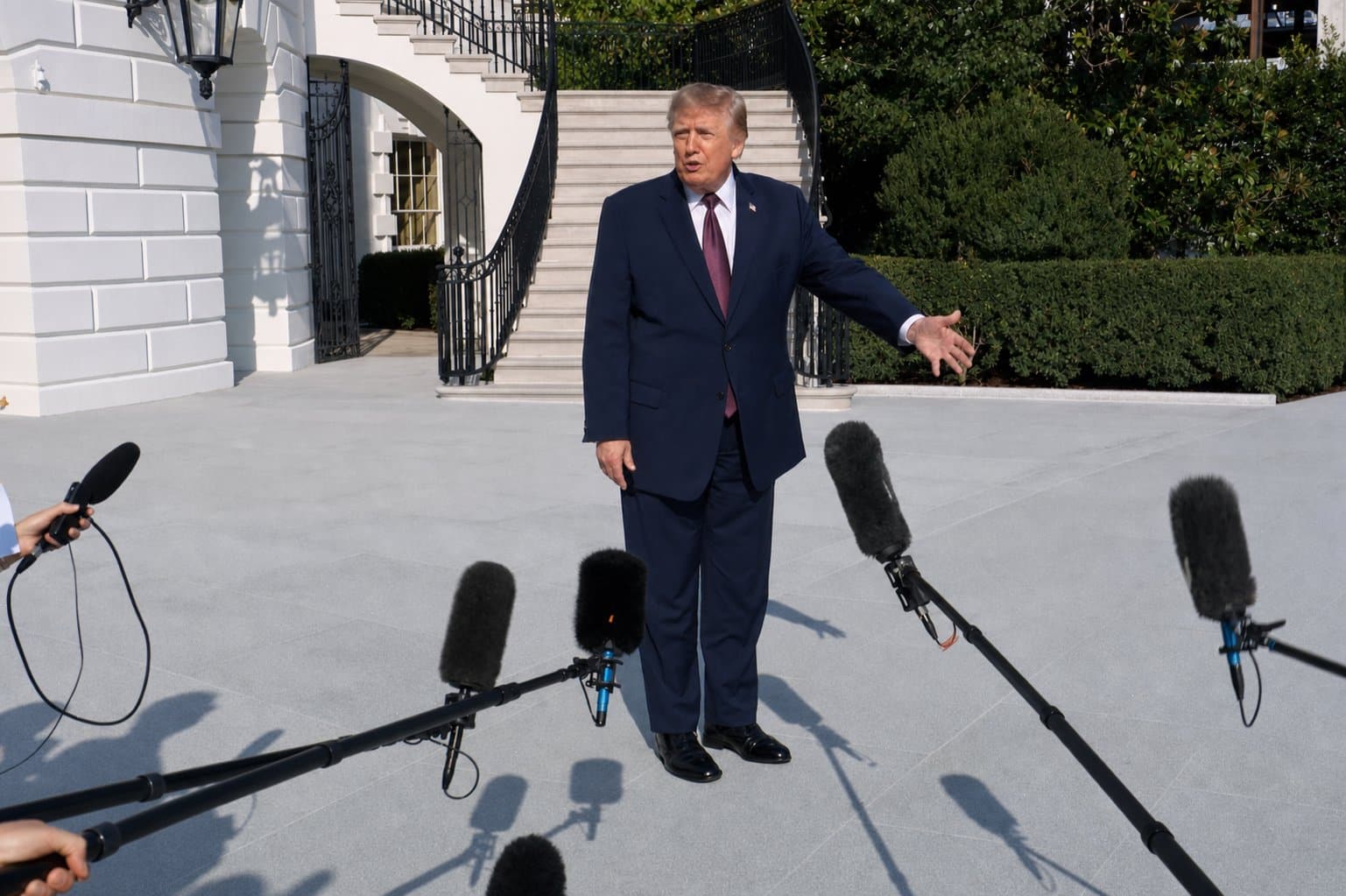
During a press briefing on October 2, President Trump was asked by a journalist from CNN Türk about the delays in lifting sanctions that were promised to Turkey. Trump responded by emphasizing his personal rapport with Erdogan but offered no specific details regarding the current status or timeline for lifting the sanctions. “I’ll always speak to President Erdogan. He’s a friend of mine, as you know, and I’ll always make him happy,” he stated, ensuring that his relationship with Turkey’s leader remains a priority in his foreign policy.
The journalist pressed on about the delays, reminding Trump of earlier comments made during the NATO summit in July, which hinted at possible sanctions relief. However, Trump chose to deflect, opting to discuss his personal ties to Erdogan rather than providing a clear action plan for the sanctions.
Sanctions Emanating from Russian Arms Deals
The core issue of the sanctions stems from Turkey’s controversial acquisition of the S-400 air-defense system from Russia. A report by the Congressional Research Service on July 14, 2026, highlighted Ankara’s twin objectives: to not only seek relief from current U.S. sanctions but also to finalize the purchase of 40 F-35 fighter jets. The sanctions, which were first enacted during Trump’s initial term, took effect on December 14, 2020, targeting the Presidency of Defense Industries in Turkey and several high-ranking officials under the Countering America’s Adversaries Through Sanctions Act (CAATSA).
These measures included limitations on exporting authorizations to Turkey’s defense sector and other forms of financial support, alongside asset-blocking and visa restrictions for affected officials. Importantly, the sanctions specifically targeted Turkey’s defense sector rather than imposing a blanket trade embargo.
Legal Restrictions on F-35 Aircraft Transfers
It’s important to note that even if sanctions are lifted, Turkey would still face legal barriers in acquiring F-35 jets. After obtaining the S-400 system, Turkey was expelled from the F-35 international development program in July 2019. U.S. officials voiced concerns that the Russian system could be leveraged to spy on the stealth capabilities of the F-35s.
In response, Congress established a separate prohibition on the transfer of these aircraft to Turkey, which complicates the potential for any future defense collaboration. According to the Congressional Research Service, this prohibition could be waived only after the executive branch certifies that Turkey has relinquished the S-400 system and committed to not reacquiring it, along with fulfilling additional conditions regarding its dealings with Russian defense supplies.
In summary, the situation between the U.S. and Turkey remains tense and complex, with sanctions tied closely to Turkey’s defense decisions. Trump’s emphasis on his friendship with Erdogan is a strategic move, yet the underlying geopolitical factors continue to play a significant role in shaping future relations. The ongoing dialogue between these nations will likely require clarity and commitment to ensure mutual interests are preserved in the realm of defense and international trade.