
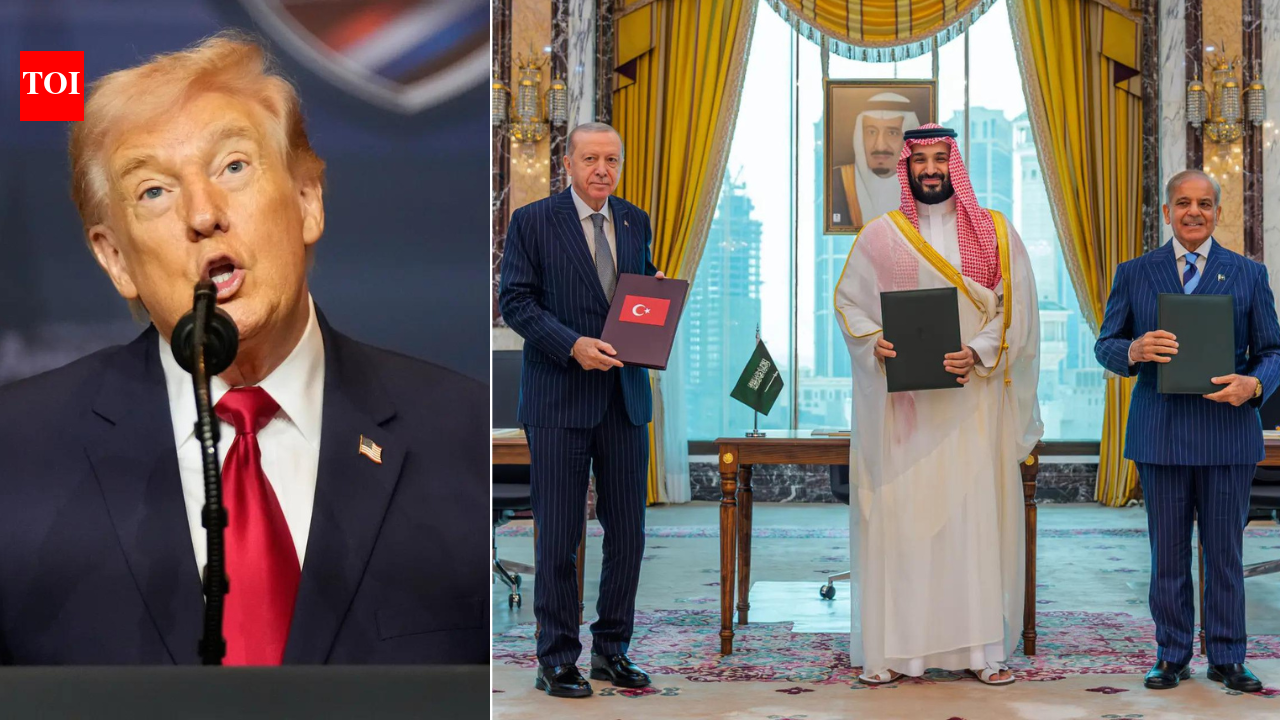
US President Donald Trump recently endorsed the Mecca Joint Defence Agreement, a significant pact involving Saudi Arabia, Turkey, and Pakistan. He characterized it as a “big, bold, and important first step” in unifying these key Islamic nations’ defense strategies. Signed on August 7, this agreement mirrors NATO’s principle of collective defense, also earning the nickname “Islamic NATO.” The collaboration brings these countries closer in their military pursuits, potentially reshaping geopolitical dynamics in the region.
Understanding the Mecca Agreement
The Mecca agreement seeks to enhance defense cooperation among Saudi Arabia, Turkey, and Pakistan significantly. It is not merely about military drills or arms transactions but establishes a formal mechanism for collective defense and mutual deterrence. According to reports, this pact aligns with Article 51 of the UN Charter, which acknowledges a country’s right to both individual and collective self-defense.
Key components of the agreement include military training, personnel exchange programs, and joint exercises aimed at improving operational coherence among the three countries. There are indications that the pact may also facilitate deeper intelligence-sharing, enhancing the collective security framework. However, vital details regarding the specific military obligations, geographical scope, and precise triggers for military action under the agreement remain undisclosed. Notably, unlike the preceding Saudi-Pakistan Strategic Mutual Defence Agreement, there is no mention of nuclear weapons in this trilateral arrangement.
Significance for Regional Dynamics
The emergence of this so-called “Islamic NATO” has drawn the attention of regional players, particularly India. The Indian government is currently evaluating the implications of this new alliance on its national security and broader regional stability. Spokesperson for the Ministry of External Affairs, Randhir Jaiswal, indicated that India is actively examining the agreement’s potential repercussions. The ministry reaffirmed its commitment to protecting national interests and indicated it would take necessary measures in response to evolving security challenges.
For India, the significance of this agreement is underscored by its complex relationship with Pakistan, one of the signatories. The ongoing tensions, particularly following instances like the Pahalgam massacre, have strained diplomatic relations, leading India to downgrade its ties with Islamabad. New Delhi is likely concerned about how this trilateral alliance could alter the strategic balance in South Asia, particularly in terms of defense capabilities.
The Broader Implications
The Mecca Joint Defence Agreement represents a pivotal shift in the defense landscape of the Middle East and South Asia. By formalizing military cooperation among these three nations, it not only reaffirms their commitment to mutual defense but also signifies a broader intent to counter perceived threats in their respective regions. This pact could encourage other nations in the Muslim world to consider similar alliances, potentially leading to a realignment of regional power dynamics.
As the geopolitical landscape evolves, the ripple effects of this agreement may extend beyond defense to impact economic collaborations and diplomatic relations among countries within and outside the region. The focus on collective security and mutual defense may encourage further unity among Islamic nations, forging a stronger coalition to address common threats and challenges. In this context, the responses from global powers, including India, will be crucial in shaping the future of regional stability and security.