
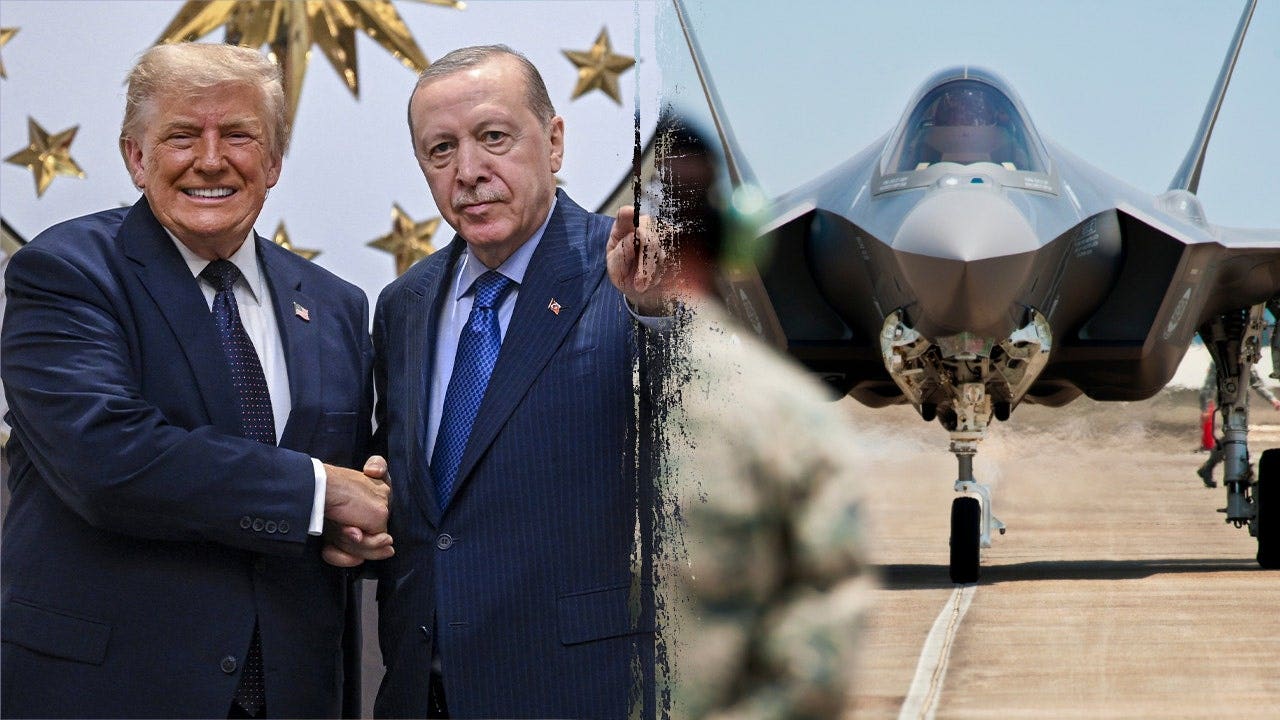
President Donald Trump has announced plans to lift U.S. sanctions against Turkey and is considering the resumption of the F-35 fighter jet sales to the nation. This marks a significant shift in diplomatic relations with Turkey, which had previously faced expulsion from the F-35 program due to its acquisition of Russian military equipment.
Shifting U.S. Policy Toward Turkey
During a meeting with Turkish President Recep Tayyip Erdoğan at a NATO summit in Ankara, Trump stated that his administration would roll back sanctions imposed on Turkey’s defense sector. “We don’t sanction friends,” he emphasized, suggesting that it is time to enhance ties with Ankara, which has been viewed as a vital ally within NATO despite a history of tensions. Trump’s remarks come at a crucial time, as the U.S. aims to stabilize its relationships within the alliance.
Trump’s approval for the sales of F-35 stealth fighter jets to Turkey is particularly noteworthy. Turkey was previously barred from the F-35 program after it acquired the Russian S-400 missile defense system. Many U.S. lawmakers have repeatedly voiced concerns over this decision, indicating that selling advanced military technology to Turkey while it holds a Russian system could expose sensitive U.S. defense capabilities.
Concerns About Defense Technology
Lawmakers expressed their apprehensions about Turkey’s ongoing possession of the S-400 system. Sections of U.S. legislation explicitly prevent the transfer of F-35 aircraft to Turkey unless specific legal requirements related to the Russian missile system are met. A bipartisan group of House representatives urged Trump not to proceed with the F-35 deal, stressing that bypassing these restrictions would undermine national security interests.
The Pentagon has been consistently vocal about the risks associated with Turkey operating both the F-35 and the S-400. The S-400’s advanced radar is capable of gathering valuable data on the F-35’s capabilities, which could, in turn, aid Russia in countering the aircraft in future conflicts. The Trump administration has historically pointed to these security concerns as justification for Turkey’s removal from the F-35 program.
The Wider Implications of U.S.-Turkey Relations
The warming relations between the U.S. and Turkey may reshape the geopolitical landscape, especially in light of Turkey’s strategic position in the region. Analysts suggest that restoring defense cooperation could significantly bolster NATO’s collective security efforts. However, political hurdles remain, both domestically and in terms of international perception.
Despite the potential benefits of strengthening ties with Turkey, many in Congress remain cautious. They assert that Turkey’s recent actions, including its support for Hamas and ongoing disputes with NATO partners Greece and Cyprus, pose significant challenges. As the U.S. navigates these complex dynamics, its approach to military alliances, trade, and regional security will be under close scrutiny.
In conclusion, Trump’s plans to lift sanctions and possibly resume F-35 sales to Turkey signify a notable shift in U.S. foreign policy. As debates continue over the implications for national security and NATO cohesion, the unfolding developments will be critical for U.S.-Turkey relations moving forward.