
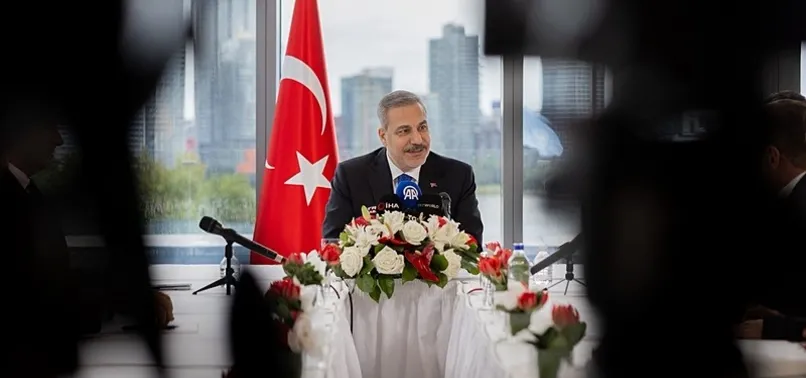
Türkiye has taken a proactive stance in promoting dialogue, diplomacy, and collaboration amid escalating global tensions during the recent high-level week of the UN General Assembly in New York. Foreign Minister Hakan Fidan highlighted this commitment in a press conference, noting the extensive diplomatic engagement the country has undertaken, particularly regarding the Palestinian issue.
Diplomatic Engagement and Key Issues
Fidan indicated that he participated in over 40 bilateral and multilateral meetings throughout the week, emphasizing that the Palestinian situation remains a pivotal focus for Türkiye’s international relations. “We championed dialogue over conflict and diplomacy over crises,” he stated, reflecting Türkiye’s dedication to addressing both regional and global challenges through diplomatic avenues. He underscored that during these discussions, the Turkish delegation consistently spotlighted Israel’s controversial actions in Gaza, including alleged genocidal policies and occupation efforts.
In his address to the General Assembly, President Recep Tayyip Erdoğan reiterated Türkiye’s strong advocacy for the Palestinian people, ensuring the issue’s prominence on the international stage. Besides engaging in multiple meetings focused on climate change and regional cooperation, Erdoğan interacted with Turkish expatriates and U.S. business representatives, further showcasing Türkiye’s multifaceted diplomatic approach.
Strengthening Regional Ties
Fidan also noted his discussions with counterparts from various nations, including Indonesia, Qatar, and Saudi Arabia, focusing on Palestine within an eight-country collaborative format. He participated in crucial dialogues regarding a comprehensive peace plan established during last year’s New York Declaration. Moreover, meetings under the framework of the Mecca Alliance facilitated comprehensive consultations among foreign ministers, fostering multilateral cooperation on pressing issues. As chair of the Organization of Islamic Cooperation’s Council of Foreign Ministers, Fidan led an annual coordination meeting that reinforced Türkiye’s leadership role in regional diplomacy.
Türkiye further co-hosted a session with the U.S. aimed at garnering international support for stability and prosperity in Libya. Fidan emphasized the need for localized responses to regional challenges, advocating for regional ownership instead of external imposition, and reiterated Türkiye’s support for UN reform.
Addressing Israel’s Isolation and Regional Security
Fidan highlighted the increasing diplomatic isolation faced by Israel due to its controversial actions. He noted that international backlash against Israel is manifesting in tangible measures, including potential legal challenges. In discussing Erdoğan’s meetings with President Trump and Gulf leaders, Fidan shared insights on the evolving situation in Gaza and Israel’s ongoing defiance of previously established agreements.
In another notable development, Türkiye, Saudi Arabia, and Pakistan are making strides to finalize the structure of the Mecca Defense Alliance, with plans to appoint a secretary-general in the coming weeks. This initiative is seen as a coordinated response to security threats, including aggressive actions from Houthi forces and other regional challenges.
Ongoing Diplomacy in the Gulf and Iraq
Fidan remarked on the ongoing diplomatic efforts concerning tensions between the U.S. and Iran, particularly regarding proposals surrounding the Strait of Hormuz. Although progress remains slow, he acknowledged that continuous discussions aim to prevent further conflict escalation. Türkiye’s Gulf partners, directly impacted by these developments, share Ankara’s preference for a peaceful resolution.
In discussions regarding Iraq, Fidan expressed optimism at Baghdad’s commitment to disarm armed groups, including the PKK in the Sinjar region. He explained that Türkiye’s military presence, especially at the Bashiqa base, was initially founded on counterterrorism cooperation. As Iraq moves forward with its disarmament agenda, Türkiye could consider reducing its military footprint in the area.
Overall, Türkiye’s assertive diplomatic engagement at the UN General Assembly underscores its dedication to fostering international dialogue and collaborative problem-solving in the face of complex global issues.