
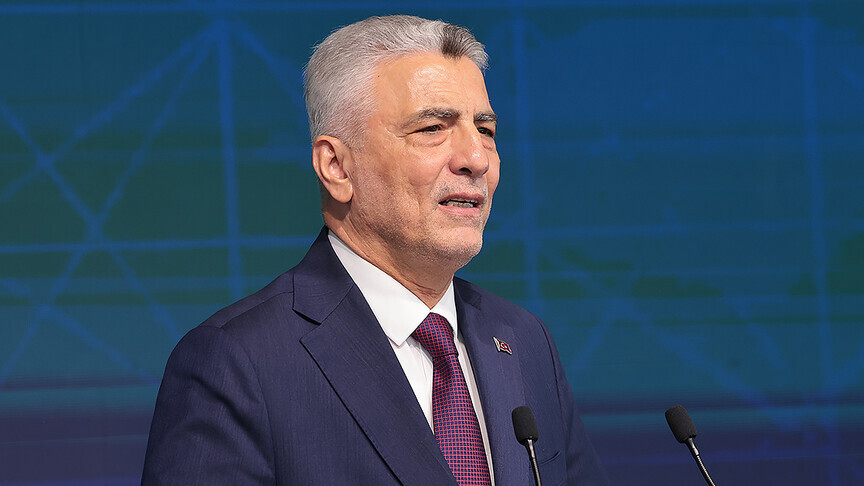
The economic relationship between Türkiye and the United States is experiencing dynamic growth, with projections indicating that bilateral trade may hit $43 billion this year and rise to $50 billion by 2028. This information was shared by Türkiye’s trade minister during an interview with Anadolu Agency, highlighting a notable improvement in American-Turkish economic interactions.
Growing Economic Ties and Future Projections
Omer Bolat emphasized the upswing in economic cooperation between Türkiye and the U.S., underscoring various private sector initiatives and state-led trade missions aimed at achieving the ambitious $100 billion trade goal set by the leaders of both nations. The minister, who was part of President Recep Tayyip Erdogan’s delegation at the UN General Assembly in New York, remarked that multiple discussions took place concerning crucial sectors such as economy, finance, foreign trade, energy, and industry. These conversations involved not only government officials but also representatives from American business sectors.
Recent data suggests that Turkish-American bilateral trade could experience a growth rate exceeding 10% annually. The trade volume is projected to reach between $42 and $43 billion based on figures from the first eight months of the year. Notably, the United States ranks as the second-largest destination for Turkish exports and is the fourth-largest source of imports. Additionally, it stands out as the second-largest country for foreign direct investment in Türkiye.
Investments and Sectoral Focus
Bolat also highlighted the significant investment from American businesses in Türkiye, with approximately 2,300 U.S. firms contributing a combined capital stock of $16.5 billion. Overall, U.S. investments in the country amount to nearly $60 billion. Conversely, Turkish firms have been proactive in seizing investment opportunities abroad, channeling roughly $14.5 billion into the U.S. economy. The minister asserted that these investments primarily focus on sectors such as manufacturing, yet there’s growing interest in energy, aviation, logistics, and the expanding digital economy.
During the recent 19th Investment Conference led by President Erdogan and organized by the Foreign Economic Relations Board (DEIK), the Turkish leader urged American executives in finance, aviation, and technology to consider expanding their operations in Türkiye. This invitation reflects a clear intention to foster stronger ties and attract foreign capital to bolster the Turkish economy.
Navigating Trade Challenges and Future Discussions
Bolat also addressed ongoing negotiations regarding customs tariffs imposed on April 2, 2025. He noted that while some tariffs were overturned by the U.S. Supreme Court, additional protective measures were reintroduced through alternative means. He cited the imposition of tariffs ranging from 25%-50% in specific sectors, justified by national security concerns. The minister emphasized that Washington should focus on imposing trade barriers against nations that maintain trade surpluses with the U.S., reiterating that Türkiye operates with a trade deficit.
Concluding his remarks, Bolat mentioned his upcoming attendance at the G20 Trade Ministers Meeting in Milwaukee, Wisconsin, where he plans to engage in discussions about the global economic landscape and continue bilateral dialogues. This highlights Türkiye’s commitment to fostering a productive dialogue that seeks balanced and mutually beneficial trade relationships with the United States.
Through mutual understanding and cooperation, both Türkiye and the U.S. are poised to enhance their economic frameworks and achieve their long-term trade aspirations.