
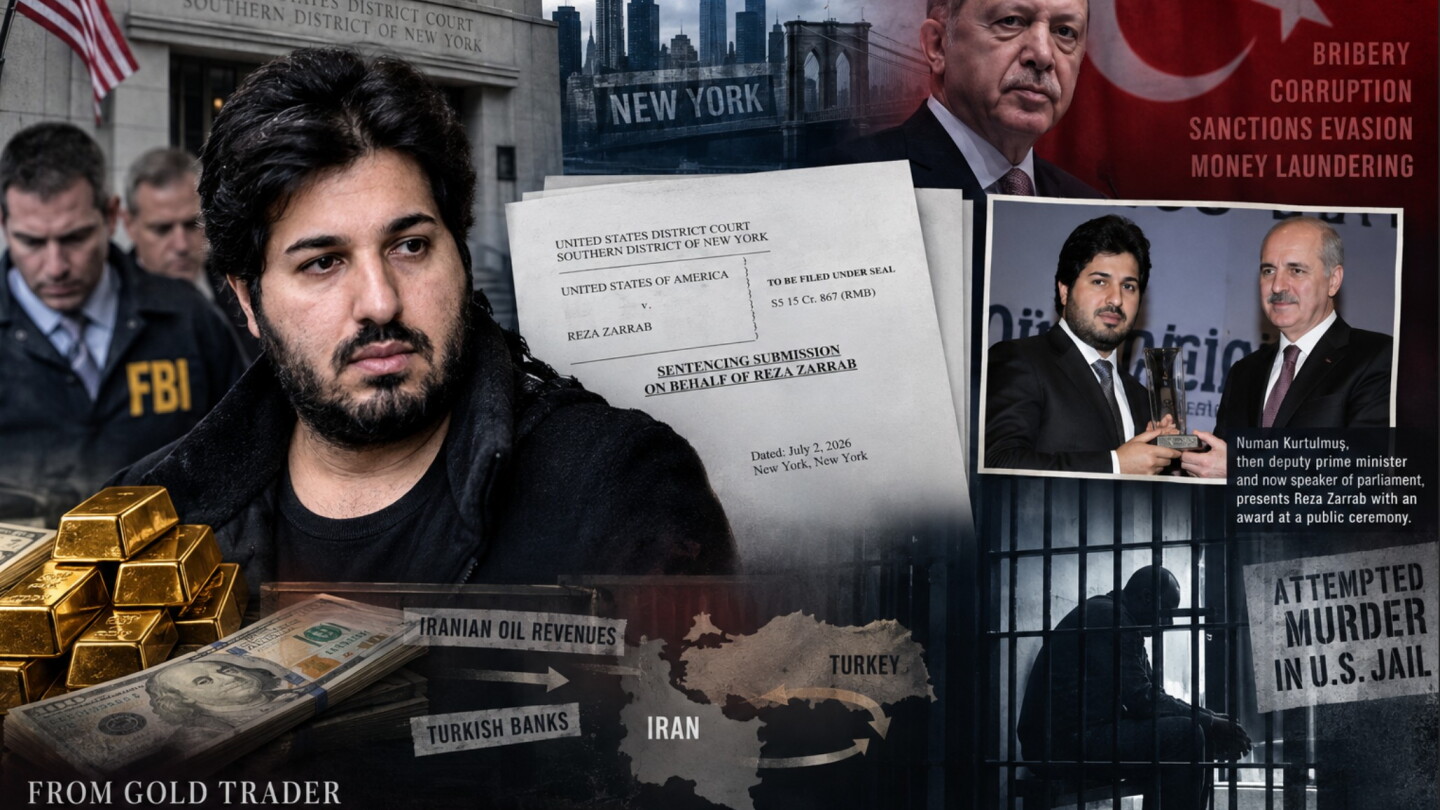
The recent allegations surrounding Iranian-Turkish gold trader Reza Zarrab unveil a troubling narrative of international intrigue involving the Turkish government, U.S. federal authorities, and a high-stakes sanctions-evasion investigation. Zarrab’s claims reveal not only his life-threatening experiences while incarcerated but also the extensive network of corruption and retaliation that has ensnared various high-level Turkish officials, including President Recep Tayyip Erdogan.
Assassination Attempt in Custody
According to documents filed in a New York federal court, Zarrab asserts that the Turkish government orchestrated an assassination attempt on him while he was being held at the Metropolitan Detention Center. This claim highlights the desperate measures Turkey allegedly took after learning about Zarrab’s cooperation with U.S. prosecutors. A fellow inmate reportedly confronted Zarrab with a knife and explicitly threatened his life unless he ceased assisting U.S. authorities. The memorandum indicates that this episode of violence is just one part of a broader strategy to muzzle a key whistleblower in a significant investigation regarding sanctions evasion involving Iranian funds.
The conditions of Zarrab’s confinement drew serious attention when it became evident that Turkish officials were attempting to affect his testimony against those involved in state-sponsored corruption. After being alerted to Zarrab’s cooperation with U.S. prosecutors, Turkish authorities reportedly arrested several of his associates and even raided the home of another employee. These actions have been described by Zarrab’s legal team as coercive measures aimed at deterring his willingness to testify against Turkish officials in his upcoming trial.
Impact of Testimony on Turkish Government
Zarrab’s eventual testimony in 2017 put the spotlight on a complex web of financial transactions designed to help Iran bypass U.S. sanctions. He disclosed intricate details regarding how these operations worked, the executives involved, and the kickbacks that enabled the system. His revelations were so impactful that U.S. authorities categorized him as a crucial witness. Following his testimony, Turkish prosecutors initiated what has been referred to as a “sham” criminal espionage investigation against him, leading to further complications and threats to his safety.
Additionally, previous arrests of Zarrab’s employees were revived just as he was set to testify, signaling an intimidation campaign that seemed to stem directly from the Turkish government’s fear of being exposed. This orchestrated harassment reflects not only Turkey’s concern over Zarrab’s testimony but also its broader implications for the regime, particularly given Erdogan’s alleged involvement in overseeing such nefarious activities.
The Broader Implications of Zarrab’s Defection
Zarrab’s complicated history stretches back to his arrest in Turkey amid a massive corruption investigation that implicated prominent officials, including Erdogan himself. Following initial charges, he was released and resumed his sanctions-evasion tactics. The U.S. authorities later intercepted Zarrab in Miami, where he initially denied the allegations against him. However, under intense pressure, he ultimately pleaded guilty to multiple charges, including conspiracy and money laundering, further entwining him in a web of international legal battles.
The aftermath of Zarrab’s defection and cooperation with U.S. prosecutors has had lasting effects. He has faced continuous threats to his safety; Turkish agents reportedly tracked his movements in the U.S., underscoring the risks he continues to navigate. The scale of retaliatory measures taken against Zarrab and his associates illustrates the lengths to which the Turkish government is willing to go to silence dissent and prevent exposure of their illicit dealings.
Zarrab’s legal team argues that the extensive series of threats and attempts on his life constitute retaliatory actions that significantly exceed the consequences faced by other participants in the sanctions scheme. As they petition for leniency in their request to the court, the narrative paints a vivid picture of a riveting international saga filled with intrigue, danger, and the high stakes of revealing state-sponsored corruption.