
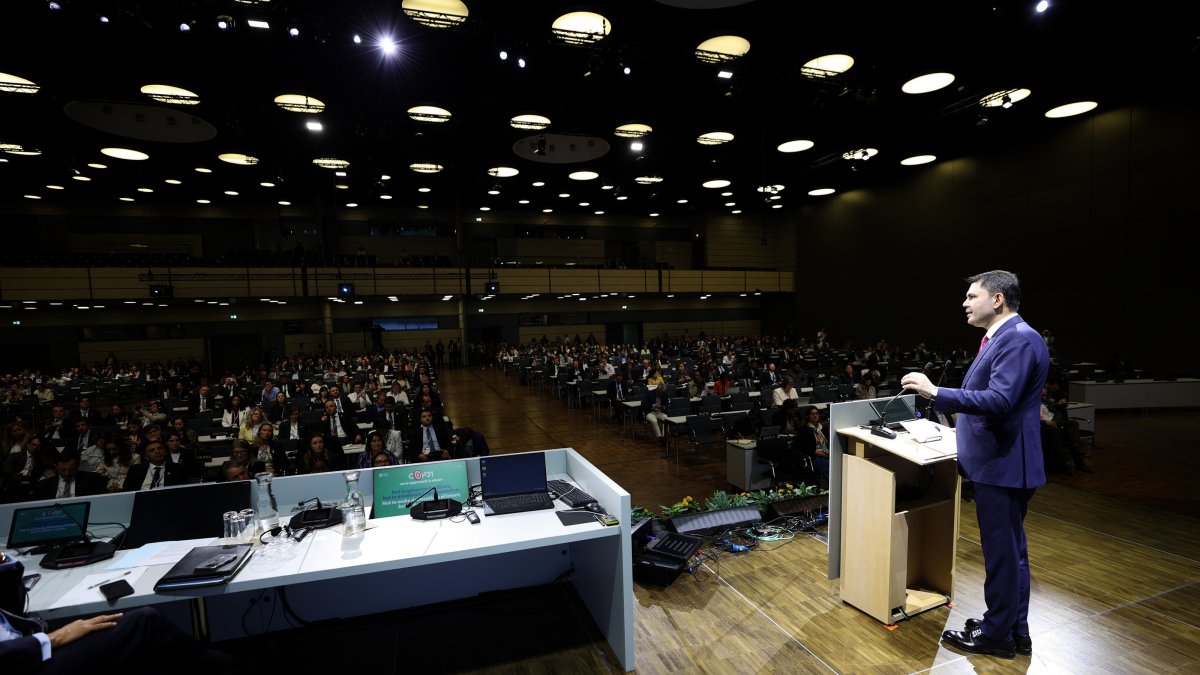
Erciyes Summit Highlights Türkiye’s Role in Climate and Food Security
This week, the inaugural Erciyes Summit was held in Kayseri, Türkiye, focusing on the interconnected challenges of climate change, water scarcity, food insecurity, and national security. As experts and policymakers gathered, the emphasis was placed on how these environmental issues have escalated into significant national security threats, with Türkiye’s strategic position at the forefront of solutions.
Türkiye’s Strategic Significance in Environmental Diplomacy
With its expanding geopolitical influence, Türkiye is increasingly viewed as a vital player in environmental diplomacy and food security, particularly in a region facing various crises. Experts acknowledge the importance of Türkiye’s unique strategic advantages as it gears up to host the U.N. Climate Change Conference (COP31). Nabil Gangi, the Food and Agriculture Organization (FAO) Sub-Regional Coordinator for Central Asia, expressed confidence in Türkiye’s ability to lead effectively during the summit. He emphasized that the country is well-equipped to address fundamental climate challenges, including land degradation and water scarcity, thanks to its comprehensive strategic initiatives.
As Gangi noted, Türkiye serves as an exemplary model with its ongoing efforts to combat climate change and promote sustainability. The upcoming COP31, which will take place in November in Antalya, is expected to attract over 100,000 attendees, positioning Türkiye as a proactive participant in global climate governance. The conference will focus on vital areas such as climate adaptation, financing, and fulfilling commitments made under the Paris Agreement, thereby emphasizing its importance on the international stage.
The Interplay Between Water Resources and Food Production
At the core of this summit’s discussions was the alarming reality that climate change is becoming an overarching challenge not just for the environment but for economies and social stability as well. Murat Kurum, Türkiye’s Minister of Environment, Urban Planning, and Climate Change, remarked that declining water resources jeopardize agricultural output and drinking water security, which could ultimately escalate into broader security concerns. He noted, “When water weakens, production weakens. When production weakens, pressure on food supplies increases,” linking these issues to potential social instability.
The implications are clear: a growing concern over water resources directly affects food production. Addressing these challenges demands collaboration across sectors and innovative strategies to enhance resilience in food and water systems.
Türkiye as a Critical Food Security Hub
Türkiye has emerged as a crucial player in providing not just diplomatic but also logistical support in a region rife with humanitarian crises. For instance, the Black Sea Grain Initiative, facilitated by Ankara, became vital for ensuring safe grain shipping during the Russia-Ukraine conflict. Gangi suggested that Türkiye could solidify its standing as a permanent food security hub for the eastern Mediterranean. By maintaining strong relations with Central Asian countries and advancing partnerships with key Arab nations, Türkiye is positioned to mitigate food insecurity across the region, particularly in places facing civil unrest.
Keenly aware of these dynamics, Gangi remarked on Türkiye’s capability to navigate political challenges and facilitate food security initiatives. He highlighted the importance of political leverage in executing technical solutions on the ground, especially in regions like Gaza, where agricultural systems are under siege.
Adapting to Changing Funding Dynamics
As funding for humanitarian and developmental agencies faces fluctuations, Gangi pointed out that organizations like the FAO are adapting to new realities in financial support. Traditional partners are being replaced by multilateral funds, necessitating an adjustment in strategies to meet changing priorities. “In the past, the main funding partners were countries,” Gangi explained, stressing the need to adapt to this evolving landscape, particularly in dealing with diverse donor expectations—whether humanitarian or developmental.
Furthermore, he emphasized that climate change is a reality that cannot be ignored, becoming an experience rather than just a theoretical problem. With unpredictable water availability and changing climate patterns, the focus is shifting to refining agricultural practices to build resilience. Gangi concluded that innovative approaches are essential for cultivating not just food but also a sustainable future, highlighting the need for investment in fertile land and resilient seeds.