
The 81st session of the United Nations General Assembly (UNGA) is unfolding amid significant shifts in the international landscape. Rather than merely witnessing a rise in conflicts, the world is confronting a more intricate web of interconnected crises. This evolution is marked by escalating tensions that intertwine through military alliances, strategic chokepoints, and critical energy routes.
Europe’s Evolving Conflict Landscape
The situation in Europe illustrates this complex interplay of conflicts vividly. While the war in Ukraine is predominantly fought on Ukrainian soil, the implications extend far beyond its borders. Recent Russian missile strikes approaching Poland have heightened the stakes, making Poland a pivotal front in NATO’s defensive strategy. The Western approach aims to support Ukraine while avoiding direct confrontation with Russia, but maintaining this delicate balance is becoming increasingly precarious. With Western Ukraine serving as a logistical hub for NATO, the risk of escalation looms large; even minor incidents could spiral into broader military responses.
Additionally, the importance of Greenland is also coming to the fore. The U.S. military’s growing access to the region highlights a renewed focus on the Arctic and North Atlantic, integrating these areas into Western security strategies. Thus, the evolving security geography of Europe must encompass the North Atlantic, Arctic, and adjacent regions, indicating a broader interconnection of potential conflicts.
Middle Eastern Dynamics and Interconnected Conflicts
A similar trend of interconnectedness is observable in the Middle East. The ongoing conflict involving Iran and its implications for global security demonstrate how regional tensions can resonate on a much larger scale. The Strait of Hormuz serves as a critical juncture; any military escalation here could disrupt vital energy supplies globally. Yemen also re-emerges as a critical player in this complex web.
The Yemen conflict can be analyzed through overlapping lenses: its internal dynamics shaped by varying factions, Saudi Arabia’s security concerns aggravated by Houthi missile attacks, Iran’s influence on the Houthis, and the geoeconomic implications tied to global energy routes. Yemen’s strategic significance is amplified when its tumultuous situation is viewed alongside Hormuz, positioning it as more than just a peripheral conflict but rather as a crucial component of the wider regional crisis.
Turkey’s Strategic Responsibilities in a Changing Landscape
For Türkiye, these shifts are not merely theoretical; they present real strategic choices across various conflict zones. The evolving landscape compels Ankara to balance its roles carefully, particularly concerning Iran. While Türkiye opposes any escalation of conflict with Iran—a nation whose instability could pose security, economic, and migration challenges—it also seeks to limit its exposure to Iranian influence, as evidenced by its recent revocation of an Iranian bank’s operating license.
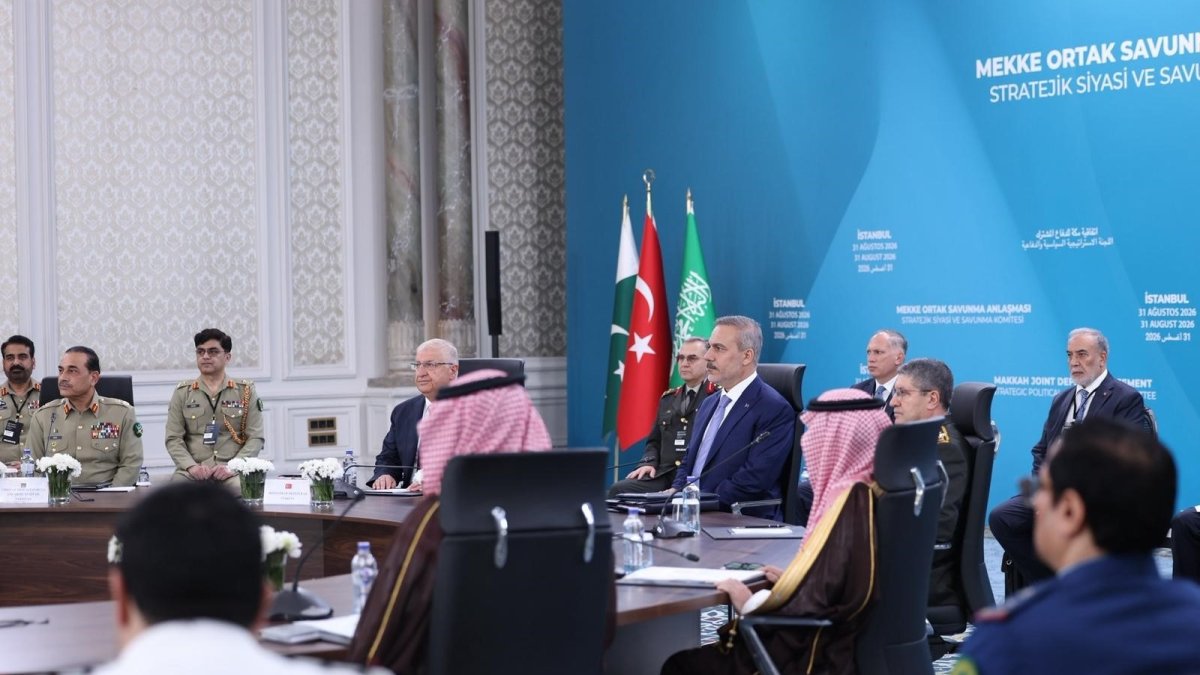
The situation in Yemen introduces another layer to Türkiye’s strategic calculus. Following the establishment of the Mecca Joint Defence Agreement with Saudi Arabia and Pakistan, Türkiye is now faced with the challenge of enhancing Saudi security. This agreement signals a commitment that requires Ankara to engage in preventive measures, possibly within defensive capacities, to establish credibility without veering into offensive military action.
In the context of its relationship with NATO and Russia, Türkiye finds itself managing multiple strategic responsibilities. While supporting Ukraine’s territorial integrity and NATO’s deterrence capabilities, Ankara must also engage with Moscow. The potential for conflict between Russia and NATO creates a complex web that requires Türkiye to maintain its strategic autonomy while navigating a myriad of commitments.
As the landscape of warfare becomes increasingly interconnected, Türkiye’s geopolitical stance enables it to engage across diverse theaters. However, the challenge lies in maintaining boundaries among these commitments. In an era filled with interlinked conflicts, Turkey must be adept at ensuring that one crisis does not dictate its responses to another. Ultimately, Türkiye’s future strategic autonomy will depend on its ability to maneuver within this multifaceted arena while upholding its national interests without compromising credibility.