
Türkiye’s Ambitious Plans to Boost Black Sea Gas Output
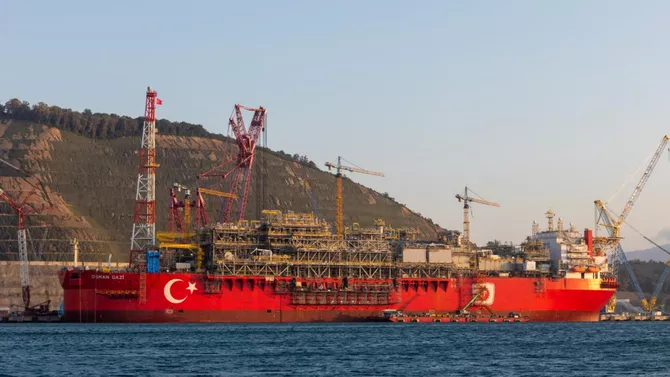
Türkiye is making significant strides towards enhancing its energy capabilities with the deployment of its first floating production, storage, and offloading (FPSO) platform, named Osman Gazi. This new platform is set to elevate gas production at the Sakarya field, demonstrating the country’s commitment to achieving energy independence and bolstering its economy through natural gas resources.
Operational Capacity of the Osman Gazi
Osman Gazi has recently left the port of Filyos and will be stationed approximately 170 kilometers offshore from the Turkish coast. This state-of-the-art facility measures an impressive 298.5 meters in length, 56 meters in width, and 29.5 meters in depth, designed to operate continuously for two decades. With a dedicated crew of 140 specialists, the platform aims to maximize daily gas production, potentially increasing output from 9.5 million to 20 million cubic meters, as reported by TRT Haber.
Economic Impact of Increased Gas Production
The anticipated rise in gas production from the Osman Gazi platform could yield substantial economic benefits. Experts estimate that this additional output may result in approximately $10 million daily or nearly $3.5 billion annually, significantly contributing to Türkiye’s energy self-sufficiency and overall economic growth. The platform’s strategic position and enhanced operational capacity make it a vital asset in the nation’s quest to expand its domestic hydrocarbon production.
Infrastructure Development and Upgrades
The implementation of the Osman Gazi involved a vast collaborative effort, with around 7,000 skilled professionals participating in the upgrades at Filyos. This comprehensive enhancement process included the installation of 642 kilometers of electrical cables and the laying of about 30 kilometers of pipelines. The infrastructure improvements encompassed 21 topside processing units, of which eleven were newly manufactured—seven fabricated in Türkiye and four sourced from international partners—while the remaining ten were adapted specifically for the unique gas characteristics of the Sakarya field.
Future Timelines for Gas Production
With ambitious plans in place, the initial trial flare ignition and the commencement of gas burning are slated for completion by the end of 2026. Full-scale commercial production, along with the integration of this gas into Türkiye’s transmission network, is expected to kick off in early 2027. The Osman Gazi platform represents a pivotal moment for Türkiye’s energy landscape, setting a path towards a more stable and secure energy future.
In conclusion, the Osman Gazi FPSO platform is poised to play a crucial role in enhancing Türkiye’s gas production capabilities. This initiative not only supports the country’s immediate energy needs but also contributes to long-term economic stability and growth. Through strategic investments in energy infrastructure, Türkiye aims to position itself as a key player in the regional gas market.