
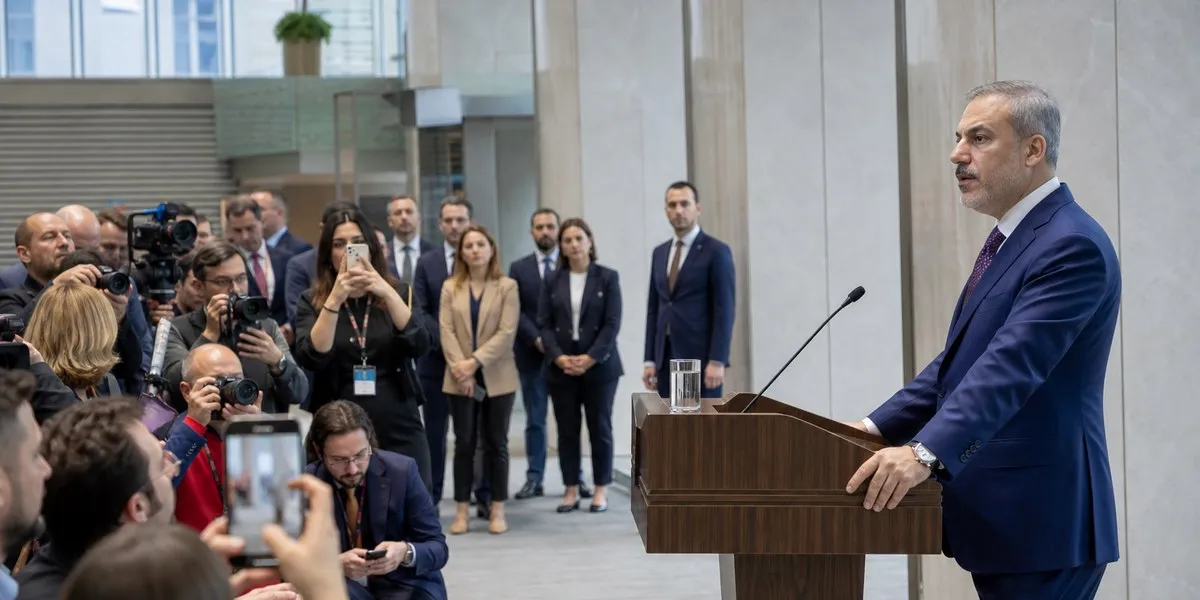
Turkey is poised to assist Saudi Arabia with its military requirements following a trilateral defense agreement with Pakistan, especially in light of recent attacks from Yemen’s Houthi rebels. Turkish Foreign Minister Hakan Fidan made this announcement during a recent interview with Turkish television, signaling Turkey’s readiness to support Saudi Arabia amid growing regional tensions.
Trilateral Defense Agreement
The three nations—Turkey, Saudi Arabia, and Pakistan—recently formalized their alliance through the Mecca Joint Defense Agreement. This pact establishes that any armed aggression against one of the signatories will be interpreted as an attack on all involved nations. Fidan emphasized that Turkey is well-equipped to offer military support, particularly in areas requiring technical assistance. Although Turkey has the second-largest military in NATO, its leadership stated that the agreement is not designed to replace existing alliances but to enhance cooperative defense among the member countries.
Pakistan has indicated that it is not currently considering military measures in response to Houthi assaults but will take appropriate actions when deemed necessary. This trilateral partnership marks a significant step toward enhancing security in the region, particularly as the Houthi threats grow more pronounced.
Recent Houthi Attacks on Saudi Arabia
In a series of aggressive moves, the Houthis have claimed responsibility for recent missile attacks targeting high-profile facilities in Riyadh. These escalations include aerial strikes that saw flames and heavy smoke near the city’s main airport, raising alarms about Saudi Arabia’s vulnerability in the ongoing conflict. Since July, the Houthis have intensified their military actions against Saudi Arabia, coinciding with their declaration of a naval blockade around the kingdom.
Fidan further articulated Turkey’s stance on avoiding any entanglement of Saudi Arabia in the broader conflict between the United States and Iran. He deemed it unacceptable to draw Riyadh into this escalating situation, stressing that Saudi Arabia does not wish to become a participant in this geopolitical struggle. Proposals aimed at resolving hostilities have already been communicated to both sides, highlighting Turkey’s role as a mediator in the region.
The Regional Implications
The establishment of the Mecca Joint Defense Agreement comes at a crucial time when regional actors are recalibrating their defense strategies in response to evolving threats. As the situation in Yemen unfolds, the implications for Saudi Arabia’s security framework will be profound. Access to advanced military assistance could bolster Riyadh’s defenses against Houthi strikes, potentially shifting the balance of power within the region.
This partnership also signifies a growing alliance among Islamic nations in the face of external pressures. By working closely together, Turkey, Saudi Arabia, and Pakistan aim to create a more secure and stable environment for themselves and neighboring countries. As military collaborations strengthen, the geopolitical landscape in the Middle East may very well transform, leading to new dynamics and alliances.
In summary, Turkey’s commitment to supporting Saudi Arabia under the umbrella of the Mecca Joint Defense Agreement, alongside Pakistan, illustrates an evolving framework for defense in the Middle East amidst rising threats. The urgent need for military collaboration has never been more apparent, and the responses from these nations will undoubtedly shape their future security policies and regional alliances.