
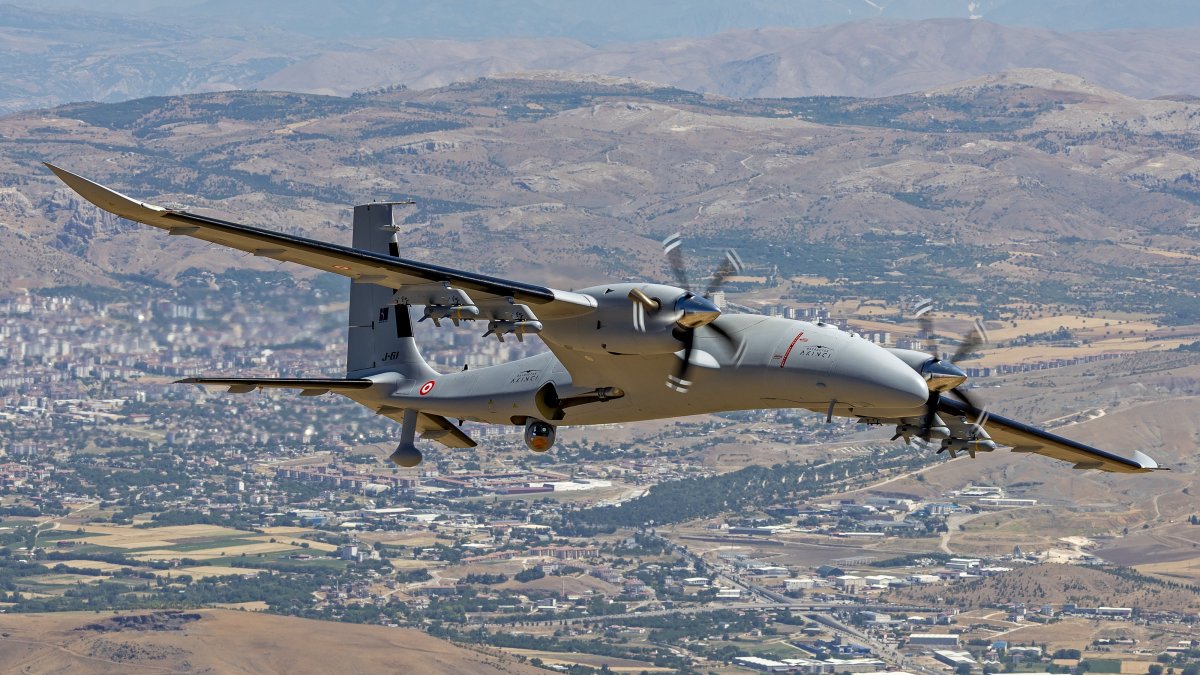
Turkey is on the verge of joining the elite circle of the world’s top ten defense exporters, buoyed by the increasing international credibility of its domestically developed platforms. This assertion was made by Haluk Görgün, the head of the Defense Industries Presidency (SSB), at an event in Ankara to celebrate the second anniversary of the National Competence Initiative.
Turkey’s Growing Defense Exports
Görgün highlighted that the burgeoning global reputation of Turkish defense technologies has catalyzed a surge in demand from various countries. In just the first seven months of the year, Turkey’s defense exports soared to $5.79 billion, a notable rise of 26.2% compared to the same period last year, with annual sales projected at around $11.2 billion. The country also achieved a staggering 48% year-over-year increase in shipments, reaching over $10 billion. According to Vice President Cevdet Yılmaz, Turkey is currently ranked as the world’s 11th largest defense exporter, and he is optimistic about achieving a new export record this year.
The Turkish defense industry has made significant strides, shifting from heavy reliance on foreign suppliers to becoming a self-sufficient exporter that meets almost all of its own defense needs. This transformation has been fueled by a multi-billion-dollar investment aimed at enhancing indigenous production capabilities. For years, Turkey has expressed dissatisfaction with its Western allies, particularly regarding their reluctance to provide adequate defense systems amid growing missile threats, despite its status as a key NATO member.
The Drive for Technological Independence
In light of its commitment to reducing dependencies on foreign sources for critical technologies, Görgün emphasized that this reliance often equates to a subtle transfer of sovereignty. More than 230 distinct defense systems are currently exported to 185 countries, illustrating Turkey’s expanding global presence. The nation is driven by a desire to fulfill the defense needs of its allies well into the future, backed by a young and skilled workforce, where the average employee age is just 34.
Yılmaz echoed these sentiments, highlighting that developing a workforce capable of innovating and maintaining forthcoming technologies is essential for achieving sustained superiority. He further pointed out that bridging the skills gap is a pressing national security concern, akin to the technology gap. With around 120,000 individuals currently employed in the defense sector, efforts are being made to ensure that Turkey continues to cultivate a rich talent pool.
The National Competence Initiative
The National Competence Initiative represents a strategic human capital development framework designed to nurture the skills required for Turkey’s defense and aerospace industries. Görgün detailed the initiative’s extensive outreach, having benefited approximately 500,000 individuals, including high school students and industry professionals. Programs within the initiative aim to boost technical, behavioral, and leadership skills across various sectors.
Over recent semesters, 2,541 students participated in targeted competency development initiatives, while 7,000 vocational students from 12 cities engaged in relevant training. The Defense Industry Campus Program attracted 3,000 participants across eight cities and the initiative has also successfully held numerous career meetings to enhance talent acquisition and development. Through the Defense Career Platform, which unites nearly 290,000 users with 339 companies, an impressive array of training sessions has been offered, totaling over 158,000 hours.
As Turkey aims to establish itself as an independent leader in the defense sector, Görgün underscored that a robust workforce and innovative technological capabilities will play crucial roles in navigating the future landscape of defense. With ongoing efforts to innovate within fields such as artificial intelligence, cybersecurity, and space exploration, Turkey is setting the stage for a sustainable future in defense.