
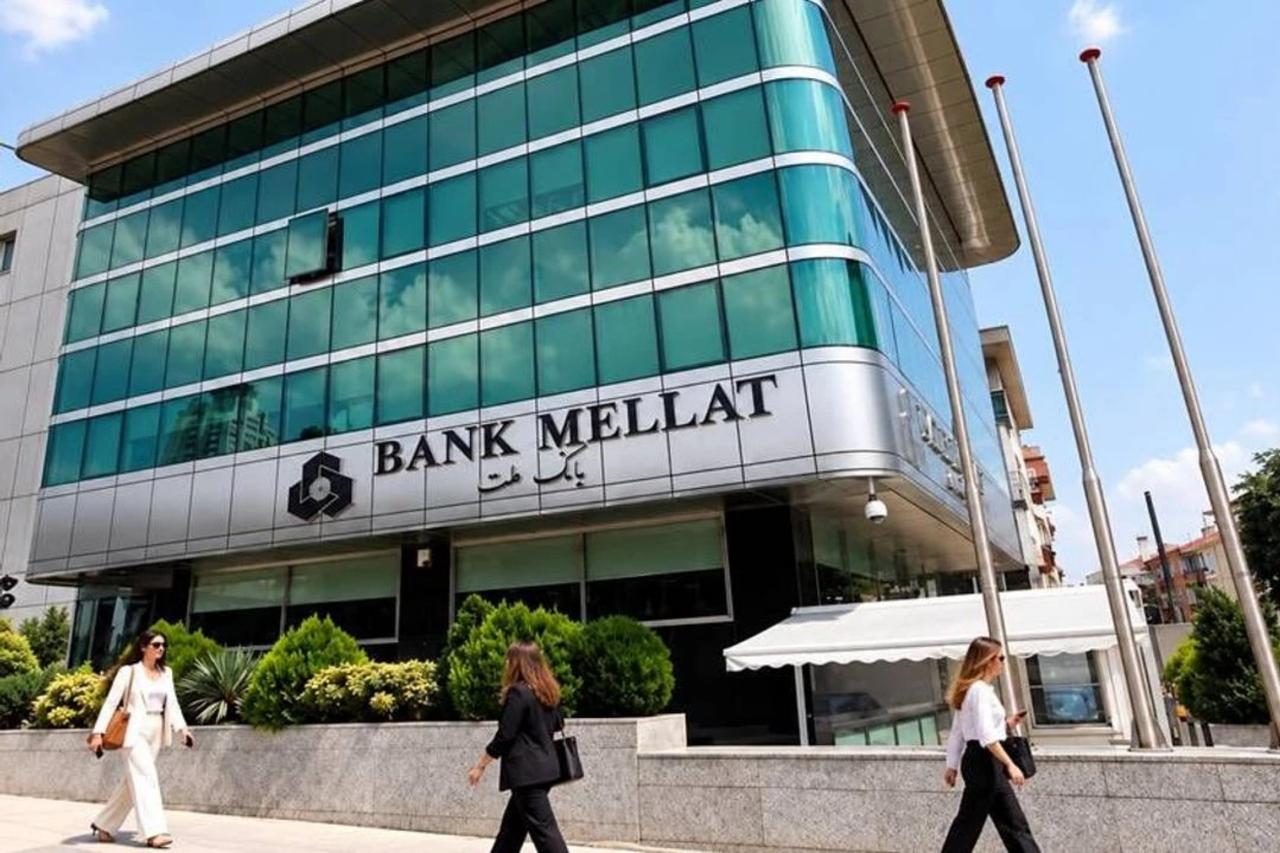
Türkiye has recently taken significant steps to tighten its financial regulations by revoking the operating license of the Iranian Bank Mellat’s branch in Istanbul. This move, prompted by escalating U.S. sanctions against Tehran’s financial networks, marks the conclusion of the bank’s 44-year presence in the country. The Banking Regulation and Supervision Agency (BRSA) acted on concerns regarding the implications that the bank’s continued operations could have on depositors and the overall financial stability of Türkiye.
Bank Mellat’s Background in Türkiye
Bank Mellat stands as one of Iran’s vital financial institutions, boasting assets worth approximately 47.9 quadrillion Iranian rials (around $34.8 billion) as of early 2026. Established in the early 1980s, Bank Mellat expanded its branches throughout Türkiye, including locations in Istanbul, Izmir, and Ankara. While the bank’s Turkish operations contributed to trade and joint projects between Iran and Türkiye, it faced repeated scrutiny due to its alleged connections to Iran’s nuclear and missile programs. The U.S. Treasury sanctioned Bank Mellat in October 2007, accusing it of facilitating financial transactions with Iran’s Atomic Energy Organization.
In late 2025, Bank Mellat’s Turkish branch reported total assets of €41 million (approximately $42.1 million) and a workforce of 39 employees, according to the Banks Association of Türkiye. It had been a significant player in Iran-Türkiye economic activities, providing financial solutions that supported local projects.
Increasing Pressure on Iranian Financial Networks
The BRSA’s decision to revoke Bank Mellat’s license doesn’t happen in isolation; it coincides with the recent efforts by the U.S. to clamp down on Iranian entities through Operation Economic Outcast, aimed at severing Iran’s financial connections and disrupting its regime-support networks. Treasury Secretary Scott Bessent has issued strong warnings that companies and financial institutions engaging with these sanctioned Iranian businesses could face secondary sanctions. This regulatory pressure is designed to further isolate Iran economically.
In a related development, Türkiye’s Savings Deposit Insurance Fund (TMSF) recently gained control over stakes held by three principal shareholders of Golden Global Investment Bank, which was also sanctioned for its connections to Iran. This action is part of a larger pattern of regulatory scrutiny, emphasizing Türkiye’s intention to align more closely with U.S. sanctions and minimize its exposure to Iranian financial entities. Additionally, on September 8, the U.S. expanded sanctions to encompass Iran’s aviation sector, targeting 36 entities, including several companies in Türkiye suspected of supporting Iranian airlines.
As these sanctions become more stringent, airlines such as Mahan Air, which were significantly affected, were compelled to suspend flights between Iran and Türkiye as of September 21, reflecting the broader impact of these measures on trade and travel between the two nations.
In conclusion, the revocation of Bank Mellat’s operating license not only emphasizes Türkiye’s heightened vigilance against potential risks associated with Iranian financial networks but also underscores the implications of international sanctions. As relations between the U.S., Iran, and Türkiye evolve, the financial landscape in the region will likely continue to experience significant changes influenced by regulatory actions and economic pressures.