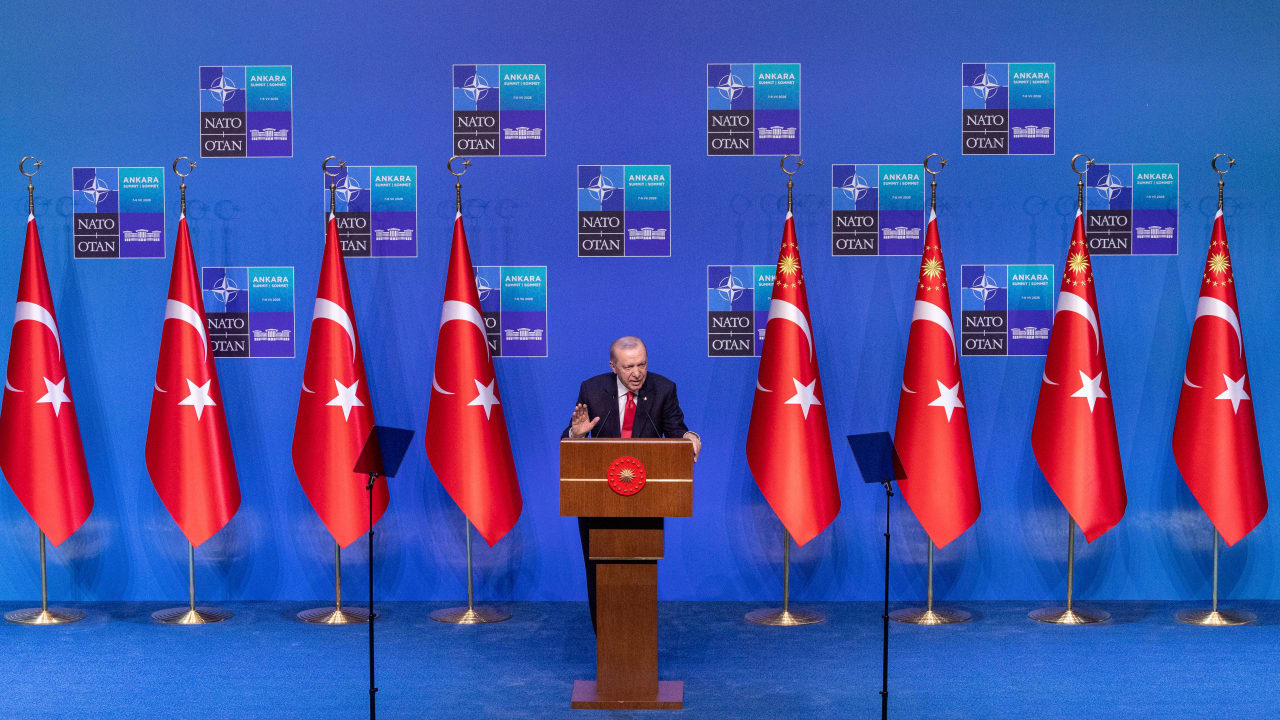
In a recent dialogue, Prime Minister Benjamin Netanyahu articulated the philosophy guiding Israel’s foreign policy, stating, “History teaches that when one regional power declines, another rises. Our responsibility is to ensure Israel ascends more swiftly than its rivals.” This statement has become particularly relevant in light of recent geopolitical dynamics, especially regarding Turkey and its ambitions under President Recep Tayyip Erdoğan.
Netanyahu’s Concerns About Turkey
Netanyahu has publicly expressed alarm over the Biden administration potentially selling advanced F-35 fighter jets to Turkey, a nation currently seeking to assert itself as a dominant regional player following Iran’s waning influence. The Prime Minister’s reflections underscore Israel’s ongoing struggle to maintain its qualitative military edge in the face of shifting alliances and military capabilities in the Middle East.
The notion that Turkey, with its strategic positioning and military advancements, is poised to fill the regional vacuum left by Iran has become increasingly evident. With a robust defense industry that produces sophisticated drones and naval capabilities, Turkey appears determined to expand its influence in places like Syria and Gaza.
The Regional Implications of Arms Deals
Netanyahu is not alone in his apprehensions. International observers note the implications of Turkey potentially acquiring F-35s, which could disrupt the delicate balance of power in the region. The Prime Minister has labeled Turkey an “aggressive” country that poses a threat to both Israeli security and regional stability, especially as Erdoğan’s administration continues to make inflammatory statements regarding Israel’s legitimacy.
The stakes have never been higher. If Turkey succeeds in obtaining advanced military technology, it could embolden Erdoğan to reinforce his strategic objectives, which frequently challenge Israel’s security. Netanyahu’s public campaign against this arms deal reflects a broader strategy to rally support against what many perceive as an imperialistic drive on Turkey’s part.
Building Alliances Against a Common Threat
Netanyahu’s recent strategy also emphasizes coalition-building with countries that share concerns about Turkey’s military aspirations. Greece, Cyprus, and other nations have their grievances against Turkey, making it possible for Israel to leverage these existing pressures to fortify its own security interests. The Prime Minister’s approach aims not just at mitigating the threat from Turkey but also at mobilizing a broader coalition of nations that can exert political influence in Washington.
Interestingly, Israel’s recognition of the Armenian Genocide, a move that many see as an affront to Turkey, aligns with this newfound alliance-building strategy. By publicly condemning Turkey’s actions, Israel may be attempting to integrate historical grievances into its current geopolitical strategy—an approach often referred to as “weaponizing history.”
In conclusion, as the specter of a post-Iran era looms, Netanyahu’s actions signify that the battle to maintain Israel’s military superiority is not over; it has simply transformed. The real challenge may lie in uniting disparate interests to counter Turkish expansionism, as this conflict could define the contours of Middle Eastern politics in the coming decade. Thus, Netanyahu’s maneuvers may very well lay the groundwork for Israel’s future strategic framework in a rapidly evolving geopolitical landscape.