
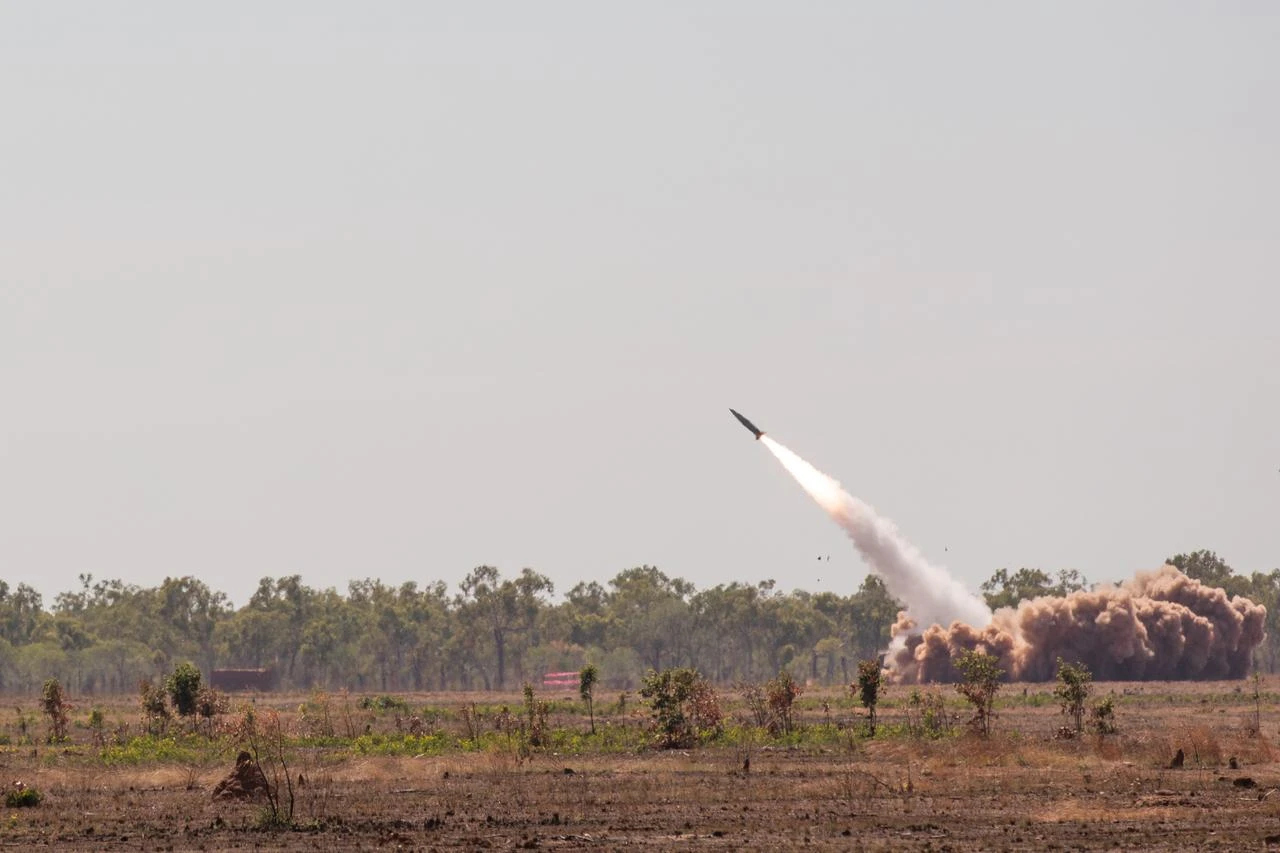
Türkiye is currently seeking U.S. approval to transfer crucial military equipment to Ukraine, which includes advanced weaponry to bolster Ukraine’s defense capabilities amid ongoing tensions with Russia. This move marks a significant step in international military collaboration and arms support as the conflict continues to evolve.
Details of the Proposed Military Transfer
According to a recent Congressional Record notice, the U.S. State Department has informed Congress about Türkiye’s intention to permanently relocate a selection of U.S.-made military systems to Ukraine. The proposed transfer consists of 12 M270 Multiple Launch Rocket Systems (MLRS) and 70 M39 ATACMS tactical ballistic missiles. Because these systems are American-made, the transfer necessitates U.S. government authorization, along with congressional notification, under Section 3(d) of the Arms Export Control Act. This requirement ensures proper oversight of defense transfers between nations.
On August 6, U.S. Senator Jim Risch, chairman of the Senate Foreign Relations Committee, filed two arms transfer notifications in the Congressional Record. The notifications adhere to Section 36(b) of the Arms Export Control Act, which obligates Congress to receive prior notice of specific proposed arms sales, followed by a 30-day review period. The first notification covers the transfer of M270 MLRS launchers, alongside surplus unguided and guided munitions with an original value of around $255.9 million. The second notification pertains specifically to the ATACMS missiles, valued at approximately $28 million, which will also be included in the proposed transfer.
Parties Involved in the Transfer
The congressional notifications specifically list the Government of Türkiye as the entity proposing the transfer, while the Government of Ukraine stands as the recipient. The transfer of the MLRS, along with its accompanying data, will involve various Turkish private companies, including MKE A.S., ASFAT A.S., and ARCA Savunma San. Tic. A.S. Additionally, cooperation with Bulgarian and U.S. private firms is planned for facilitating this significant military exchange.
Both nations have strategic motivations underlying this transfer. Türkiye aims to modernize its defense inventory by transitioning from outdated military assets. On the other hand, Ukraine is looking to enhance its offensive and defensive capabilities, especially as it faces the ongoing Russian military advancement. The notification indicates that Ukraine already uses similar munitions, making this transfer a tactical integration of existing capabilities.
Implications of the Military Support
The U.S. government has expressed readiness to approve this arms transfer, underpinned by considerations of political, military, and economic conditions, as well as human rights and arms control aspects. Such support aligns with U.S. security assistance objectives, demonstrating a strategic partnership in addressing the ongoing conflict in Eastern Europe. The transfer is planned to occur immediately following the conclusion of the congressional notification period, which began on August 3, 2026.
The ATACMS is notable for its ability to effectively strike targets beyond the front lines, distinguishing it from previous air-defense or artillery systems Türkiye has supplied to other countries. This capability positions it as a more offensively effective weapon, which could significantly impact Ukraine’s military tactics against Russian forces. Defense analysts, including Turkish expert Arda Mevlutoglu, have noted that the decision to provide an advanced system like the ATACMS suggests a considerable shift in Türkiye’s defense policy concerning Ukraine.
In summation, Türkiye’s bid to transfer key military assets to Ukraine represents a critical development in the context of international military support and geopolitical alliances. As the conflict unfolds, the implications of such transfers may redefine both tactical operations on the ground and broader regional stability dynamics.