
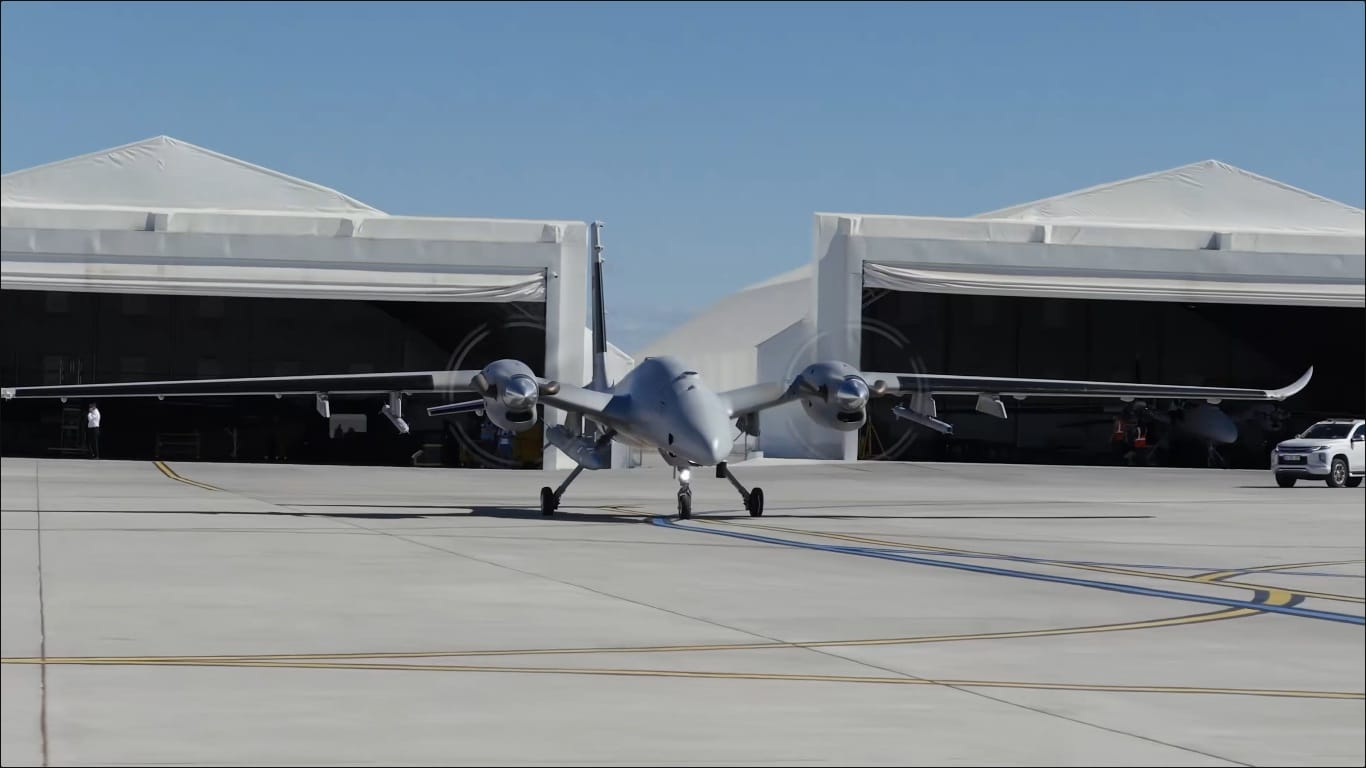
Turkey’s Baykar Akinci Unmanned Combat Aerial Vehicle (UCAV) has made headlines by successfully firing the İHA-300 (UAV-300) Air-Launched Ballistic Missile (ALBM) at a maritime target located over 250 kilometers away. This milestone was revealed on September 11, 2026, when the company and its Chief Technology Officer, Selçuk Bayraktar, shared a video of the trial conducted over the Black Sea. The successful hit emphasizes Turkey’s growing capabilities in unmanned aerial warfare.
Significant Milestone in UAV Technology
The recent firing test represents a culmination of advanced technological efforts by Baykar. The UAV-300, sometimes referred to as the 300ER by defense analysts, was also previously transported by the Akinci during tests of the smaller İHA-122 (UAV-122), indicating its functionality was being closely monitored. This progressive timeline suggests that the operationalization of the UAV-300 was a matter of time, anticipated by both the public and defense specialists alike.
What makes an ALBM-capable UCAV groundbreaking is the potential it holds for cost efficiency and tactical versatility. With lower operational costs compared to traditional manned fighters, systems like the UAV-300 can serve as effective forces in various military applications, supporting heavier strike and multi-role aircraft without escalating defense expenditures significantly.
Insights from the Test
While the official promotional footage does not showcase the exact moment the UAV-300 struck its target, Baykar has affirmed that the missile achieved a direct hit. During the trial, the Akinci UCAV was fitted with two UAV-122s and the UAV-300, illustrating its capacity to carry multiple types of munitions. Notably, footage from ground control highlighted the UAV-300’s launch sequence, including the moment it dropped before its motor ignited, culminating in a parabolic ascent toward its target.
The emphasis of this test is not solely on the UAV-300. Another important aspect is the UAV-122, which demonstrated its capability by effectively hitting an alternative target during the same exercise. This dual test not only showcased the versatility of the Akinci platform, but it also underscored Turkey’s advancements in aerial missile technology.
Specifications and Future Capabilities of UAV-300
While detailed specifications for the UAV-300 are still not extensively available on Roketsan’s website, defense reports suggest that this missile could attain ranges between 300 to 500 kilometers, depending on the launch platform’s characteristics. It is designed to carry a payload of approximately 105 kilograms and measures around 5 meters long, weighing around 900 kg. Although some exhibits previously displayed the missile with nose fins, the model launched appeared streamlined for optimal performance.
Guidance systems for the UAV-300 are sophisticated, featuring Inertial Navigation System (INS) alongside compatibility with Satellite Navigation systems, including Russian GLONASS and U.S. GPS. Such integrative capabilities ensure that the UAV-300 can not only operate from the Akinci platform but also be equipped to function with other aircraft, like the Turkish Air Force’s F-16s.
In the evolving landscape of defense technology, the Akinci’s adaptability to accommodate missiles like the UAV-300 signifies a noteworthy shift towards incorporating sophisticated unmanned systems into military planning. This also sets the stage for future operational concepts involving larger ballistic missiles, as demonstrated by the planned developments for the KAAN fighter jet.
As Turkey continues to push the boundaries of unmanned aerial technology, the successful test of the UAV-300 underlines a significant leap towards establishing a robust military deterrent, securing its ambitions in the realm of modern warfare.