
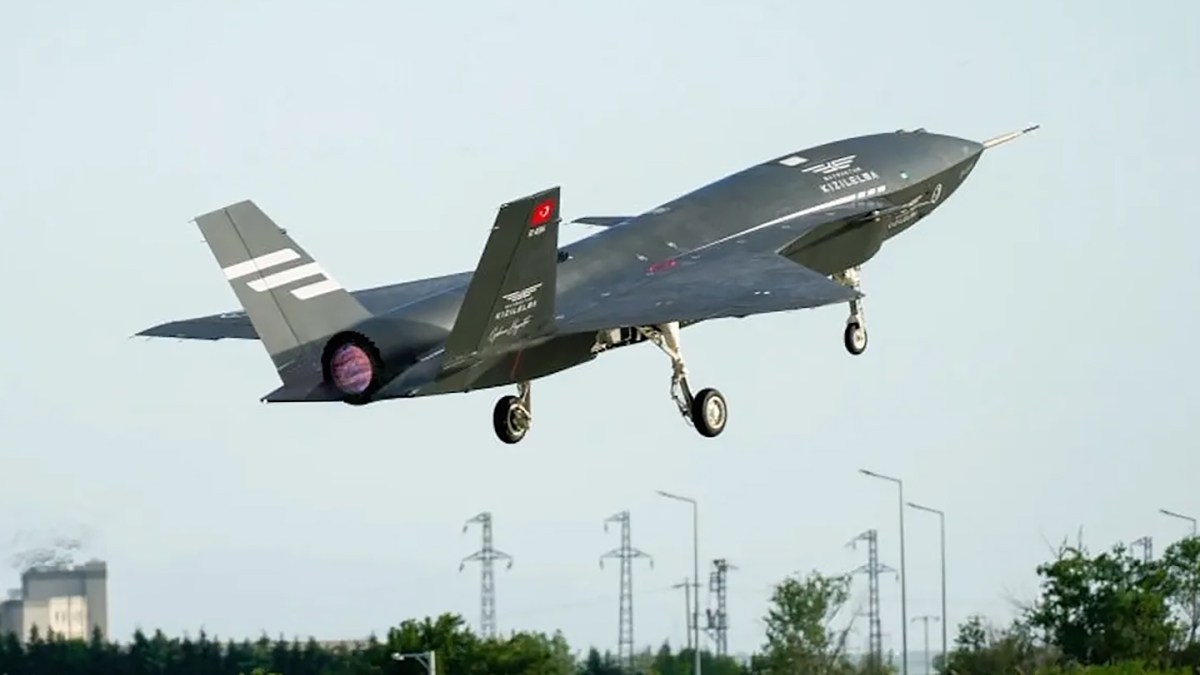
Turkey’s Baykar and Italy’s Leonardo have recently made significant strides in military aviation with the successful completion of live trials for their K-SWARM initiative. This innovative project aims to enhance autonomous air combat capabilities by integrating unmanned aerial vehicles (UAVs) with crewed aircraft. The ongoing advancements represent a pivotal moment in air combat evolution as defense technologies rapidly evolve.
K-SWARM Trials: A Milestone in Military Technology
The K-SWARM trials took place at Baykar’s flight test center in Çorlu, Turkey, where the Kizilelma uncrewed combat air vehicle (UCAV) collaborated with Leonardo’s M-346 light fighter-trainer. The operational tests included autonomous taxiing and takeoff by the Kizilelma before it formed up with the M-346, demonstrating crucial capabilities in crewed/uncrewed teamwork.
One notable feature of the trials was the use of Smart Fleet Autonomy algorithms from Baykar’s Hardware-in-the-Loop (HIL) Laboratory. During the mission, after the initial commands were issued by the M-346 pilots, the drone autonomously executed various maneuvers, underscoring the efficacy of advanced algorithms in combat scenarios.
Technological Synergy and Future Developments
The collaboration between Baykar and Leonardo relies heavily on a sophisticated radio-frequency data exchange system that facilitates seamless communication between the two aircraft. This hands-on approach to integrating crewed and uncrewed operations extends the operational range and versatility of military assets.
Enhancements in this realm are expected through future K-SWARM trials that introduce additional complexities and operational requirements. The focus is likely to be on developing situational awareness and further advancing the operational capabilities of these unmanned systems, allowing for more intricate mission execution.
The Evolution of the Kizilelma UCAV
The Kizilelma has rapidly gained attention as a promising fighter-like UCAV, primarily designed for advanced air combat. Initially launched in the public eye in July 2021, it has since achieved notable developmental milestones, including its first brief flight in December 2022. The UCAV is expected to operate alongside Turkey’s next-generation TF Kaan fighters, providing a formidable aerial duo.
Reportedly designed with reduced-observable characteristics and supersonic capabilities, Kizilelma’s dual potential as both a combat asset and a tech demonstrator will likely position Turkey to not only meet its own defense needs but also to capture international interest in its burgeoning defense export market.
A Broadening Horizon for Future Combat
These developments reflect a larger trend toward crewed-uncrewed teaming in military aviation, gaining traction in countries like the U.S. and China. The successful trials conducted by Baykar and Leonardo place Turkey among a select group of nations advancing in this domain, particularly in the context of Cost-Effective Combat Aircraft (CCAs).
As air forces globally seek affordable ways to boost their combat capabilities without relying solely on increasingly expensive crewed fighters, innovative solutions like Kizilelma demonstrate the promise of integrating autonomous drones into traditional combat roles. The overall trajectory of these advancements could fundamentally reshape the landscape of air combat in the years to come, as technology and strategy converge to create more expansive and dynamic military operations.