
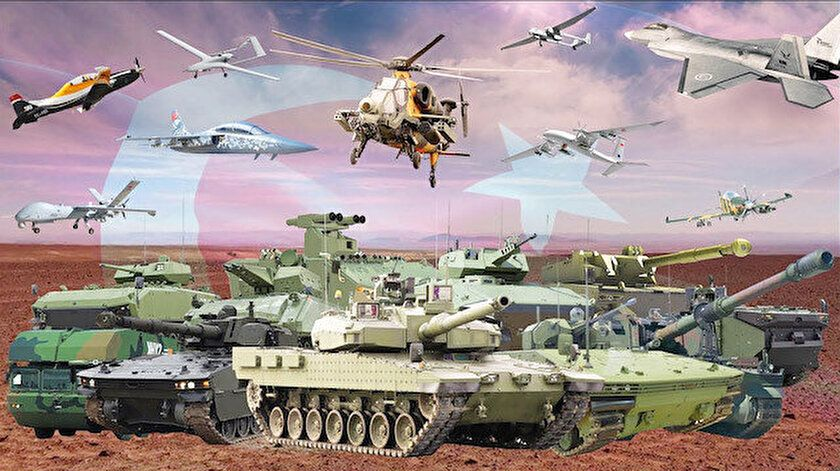
Türkiye’s defence and aerospace sector is experiencing robust growth, projected to reach $20 billion in contracts by 2026. This remarkable leap underscores the industry’s expanding manufacturing capabilities and growing international collaborations. Haluk Görgün, the head of Türkiye’s Presidency of Defence Industries (SSB), shared these insights during a recent workshop focused on subcontracting and supply management.
Strength in Domestic Partnerships
Görgün revealed that major Turkish defence manufacturers, such as ASELSAN, ROKETSAN, Turkish Aerospace Industries (TUSAŞ), HAVELSAN, and STM, have engaged with over 16,000 domestic suppliers over the past three years, placing orders exceeding $20 billion. Currently, domestic orders stand at an impressive $13.4 billion, showcasing the industry’s commitment to local procurement. This strong foundation in domestic partnerships has contributed significantly to Türkiye’s capabilities in defence manufacturing.
The push for international exports is evident as Türkiye increasingly positions itself in global defence markets. Exports of unmanned aerial vehicles, aircraft, missiles, and advanced naval platforms are on the rise, contributing to a more significant share of the national economy. The Türkiye Exporters’ Assembly reports that exports in the defence and aerospace sector surged by 15.6% year-on-year, totaling $6.93 billion from January to September 2026.
Rising Global Standing
Türkiye’s position in the international arms market is gaining momentum, with the Stockholm International Peace Research Institute (SIPRI) ranking Türkiye as the 11th largest exporter of major arms between 2021-2025. This is a significant increase from a 0.9% global share during 2016-2020 to 1.8% during the more recent period. Major markets for Turkish arms include Pakistan, the United Arab Emirates, and Ukraine, which together accounted for a substantial share of the exports.
The recent Defence News ranking underscores this growth, featuring five Turkish manufacturers among the world’s top 100 defence companies. ASELSAN ranks 40th globally, with a revenue of approximately $4.46 billion, a notable 26% increase compared to the previous year. Turkish Aerospace Industries holds the 48th position, while ROKETSAN and ARCA Defence follow closely. The combined defence revenue from these companies reached nearly $15 billion in 2025, reflecting the industry’s diverse capabilities in advanced military technologies.
Major Contracts and Future Prospects
Türkiye has secured significant contracts that bolster its defence exports. One key agreement involves the sale of 48 KAAN fighter aircraft to Indonesia, valued at an estimated $10 billion. This deal underscores a shift towards high-value, long-term defence collaborations, which are becoming increasingly important in Türkiye’s export strategy. Additionally, the naval segment has seen substantial agreements, such as the partnership for constructing MILGEM-class corvettes with Pakistan.
As 2026 progresses, Türkiye’s defence industry is expected to sustain its upward trajectory, building on existing partnerships and fostering new collaborations across Europe, Asia, and Africa. The growing demand for Turkish-manufactured defence platforms, from unmanned systems to advanced weaponry, enhances the country’s standing in the global market.
In conclusion, the anticipated rise in defence contract value to $20 billion illustrates Türkiye’s commitment to expanding its defence capabilities. The real impact of these agreements on future export revenues will depend on production timelines and contract execution. Nonetheless, the country’s trajectory in defence manufacturing indicates a bright future for its global defence industry.