
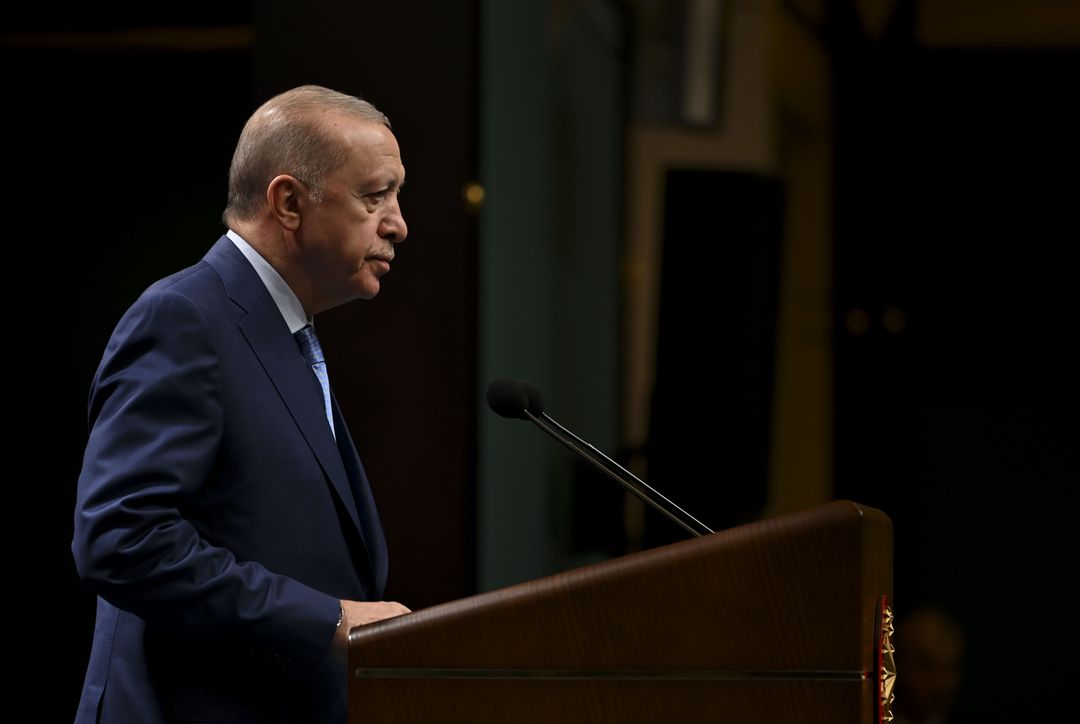
Türkiye’s President Recep Tayyip Erdogan has strongly criticized Israel’s recent actions against the Global Sumud Flotilla. He labeled these actions as “piracy and banditry,” urging the international community to take a stance against what he termed Israel’s “lawless behavior.”
Humanitarian Mission Under Siege
Following a Cabinet meeting in Ankara, Erdogan addressed reporters, expressing that Israel’s aggressive interception of the aid mission would not diminish global solidarity with the Palestinian cause or hinder the pursuit of justice for Gaza. He emphasized that the flotilla is fundamentally a humanitarian initiative supported by activists from nearly 40 nations, aiming to provide vital assistance to those in need.
Erdogan did not hold back in his condemnation, stating, “We condemn Israel’s piracy and banditry in the strongest terms.” His remarks underline the seriousness of the situation and highlight the broader implications for humanitarian efforts in the region. The flotilla’s mission represents a collective effort to address humanitarian crises stemming from ongoing conflicts.
Call for International Action
The Turkish President urged the global community to take decisive steps in response to Israel’s actions. He accused the Israeli government of perpetually violating international law through its ongoing blockade of Gaza and repeated attacks that threaten the lives and well-being of innocent civilians. Erdogan’s calls resonate with a growing sentiment for accountability regarding the treatment of Palestinians and the need for international intervention to uphold humanitarian principles.
Erdogan’s insistence on unity among nations against such actions underscores the importance of global cooperation in addressing humanitarian issues. He believes that unwavering support for the rights of Palestinians is essential not only for regional stability but also for the integrity of international law.
Implications for Regional Stability
The targeting of humanitarian aid convoys raises alarm not just for the immediate impact on those reliant on assistance, but for the broader geopolitical implications. Erdogan’s outcry reflects deep concerns about the rights of Palestinians and the importance of humanitarian access amid conflict. Sustained efforts to provide aid to Gaza face obstacles not only due to blockades but also aggressive actions from armed forces.
As nations watch closely, Erdogan’s remarks may catalyze further discussions around humanitarian interventions and draw attention to the necessity of enforcing international law. The case of the Global Sumud Flotilla brings to light critical ongoing challenges regarding humanitarian efforts in conflict zones and the obstacles that activists encounter.
In conclusion, the situation surrounding the Global Sumud Flotilla has ignited a passionate response from Türkiye’s leadership, highlighting urgent calls for international solidarity and action. Erdogan’s statements serve not only as a condemnation of Israel’s actions but also as a clarion call for justice and assistance for the people of Palestine. The world’s response to these developments will be critical in shaping the future of humanitarian aid initiatives and the quest for lasting peace in the region.