
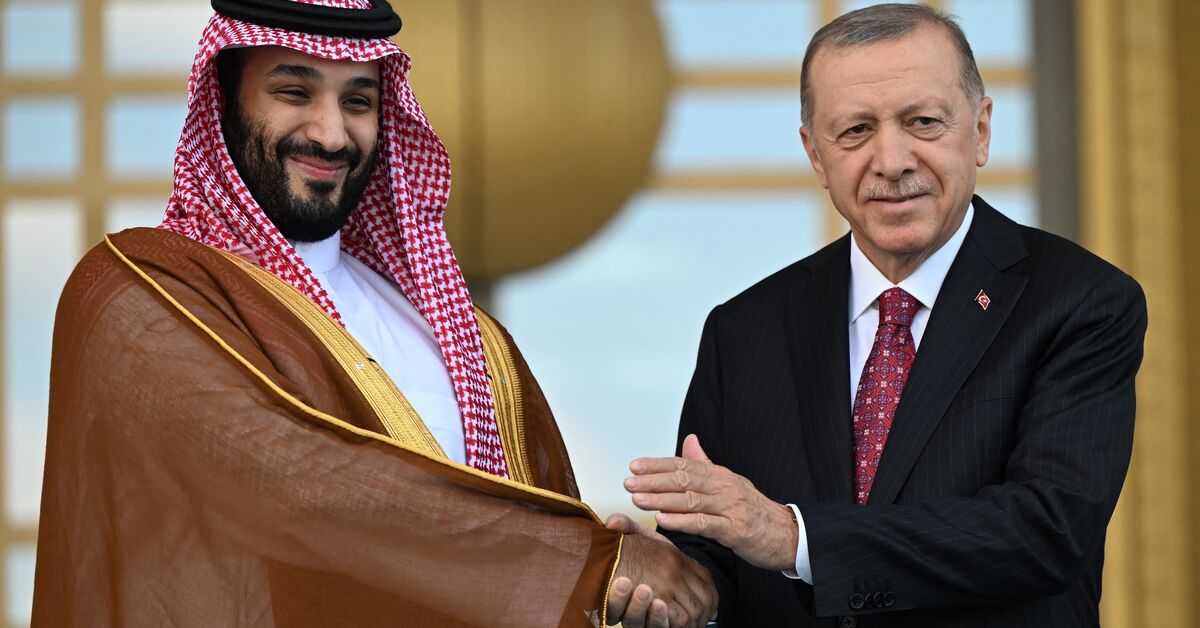
Turkish President Recep Tayyip Erdogan is scheduled to visit Saudi Arabia for crucial discussions with Crown Prince Mohammed bin Salman and Pakistani Prime Minister Shehbaz Sharif. This trip underscores the increasing collaboration among these three regional powers, specifically focusing on security and defense matters amid ongoing tensions in the Middle East.
Key Objectives of the Meeting
Erdogan’s visit will feature a tri-party meeting alongside Sharif and the Crown Prince. Turkish presidential communications chief Burhanettin Duran highlighted that the agenda would likely cover essential topics like regional security, maritime threats, the conflict involving Iran, and broader defense cooperation strategies. This strategic dialogue is timely, given Saudi Arabia’s recent announcement of a multinational maritime defense coalition aimed at safeguarding critical shipping routes in the Red Sea and surrounding areas from threats posed by Iran-backed Houthi rebels in Yemen.
Pakistani Prime Minister Shehbaz Sharif has arrived in Saudi Arabia with a high-ranking delegation, including the Chief of Army Staff, Field Marshal Asim Munir, to discuss vital security partnerships. The collective emphasis on defense indicates a shared recognition among these countries of the necessity to enhance cooperation to stabilize the region. Although Turkey has not explicitly declared a role within the new coalition, Ankara has voiced its backing for the initiative, reinforcing its commitment to regional security and solidarity with Saudi Arabia.
Implications of Erdogan’s Regional Diplomacy
The diplomatic engagement among Turkey, Saudi Arabia, and Pakistan bears significant implications for the regional landscape. As Ankara intensifies its efforts to bolster alliances, particularly in light of the ongoing Iran conflict, it is positioning itself to wield greater influence in a region marked by instability, exemplified by the fragile ceasefire in Gaza and the complex geopolitics of the eastern Mediterranean. Turkey aims to secure broader regional support to increase pressure on Israel, viewing Israeli actions as destabilizing and expansionist.
Turkish Foreign Minister Hakan Fidan underscored the urgency of addressing threats to regional stability, identifying Israel as a key player undermining peace. This sentiment resonates with ongoing dialogues focused on forging a robust alliance that not only addresses security concerns but also advances diplomatic initiatives to mitigate broader turmoil in the Middle East.
Strengthening Defense Ties and Economic Collaborations
In addition to security alignment, Turkey is also looking to enhance its defense exports and foster joint production initiatives with Gulf nations. Saudi Arabia has already signed significant agreements with Turkish defense companies, including one for drone procurement and another for cooperative production of military technologies. These agreements mark a historic development in Turkey-Saudi relations, emphasizing defense cooperation as a vital pillar of their partnership.
By the end of 2025, bilateral trade between Turkey and Saudi Arabia is projected to reach $8.5 billion, showcasing the economic dimensions of this growing alliance. Erdogan’s prior visit to Saudi Arabia in February also hinted at a sustained commitment to these strengthening ties, focusing on both economic and defense collaborations.
Erdogan’s upcoming trip represents not merely a diplomatic exercise but a strategic maneuver in the quest for greater influence and stability in a region characterized by complex challenges. With an emphasis on security, defense, and economic partnerships, this visit is poised to further solidify Turkey’s role as a key player in the geopolitical landscape of the Middle East.