
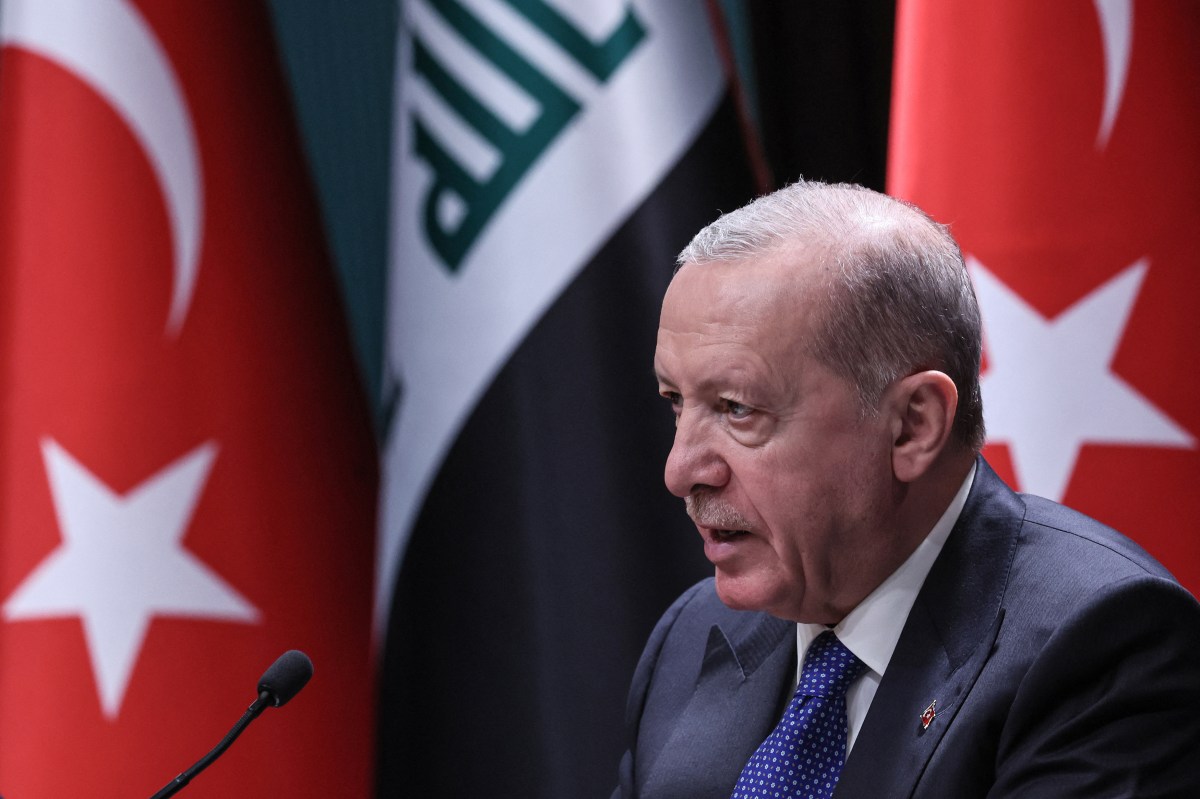
The evolving landscape in Syria poses significant implications for U.S. security interests. Following the ousting of Bashar al-Assad, Iran’s previously unchallenged dominance in Syria faced a major setback. However, this shift has opened the door for other regional powers, notably Turkey, Saudi Arabia, and Qatar, all vying to influence Syria’s political, economic, and security frameworks. As Turkey’s involvement deepens, it potentially undermines U.S. national security objectives.
Turkish Intervention and its Implications
Recent military actions, such as Israeli airstrikes on the Abu al-Duhur airbase in Idlib, underscore the fragile post-Assad dynamics. Initially focused on countering Iranian military presence, Israeli operations have now shifted attention to preventing Turkish incursions. This illustrates how Syria’s power void is attracting various actors, with Turkey’s ambitions increasingly becoming a concern for both Israel and the United States.
Under Assad’s regime, Iran invested heavily in what it termed a “Marshall Plan” for Syria, aiming to extend its influence through extensive development projects. With a projected cost of around $400 billion, Iran’s plans encompassed vital infrastructure that would allow Tehran to solidify its grip on the war-torn nation. However, the fall of Assad in December 2024, at the hands of opposition forces, has led to a far more complicated scenario.
The Rise of New Power Dynamics
The emergence of Ahmad al-Sharaa, a former al-Qaeda commander, as Syria’s new president signals a notable shift. While attempts have been made under his leadership to distance the new administration from Iranian influence, the reality is that Turkey’s role has become increasingly pronounced. Turkey shares a long border with Syria, and it has been instrumental in supporting rebel factions that have now taken control of the Syrian state.
Tensions are exacerbated by the unsettling reality facing Kurdish fighters who allied with U.S. forces against ISIS. These fighters now find themselves marginalized in a new Syria that favors Turkish influence. This situation poses a delicate dilemma for U.S. policymakers, as the former allies may feel discarded in the region’s ongoing power struggle.
Turkey’s Expansionist Aspirations
President Recep Tayyip Erdoğan has revitalized narratives reminiscent of the Ottoman Empire, emphasizing Turkey’s intention to reclaim a sphere of influence over historical territories. Beyond addressing their aspirations in Syria, Turkey has demonstrated military presence beyond its borders in places like Cyprus and Libya, as well as strategic alliances like the mutual-defense pact with Saudi Arabia and Pakistan. This unified front enhances Turkey’s military capabilities and poses a formidable challenge to regional stability.
The potential for a Turkish-aligned Syria could be more hazardous than the regime under Iran, according to assessments by Israeli military panels. The recommendation for Israel to bolster its defense spending reflects concerns about Erdoğan’s ambitions and the potential for proxy conflicts near Israel’s borders. Coupled with U.S. moves, such as the lifting of sanctions on Turkey and the sale of advanced military equipment, the strategic landscape becomes increasingly precarious.
In summary, as Turkey attempts to consolidate its grip in Syria to fill the regional power vacuum left by Iran, it may inadvertently pose a greater threat to U.S. interests and regional allies like Israel. While new partnerships and reconstruction efforts, led by Saudi Arabia, could provide opportunities, the risk of creating a Turkish-dominated landscape necessitates a reevaluation of U.S. policies in the region. The stakes are high, and the geopolitical chessboard is rapidly evolving in ways that challenge U.S. security objectives.