
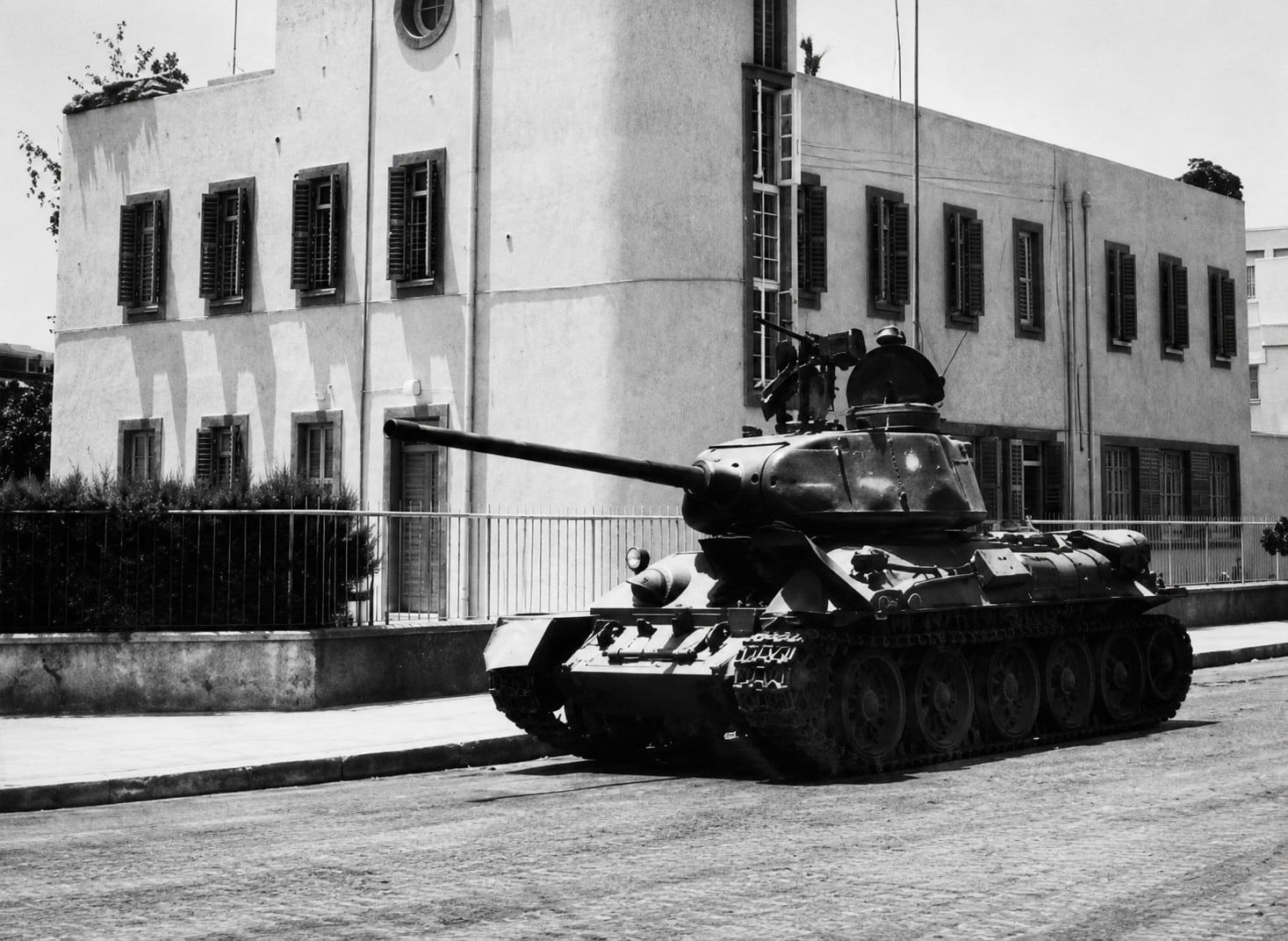
Turkey’s invasion of Cyprus in 1974 and the conflict in Ukraine initiated by Russia share striking similarities, according to a recent study. Both scenarios reflect a strategy marked by political instability, military interventions, and the quest for permanent territorial gains. Published in the journal Comparative Strategy, the research delves into how nations often weaken their targets prior to launching military operations, subsequently consolidating control through political maneuvering.
Overview of Revisionist Strategies
Researcher Michail Ploumis from the National and Kapodistrian University of Athens outlines a “revisionist strategy” comprising three crucial stages: undermining political institutions, conducting military operations, and solidifying control over occupied territories. These stages can occur simultaneously and represent a calculated approach to altering territorial borders. The study traces this pattern back to Cyprus, where a coup executed by Greece’s military junta successfully removed President Archbishop Makarios on July 15, 1974. Just five days later, Turkey invaded, capturing 36% of the island by August. Declarations of independence by the Turkish Republic of Northern Cyprus have since complicated any prospects for resolution, underscoring the enduring legacy of military intervention.
Comparative Analysis: Turkey and Russia
The study asserts that Turkey leveraged the coup as a pretext for premeditated military aggression. Over the years, Turkey has employed “coercive gradualism” to secure international acknowledgment of a separate Turkish Cypriot state. Similarly, Russia employed a comparable strategy during its 2014 annexation of Crimea and subsequent actions in eastern Ukraine. Moscow promoted narratives questioning Ukrainian state sovereignty, supported separatist factions, and initiated cyber assaults before launching a full-scale invasion. The official Russian justification painted the invasion as a “special military operation” aimed at protecting Russian speakers and “denazification,” a rationale strikingly akin to Turkey’s justification for its actions in 1974.
Differences in Resistance and International Support
Despite these parallels, significant differences exist, particularly concerning the response to aggression. In 1974, Cyprus received little effective assistance from the international community, leading to a relatively uncontested occupation. In contrast, Ukraine’s resistance has been bolstered by extensive Western support. Initial Russian attempts to capture Kyiv met with logistical failures, poor military execution, and fierce Ukrainian resistance, which has been crucial in thwarting Moscow’s broader ambitions.
Furthermore, the study mentions that after early setbacks, Russia redirected its focus towards the eastern and southern territories of Ukraine. By September 2022, Russia moved to annex these areas following controversial referendums under far from ideal conditions. This was also informed by efforts to alter demographics within occupied regions, paralleling Turkish settlement policies in Northern Cyprus.
In conclusion, this analysis suggests that the responses to military interventions vary significantly based on political unity, military readiness, and strategic alliances. While Turkey faced minimal resistance during its 1974 invasion, Ukraine’s aid from Western allies demonstrates how robust support can disrupt territorial ambitions. Although conflicts may persist for decades, the effective mobilization of international partnerships is key in countering such aggression and promoting lasting stability.