
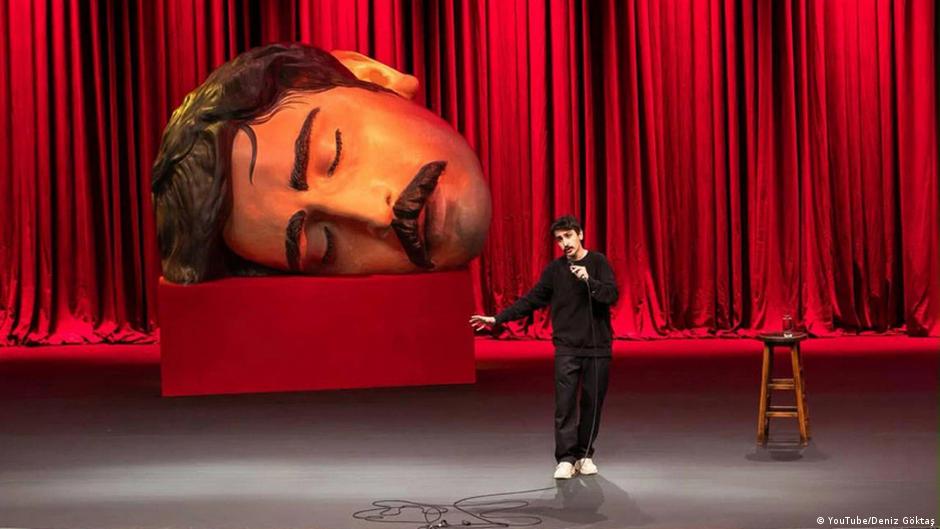
Turkish stand-up comedian Deniz Goktas was detained upon his arrival at Istanbul International Airport on Thursday after returning from abroad. This incident has sparked considerable attention, especially in light of recent controversies surrounding his comedy.
### The Context of Goktas’ Detention
Goktas’ detention comes on the heels of a viral video he posted online. On June 30, he shared a roughly three-minute clip on social media, captioning it, “My favorite joke, for some reason, hasn’t been shared much.” This video quickly resonated with many, racking up over 6 million views within just 72 hours. In addition, his entire 90-minute comedy set on YouTube garnered more than 8.5 million views as of Thursday afternoon. In the shorter clip, Goktas made comments about Turkey’s President Recep Tayyip Erdogan and matters related to Islam, which could be construed as provocative.
### Legal Implications in Turkey
Following the video’s rise in popularity, the Istanbul chief public prosecutor’s office announced it had received 185 complaints regarding the content. Consequently, an investigation was launched, centering on Article 216 (3) of the Turkish Penal Code. This specific article criminalizes “publicly insulting religious values adopted by a segment of the public,” and those found guilty can face imprisonment ranging from six months to a year. Goktas was apprehended as a part of this inquiry. Importantly, prosecutors have not confirmed that he is formally under arrest or facing charges but indicated he is currently under investigation.
### Political Reactions and Freedom of Expression
The public and political response to Goktas’ video has ignited discussions in the Turkish parliament. Lawmakers from both President Erdogan’s conservative Justice and Development Party (AKP) and the left-leaning Republican People’s Party (CHP) engaged in a debate over the video’s contents. This conflict highlights a larger national issue: balancing the protection of “sacred values” with the fundamental right to “freedom of expression.” In a country where expressing dissent can lead to serious legal repercussions, the implications of comedic commentary are becoming increasingly significant.
### Human Rights Concerns
According to the US Commission on International Religious Freedom (USCIRF), Turkey’s penchant for prosecuting those who insult religious values violates its human rights commitments. Alarmingly, Turkey’s approach to these offenses is notably harsh compared to other nations in or partially in Europe, except for Russia. The USCIRF indicates that the Turkish government, including the president and other officials, leverage these laws to silence critics and quell dissenting views, particularly in matters of religion.
In recent years, Erdogan’s administration has come under scrutiny for intensifying efforts to prosecute individuals who criticize the government or express divergent beliefs. This trend has raised significant concerns about the narrowing space for free speech within Turkey. As the country prepares for an upcoming NATO summit in Ankara, the political climate is one of increased security and heightened scrutiny over dissent.
In summary, the situation surrounding Deniz Goktas serves as a stark reminder of the precarious interplay between humor, politics, and legal consequences in Turkey. As the nation grapples with these issues, the ongoing legitimacy of artistic expression remains in the balance, reflecting broader questions regarding freedom of speech in a complex and changing political landscape.