
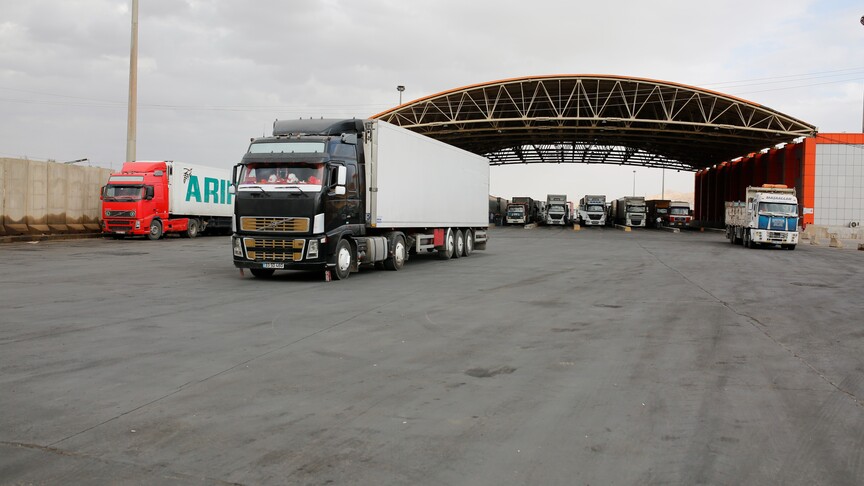
Integrating the Ibrahim Khalil border crossing into Iraq’s automated customs system could play a crucial role in boosting trade between Türkiye and Iraq to an ambitious target of $30 billion, according to Turkish Trade Minister Omer Bolat. This assertion was made during the Türkiye-Iraq Business Roundtable Meeting held in Ankara, where he discussed the expanded economic relations between the two nations.
Strengthening Economic Ties
Bolat highlighted that trade relations have extended across various sectors, including investments, contracting, transportation, defense, tourism, and services. Presently, bilateral trade stands at approximately $17 billion, a notable decrease from a peak of $24 billion during the COVID-19 pandemic and an era of high energy prices. As the fifth-largest trading partner for Türkiye, Iraq is integral to Turkey’s aspirations for economic growth, with both countries committed to raising this trade figure to $30 billion over the medium term.
Notably, Turkish contractors have executed a remarkable 1,157 projects worth about $40 billion in Iraq, establishing the country as Türkiye’s third-largest market overseas. This achievement underscores the mutual benefits derived from increased collaboration and assertive investment strategies.
Importance of Customs Integration
The Turkish Trade Minister emphasized the pivotal role of integrating the Ibrahim Khalil border crossing with Iraq’s Automated System for Customs Data (ASYCUDA). Bolat articulated that doing so would substantially streamline processes, reduce uncertainty, and hasten trade activities between the two regions. This integration is a critical step towards achieving the goal of elevating trade volume to $30 billion.
Additionally, Türkiye is prepared to assist Iraq in implementing the TIR Convention, which focuses on customs transits. Bolat stressed the necessity for bilateral agreements on investment protection and measures to avoid double taxation, which would further solidify the economic ties and facilitate smoother business transactions.
Development Road and Future Prospects
In light of geopolitical tensions in the Gulf, Bolat argued that there is an undeniable need to fortify trade and energy corridors. He advocated for the full operational capacity of the Kirkuk-Ceyhan oil pipeline, the construction of a new pipeline from Basra to Türkiye’s Ceyhan terminal, and advancements on the Development Road project. This ambitious corridor is intended to connect Iraq’s Grand Faw Port with Europe via Türkiye, promoting increased trade efficiency.
Furthermore, the Turkish minister pointed out that the recently established transit visa arrangement with Saudi Arabia has unlocked new trade routes through Iraq, facilitating commerce with Saudi Arabia, Kuwait, and the broader Gulf region. Bolat expressed interest in hosting the next Türkiye-Iraq Joint Economic and Trade Committee meeting within the year, signifying Türkiye’s commitment to fostering ongoing dialogue and cooperation.
Nail Olpak, president of Türkiye’s Foreign Economic Relations Board, emphasized the need for harmonizing customs practices between Iraq’s federal authority and the Kurdish Regional Government. He also urged improvements in banking channels for trade payments, enhanced e-visa procedures, and the provision of multiple-entry commercial visas for businesspeople, all essential measures for streamlining trade operations and fostering a more conducive environment for bilateral commerce.