
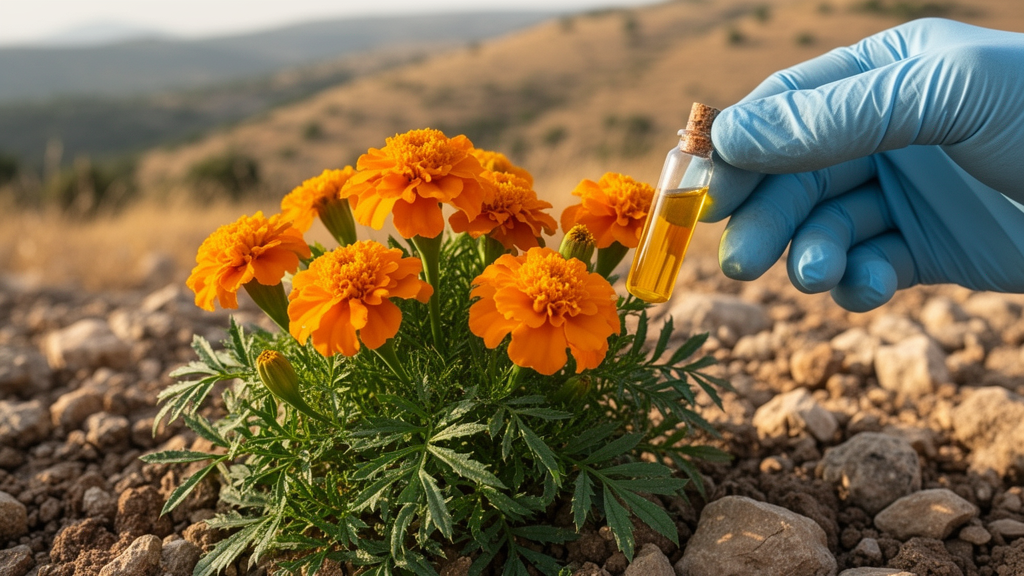
The pot marigold, known scientifically as Calendula officinalis, is a widely recognized medicinal plant with vibrant yellow flowers. This member of the daisy family has been cultivated for its healing properties across various cultures, particularly in Europe and Asia. Despite its popularity in herbal medicine, the biology of wild C. officinalis has not been thoroughly documented. A recent study published in Plant Biosystems aims to fill this knowledge gap by providing valuable insights into wild-growing populations of this species from Eskişehir Province in central Türkiye.
Understanding Wild Populations
Research into the morphological and anatomical characteristics of wild C. officinalis has been limited, with much of the existing literature focusing on cultivated plants. The study, led by Merve Kalas from Çukurova University along with Betül Demirci and Sevim Küçük from Anadolu University, involves detailed examinations of plants collected from four distinct wild populations in Eskişehir. This region, characterized by its steppe-influenced climate and diverse ecosystems, presents a unique opportunity to understand the species’ adaptability in natural settings. Unlike commonly cultivated varieties that are often treated as annuals, findings indicated that the wild populations were primarily perennial, exhibiting prolonged flowering from spring through autumn, a feature that could offer valuable insights for breeders and ecologists.
Detailed Morphological and Anatomical Insights
Utilizing fresh specimens rather than dried herbarium samples, researchers provided meticulous descriptions of the vegetative and reproductive structures of the plant. This approach also allowed for the creation of original illustrations that serve crucial roles in botanical taxonomy. Such visual documentation is essential for distinguishing between truly wild plants and those that escaped from cultivation. For a highly variable species like C. officinalis, having verified morphological data from wild populations represents a significant resource for future research.
In their investigation of plant anatomy, the study revealed unique microscopic features characteristic of C. officinalis and the wider Asteraceae family. By employing classical techniques, the research examined sections of roots, stems, and leaves. Notably, researchers observed amphistomatic leaves, where stomata are located on both surfaces, and a bifacial mesophyll structure conducive to efficient photosynthesis. The roots demonstrated secondary growth patterns indicative of the plant’s perennial behavior.
Pharmacological Findings and Essential Oil Composition
A crucial aspect of the study was the examination of trichomes—tiny hair-like structures on the plant—which include both glandular and non-glandular types. Glandular trichomes are particularly significant as they synthesize and store volatile compounds found in essential oils. The study’s findings provide valuable anatomical markers that can help verify the identity of herbal products, combating issues of adulteration in the market.
The investigation into essential oils, extracted via hydrodistillation, yielded a detailed chemical profile of the plant’s volatile components, analyzed with gas chromatography and mass spectrometry. The primary compound identified was α-cadinol, comprising 30 to 34.5 percent of the oil content across all four populations. This was followed by other significant constituents, suggesting a stable chemical composition that may be genetically programmed rather than exclusively influenced by environmental variables. Such consistency distinguishes the wild C. officinalis from cultivated varieties, which often exhibit different oil profiles.
Implications for Future Research
The study ultimately establishes a foundational understanding of the wild C. officinalis populations, noting the importance of these genetic resources that may have been diminished through domestication. With their perennial life cycle, extended flowering periods, and unique essential oil composition rich in α-cadinol, these wild populations could serve as a critical resource for future taxonomic, pharmacognostic, and phytochemical research. As the demand for plant-derived medicines and natural ingredients rises, thorough documentation of such wild populations is essential for sustainable use and conservation efforts.
This comprehensive investigation represents a significant step forward in understanding the medicinal potential of pot marigold and sets the stage for further exploration into its properties and applications in herbal medicine.