
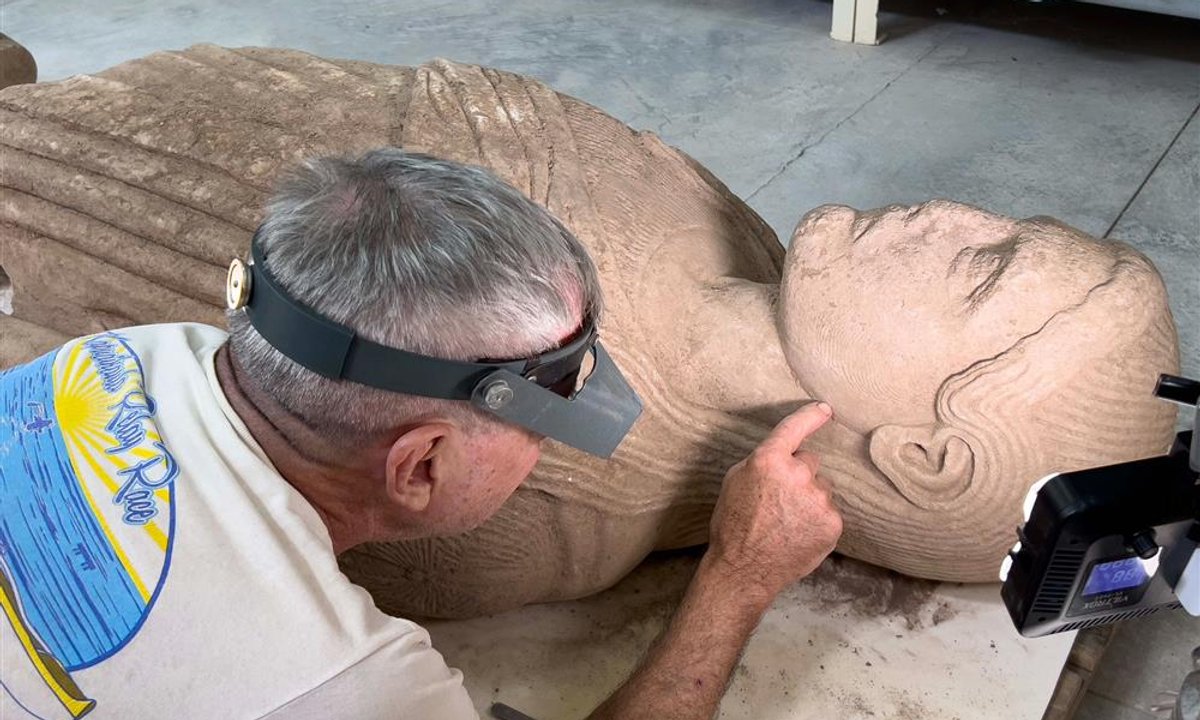
A significant archaeological discovery was announced by Turkey’s Ministry of Culture on August 4: an ancient statue believed to be around 2,500 years old has been found in Sardis, located in Manisa, Turkey. This monumental piece represents a young man holding fruit, and although it was excavated in two segments, it initially stood an impressive seven feet tall.
The Significance of the Sardis Statue
Dating back to the early 5th century BC, this statue offers a valuable glimpse into the art and social dynamics of a pivotal period in Greek history, marking the dawn of the Classical era. Remarkably well-preserved, the statue had been repurposed as a paving stone in a Roman-era colonnaded street, which helped protect it from weathering. The findings highlight not just the craftsmanship of the time but also the cultural interactions of Sardis, which served as the capital of the wealthy Lydian civilization that flourished between the 8th and 6th centuries BC.
Sardis is unique as it embodies a confluence of various cultures, being a key location at the intersection of the Greek world and Near Eastern civilizations. As a UNESCO World Heritage site, Sardis has attracted the attention of historians and archaeologists alike, eager to understand its rich past, including its time as part of the Achaemenid Persian Empire. The examination of the statue indicates a blend of different artistic styles, capturing the transition from earlier sculptural traditions to more nuanced representations that emerged in the classical period.
A Fusion of Artistic Traditions
The statue’s design reflects a fascinating mix of artistic influences. The pose and long hair evoke older sculptural conventions from the 6th century BC, while the detailing in the facial features and hands aligns with the stylistic trends of the 5th century BC. This overlap suggests that artists were keen to blend traditions as they drew upon the rich heritage left by their predecessors.
The garments depicted on the figure also reveal unprecedented details. The young man is adorned in a Greek-style outer cloak alongside a lighter inner garment marked with horizontal lines, a combination never previously observed in other statues from either Greece or Anatolia. These clothing traditions are indicative of the cultural tapestry that characterized Lydia at the time, offering deeper insight into the visual language and societal norms of this civilization.
Expert Reactions to the Discovery
Nicholas Cahill, the field director of the Sardis Expedition, expressed awe at the find, emphasizing that it challenges existing understandings of Lydia. Despite decades of archaeological work in Sardis, discoveries of such monumental sculptures remain exceptionally rare. Cahill noted the striking contrast within the statue—its ancient hairstyle and attire juxtaposed with a modern depiction of anatomical features, reflecting the sculptor’s awareness of contemporary trends in Greece and Italy while adhering to traditional methods.
Hector Williams, an archaeologist with extensive experience at the site, remarked that the statue is among the most unusual findings to emerge from excavations in western Turkey. He anticipates that scholars specializing in Greek sculpture will deeply engage with this discovery, which could serve as a critical reference point for studies focusing on the late archaic and classical periods.
In summary, this statue from Sardis not only enriches our understanding of Lydian culture but also highlights the artistic and social transitions of its time. With ongoing studies, it is poised to unlock further secrets of this ancient civilization.