
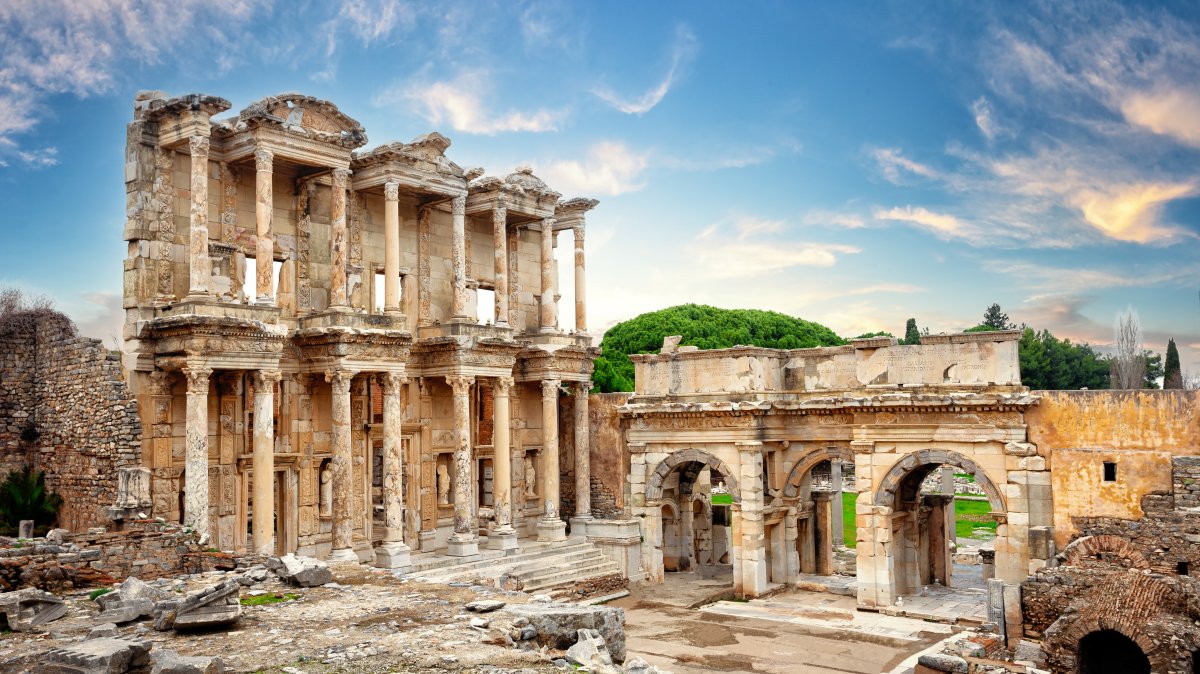
The recent gathering of the UNESCO World Heritage Committee in Busan, South Korea, highlighted Türkiye’s rich cultural heritage, showcasing ancient cities that reflect millennia of human civilization. Türkiye’s Ministry of Culture and Tourism has emphasized the significance of these UNESCO-recognized sites, revealing layers of history that speak to various myths, religions, and legacies.
The Legacy of Troy
The renowned archaeological site of Troy, situated in northwestern Türkiye’s Çanakkale province, is steeped in legend and history. Celebrated in Homer’s “Iliad,” Troy is not just a mythical location but also a real city dating back to approximately 3000 B.C. Its cultural significance has seen a resurgence, particularly with recent cinematic portrayals. The site was designated a UNESCO World Heritage Site in 1998, recognizing its profound archaeological importance.
Remarkably, the excavations of Troy commenced in 1871 and revealed that the city experienced multiple cycles of habitation and destruction over the centuries. Archaeologists have uncovered an impressive array of architectural remains, including a theater, baths, and an advanced sewage system, alongside nine layers of settlement that underline its continuous occupation.
Ephesus: A Cultural Hub
Moving on to another Site of global importance, Ephesus, located in İzmir province, was continuously inhabited for nearly 9,000 years. This ancient city has served as a vital center for trade, culture, and religion throughout various epochs including Hellenistic, Roman, and Byzantine periods. In 2015, Ephesus was recognized as a UNESCO World Heritage Site, celebrated for its various architectural achievements and urban planning.
The city is famed for housing the Artemision, one of the Seven Wonders of the Ancient World, along with notable Christian heritage sites, such as the Basilica of St. John and the House of the Virgin Mary. This amalgamation of sites makes Ephesus a unique confluence of religious history, celebrated by visitors from diverse backgrounds.
Aphrodisias: The Marvel of Sculpture
Aphrodisias, located in western Türkiye’s Aydın province, received UNESCO World Heritage status in 2017 due to its exceptional preservation of marble-built structures from the ancient world. Dating back to the fifth century B.C., the site holds remarkable artistic and architectural significance, particularly during the Roman era when it became a leading center for sculpture.
The nearby marble quarries were vital for crafting exquisite sculptures, contributing to the city’s reputation as an artistic hub. This ancient city exemplifies the rich exchange of cultural values and ideas flourishing in the Mediterranean during antiquity.
The Enigma of Pergamon
Nestled atop Kale Hill in İzmir, Pergamon is another UNESCO-listed marvel, acknowledged in 2014 for its impressive Hellenistic urban planning. It was home to monumental structures such as the Temple of Athena and the steepest theater of its time, showcasing the ingenuity of ancient architects. As the capital of the Hellenistic Kingdom and later the Roman province of Asia, Pergamon was pivotal in both governance and intellectual pursuits.
The site features several well-preserved buildings that date back to a flourishing cultural landscape, reflecting the continuous significance of Pergamon through various historical epochs, including the Ottoman period.
In summary, Türkiye’s UNESCO heritage sites are not only archaeological treasures but also vital connections to humanity’s shared history, preserving the stories of civilizations, cultures, and arts that have shaped the world we live in today. Each site, with its unique legacy and archaeological significance, invites exploration and appreciation of the richness of human achievement.