
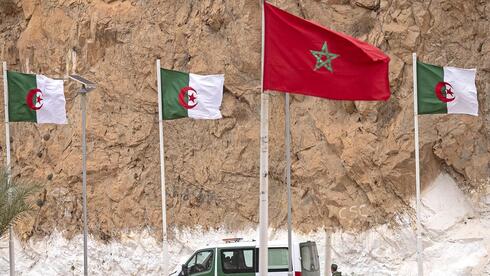
On September 10, 2026, Algeria took a significant diplomatic step by expelling the UAE ambassador and imposing restrictions on UAE-registered military and civilian aircraft, although commercial flights remain unaffected until the year’s end. This abrupt decision signals a deeper shift within the regional geopolitical landscape. Although official statements from Algeria cited “provocative and hostile” actions by the UAE, there was no explicit triggering event mentioned.
Contrasting Power Models: Algeria vs. UAE
Algeria’s geopolitical strategy leans heavily on a state-centric model that emphasizes territory, energy resources, military capability, and formal diplomatic relations. In sharp contrast, the UAE adopts a network-driven approach that leverages capital, logistics, and commercial infrastructure, significantly expanding its reach beyond its borders. This networked model can exert influence more rapidly and flexibly, especially in fragmented political environments, making the differences in approach between Algeria and the UAE increasingly pronounced as they compete in various regional arenas.
The New Dynamics in Morocco
A vivid example of this shift can be observed in the changing relationship dynamics involving Morocco. Historically, the tensions between Algeria and Morocco focused on the issue of Western Sahara, with Algeria backing the Polisario Front for decades. However, the situation evolved dramatically in November 2020 when the UAE established a consulate in Laayoune, signaling its backing for Morocco’s territorial claims. This occurred alongside Morocco’s normalization with Israel under the Abraham Accords and U.S. recognition of Moroccan sovereignty over Western Sahara, thereby altering the longstanding rivalry into more complex geopolitical calculations.
The result is not simply an anti-Algerian military collaboration; rather, it is a web of overlapping partnerships that include UAE investments in Moroccan infrastructure and energy. Such initiatives deepen Morocco’s external alliances while positioning Algeria at a disadvantage, limiting its ability to counter these moves through conventional diplomatic tactics.
Shifts in the Sahel Region
Similar dynamics are mirrored to the south in the Sahel, where Algeria has traditionally played a mediating role, famously highlighted by the 2015 Algiers Agreement on Mali. However, recent military coups in Mali, Burkina Faso, and Niger have disrupted the diplomatic frameworks that Algeria relied on to exert influence. New military regimes have shown reluctance to engage in traditional diplomatic structures that they perceive as limiting their sovereignty. Instead, they are gravitating towards alternative partnerships that offer resources with fewer political strings attached, creating a vacuum that the UAE is ready to fill with its own investments and logistical capabilities.
In regions like the Horn of Africa, the UAE has made significant inroads through investments in ports and security infrastructures, effectively offering influence where traditional diplomatic engagements are weak. This shift underscores the UAE’s growing leverage in parts of Africa that Algeria once considered within its sphere of influence.
The Role of External Actors
Algeria’s challenges are accentuated by its marginalization from a broader security architecture that has emerged after the Abraham Accords. The growing collaboration among Morocco, the UAE, and Israel has fostered a dense network of security relationships focusing on intelligence sharing, maritime security, and defense technology. Algeria’s refusal to formalize ties with Israel and its commitment to a pro-Palestinian agenda have left it outside this influential network.
As U.S. interests shape the strategic alliances in North Africa, it becomes crucial to acknowledge that Algeria and its regional partners are not interchangeable. The Algerian state remains an important energy provider and retains diplomatic significance, but its autonomy and historical defense ties with non-Western powers, particularly Russia, complicate its relationships with the U.S. and its allies.
In conclusion, the rupture in relations between Algeria and the UAE is not a signal of collapsing Arab diplomacy but rather a reflection of an evolving regional architecture where power dynamics are increasingly defined by economic capacity and adaptive security partnerships. Algeria may hold significant assets, but it faces a future of competitive pressures from networked powers that are reshaping influence across North Africa. The geopolitical outlook reveals a profound transformation, prompting the need for countries like Algeria to reassess their traditional diplomatic strategies in an increasingly interconnected world.