
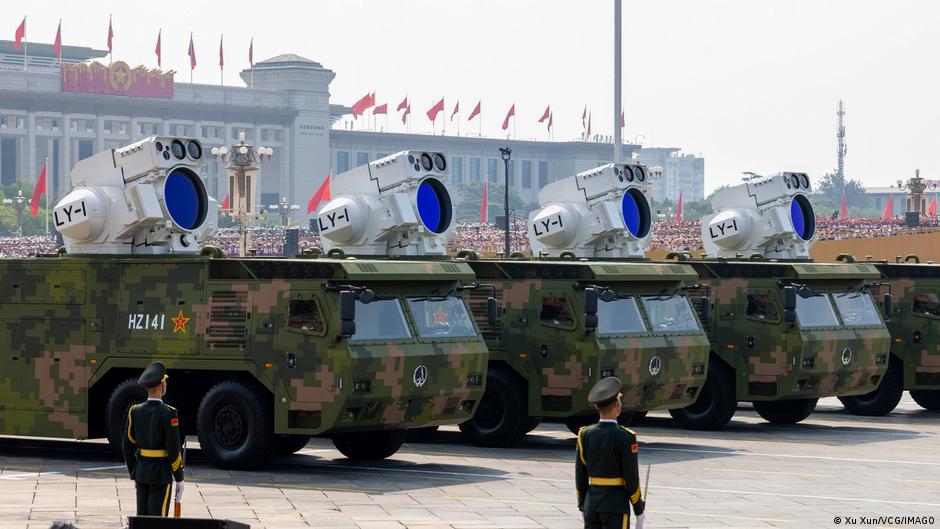
In recent developments, laser weapon systems are becoming a focal point in the military strategies of Middle Eastern nations. A Chinese-manufactured laser unit was recently spotted at Dubai Airport, sparking interest and concern among military analysts and observers. This technology, designed to target and neutralize drones, represents a growing trend towards advanced defensive capabilities in the region.
Emerging Laser Technologies in the UAE
The United Arab Emirates (UAE) has been proactive in enhancing its air defense systems. Alongside the Chinese laser system, the UAE is currently utilizing Israel’s Iron Beam, a prominent laser weapon offered to them in cooperation with Israeli forces. Recent reports also indicate efforts to acquire American laser technologies, further diversifying their defense arsenal. The UAE’s ambitions extend beyond mere acquisition; they are collaborating with European and American companies to develop indigenous laser weapon systems, emphasizing a strategic shift towards self-reliance in military capabilities.
Meanwhile, Oman has also entered the arena, reportedly acquiring Chinese laser weapons, which showcases the broader regional interest in advanced military technologies. Qatar has similarly expressed intentions to bolster its defenses through the purchase of systems that include laser weaponry as a response to regional threats, especially following tensions that saw Israeli actions in its capital.
The Role of Lasers in Modern Warfare
Despite sounding like something out of a science fiction film, the use of laser weapons has gained serious traction in military discussions, particularly as conflicts evolve. Jared Keller, a former defense journalist, notes that the ongoing conflict involving Iran has accelerated advancements in laser technology, spurring interest from various countries. The UAE is rapidly becoming a hub for laser weapon systems, indicating a seismic shift in regional defense strategies.
These weapons, classified as Direct Energy Weapons (DEW), utilize focused energy beams for targeting. The financial implications are significant; laser shots can cost as little as $3 to $5, making them an attractive countermeasure against drones, which can be produced and deployed at a fraction of the cost. Keller highlights that conventional arms are becoming economically unfeasible for targeting low-cost drones, leading nations to explore affordable alternatives like lasers.
Challenges and Limitations of Laser Technology
However, Keller warns that lasers should not be viewed as a “magic bullet.” For Middle Eastern nations, their effectiveness is maximized when integrated into a multi-layered defense system. Lasers must maintain a certain dwell time on a target for effectiveness, complicating their use against fast-moving drones. Additionally, environmental factors—such as humidity, dust, or precipitation—can hinder laser performance, leading to operational challenges.
Israel’s Iron Beam, despite being a frontrunner in this technology, still has limitations. While it has been engaged in drone neutralization during confrontations, it lacks sufficient battery support for optimal functionality. This suggests the transfer of laser systems, such as the Iron Beam to the UAE, might have more geopolitical motivations than immediate tactical advantages.
These developments underline the strategic landscape in the Gulf region, where nations are seeking diverse defense solutions amid persistent threats from adversaries. Countries like the UAE and Saudi Arabia are keen on reducing reliance on a single ally, particularly the United States, reinforcing their military independence through a spectrum of advanced technologies. As the geopolitical climate evolves, the need for effective defense against regional threats has never been more critical.