
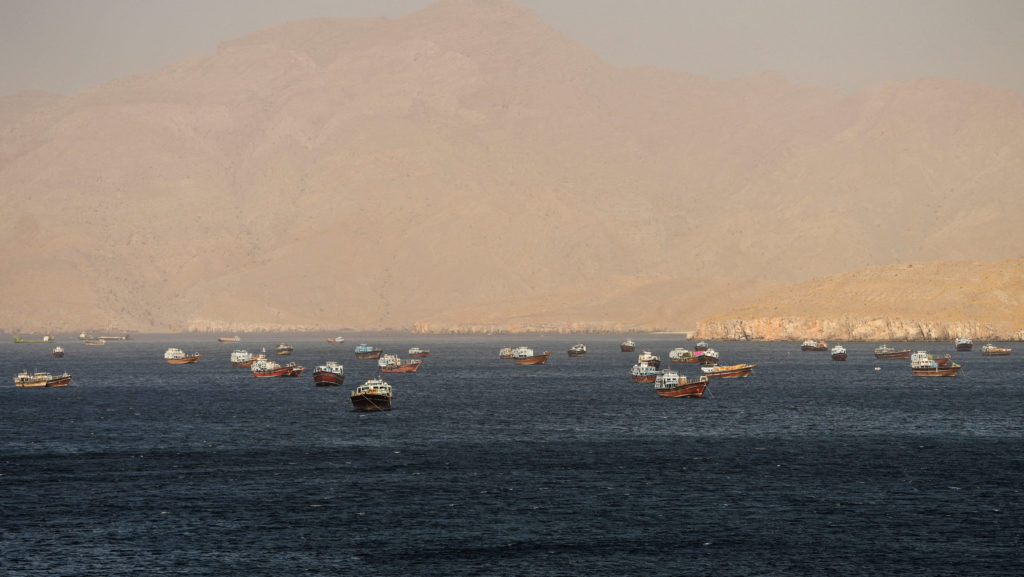
DUBAI, United Arab Emirates — Recent developments have intensified tensions in the Strait of Hormuz, a strategic waterway crucial for global oil transit. Authorities have reported the seizure of a ship off the coast of the United Arab Emirates, along with the sinking of another cargo vessel near Oman—all while Iranian officials assert their control over this vital maritime corridor.
Escalating Maritime Tensions
In the past few weeks, the Strait of Hormuz has become a flashpoint, impacting global oil prices and the international economy. A significant portion of the world’s oil passes through this narrow strait, making its security paramount. Iranian government officials have made assertive statements, suggesting their entitlement to seize oil tankers associated with the United States, heightening fears of potential retaliatory actions.
The latest incident involved a vessel reportedly taken by unauthorized personnel while anchored northeast of Fujairah, an essential oil export terminal in the UAE. The U.K. Maritime Trade Operations center confirmed this seizure and noted that investigations are underway. Meanwhile, Indian authorities reported that a cargo ship, Haji Ali, sank after a fire onboard during its transit from Somalia to Sharjah. All crew members were successfully rescued, but the incident has raised alarms about the security of commercial shipping in the region.
Diplomatic Stakes Rise
The maritime upheaval comes at a particularly sensitive time for diplomatic relations between the U.S. and Iran. Just as U.S. President Trump met with Chinese leader Xi Jinping, Iranian officials reiterated their stance on controlling the Strait of Hormuz, claiming it as an integral part of their sovereignty. Iran’s senior vice president stated assertively that the strait belongs to Iran “at any price.”
Iran’s posture toward its shipping activities has profound implications for ongoing negotiations with the U.S., especially as the latter is unlikely to meet Tehran’s demands for reparations and acknowledgment of its maritime claims. Observers noted that the dynamics could redefine relations not only between the U.S. and Iran but also among other regional players, given that the UAE has established ties with Israel.
Military Implications and International Reactions
The escalating maritime tensions have caught the attention of U.S. military leadership, signaling an increased focus on securing shipping channels. Although U.S. military capabilities in the region remain significant, the ongoing negotiations have prompted caution in military posturing. U.S. officials have emphasized their readiness to protect commercial interests in the Strait of Hormuz, but the preference for diplomatic solutions remains the priority.
Iranian authorities have defended their actions as a response to perceived violations of international maritime laws by the U.S. The judiciary spokesperson remarked that Iran holds the right to seize vessels they consider violating these laws, underscoring the ongoing hostilities in the region. The combination of military readiness and strategic dialogue will be crucial as stakeholders aim to navigate these turbulent waters.
Looking Forward
As tensions continue to simmer, the situation in the Strait of Hormuz remains fluid and complex. With competing claims over sovereignty and increasing military presence, the global community watches closely. The outcome of diplomatic negotiations will play a critical role in determining the future of this key maritime corridor. Stakeholders must balance interests in security, trade, and regional stability as the next chapter unfolds in this ongoing drama.