
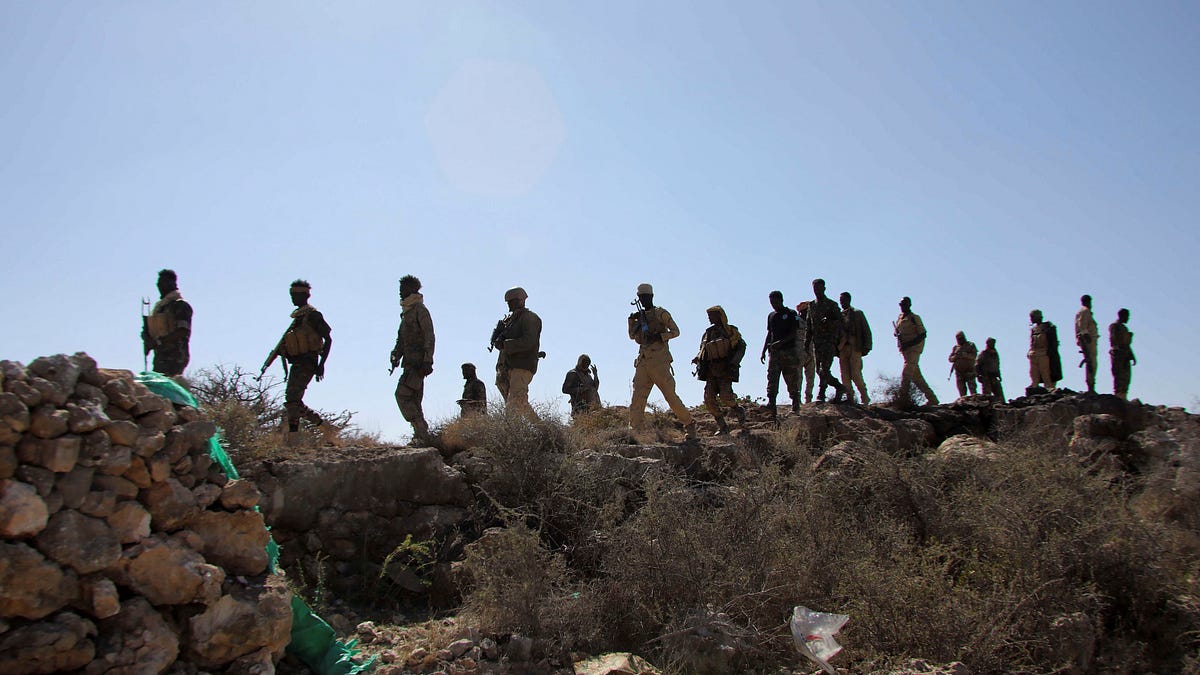
In the northeastern region of Somalia, locals live under the constant drone surveillance of the Puntland security forces as they combat ISIS militants. This ongoing conflict has been transformed by international involvement, particularly from the United Arab Emirates (UAE) and the United States. Unfortunately, this military engagement has resulted in tragic civilian casualties, revealing the complex and often devastating consequences of foreign intervention in local conflicts.
The Tragic Incident in Togga-Xarago
On January 26, 2025, a horrifying event unfolded in the small mountainous settlement of Togga-Xarago. Khadra Abdi Ismael, a 38-year-old woman, experienced her life shatter within moments. While visiting a neighbor’s home, she heard the unmistakable sound of drone engines overhead. It wasn’t long before a devastating explosion shook the ground, sending thick plumes of smoke into the air and igniting a massive fire that consumed her family’s traditional hut, the Caqil Soomaali.
As the smoke cleared, the scene was one of chaos. Khadra reported seeing remnants of what had been a family gathering: shrapnel from the missile, body parts, and even the remains of livestock. The impact was catastrophic—Khadra lost four family members, including her sister and her young son. In her words, “The child survived but she didn’t,” referring to her sister who perished while cradling her own baby—a child fortunate enough to survive the strike.
The Role of Foreign Forces
Investigations revealed that the airstrike on the Reer Yusuf Mohamud Salah family was conducted by the UAE, an assertion corroborated by multiple Puntland security officials. Despite reaching out for clarification, both the UAE embassy in Mogadishu and the UAE Ministry for Foreign Affairs have not responded. The incident raises crucial questions about accountability and the ethics of military intervention in civilian areas.
What’s more, the absence of a comprehensive record of civilian casualties complicates efforts to grasp the true human cost of this conflict against ISIS. The mountainous regions of Puntland make access challenging for journalists and human rights organizations, which hinders accurate reporting on events and their consequences. Local authorities have confirmed that the military operations targeting ISIS are primarily conducted from a UAE base in Bosasso, where drones are used for “counter-terrorism” missions.
The Aftermath and Community Impact
The fallout from the airstrike has left the local community devastated. Survivors have reported the physical injuries suffered—not just from the blast, but from the psychological scars left behind. Family members are haunted by memories and the constant reminder of drones flying overhead. Khadra’s own family lost their livelihood as the explosion resulted in the death of six camels and 400 goats, which were their primary source of income.
As the months passed, the UAE has seemingly slowed its operations in Puntland, while the United States appears to have taken a more prominent role in combating ISIS. Despite the shifting dynamics, many still view the actions of foreign forces as reckless and lacking accountability. One Puntland security official described the UAE strikes as “catastrophic” and likened them to “target practice,” suggesting a failure to verify targets before deploying lethal force.
Ultimately, the struggle in Puntland serves as a grim reminder of the unintended consequences of foreign military aid. While the fight against terrorist groups like ISIS is undoubtedly necessary, the toll on innocent civilians underscores the dire need for a more measured and accountable approach. The tragedy experienced by families like Khadra’s is not an isolated incident but part of a broader narrative of suffering that demands attention and action.