
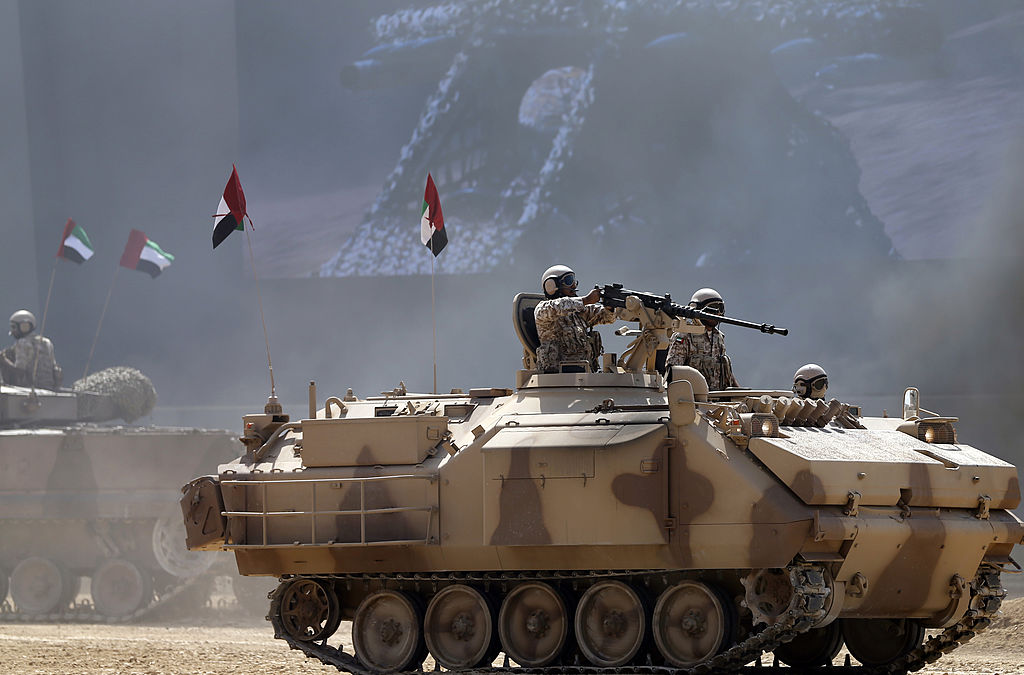
With the Arab Spring’s promise now fading, the geopolitical landscape demands a reconfiguration of power dynamics. The United Arab Emirates (UAE), while ambitious and assertive, represents merely one aspect of a larger global capitalist framework that prioritizes extraction, militarization, and political dependency. Its ongoing rivalry with Saudi Arabia, coupled with ideological tensions involving Qatar, Turkey, and Iran, contributes to a region increasingly characterized by fragmentation and discord.
The Rise of Fragmented Powers
The rise of various powers in the Middle East has led to unique imperial identities, heavily reliant on local allies to influence their spheres of interest. By pitting nations against one another, these state actors have managed to create a chaotic equilibrium, further complicated by outside influences from major global players such as the U.S., Europe, Israel, Russia, and China. Despite their ongoing conflicts, these powers have collectively facilitated environments of insecurity, where only opportunistic investors and mercenaries flourish.
The Yemen Conflict and UAE’s Strategic Moves
Yemen serves as a crucial battleground for these geopolitical maneuvers, particularly given its location near the strategic Bab-el-Mandeb Strait. Since March 2015, a coalition led by Saudi Arabia has attempted to suppress the Iran-aligned Houthis while enforcing a blockade that has led to widespread famine and devastation in Yemen. The ensuing airstrikes, supported by Western powers, have inflicted heavy civilian casualties and obliterated essential infrastructure.
Amidst this humanitarian crisis, the UAE has strategically seized control of key ports and energy resources in southern Yemen. By establishing the Southern Transitional Council (STC) in 2017, the Emirates aimed to fortify its interests in a proxy battle against the Saudi-backed government. Despite setbacks from Saudi air strikes, this Emirati enclave has thrived on power structures involving militias, mercenaries, and even covert interrogation networks, showcasing a ruthless approach to expanding its influence.
Expansion into Africa
The UAE’s control over Yemen’s southern coastline has facilitated its growing presence in Africa, echoing Cold War tactics of inciting conflict to further resource extraction. The UAE has invested in a series of military and logistical bases spanning Djibouti, Somalia, and other key regions, seeking to stimulate its influence from the Horn of Africa to the Sahel. By providing military support, the UAE has positioned itself as a key player; notably, its intervention in Ethiopia helped shift the balance against Tigrayan forces during the 2021 conflict.
This encroachment exemplifies a mutually beneficial relationship between indebted local elites and Emirati ambitions. In 2023, the UAE signed multiple agreements with Ethiopia, extending economic cooperation and solidifying its status as a significant investor in the region. Yet, as the UAE enhances its role as a financial powerhouse in Africa, many local communities remain on the periphery, often deprived of any real gains from the resources extracted by Emirati enterprises.
The Contradictions of Emirati Power
While the UAE promotes a narrative as a benevolent investor and security partner, its actions reveal a deeper commitment to exploitation and militarization. Its role in Africa, framed as a pivot toward stability, does little to uplift local populations. Instead, the image of the UAE as the “City of Gold” or a strategic ally is overshadowed by its prioritization of capital interests and military presence. As African nations navigate their own increasingly complex landscapes, the UAE’s true methods underline a conflicting reality, where wealth extraction and military intervention remain the two pillars of Emirati influence on the continent.