
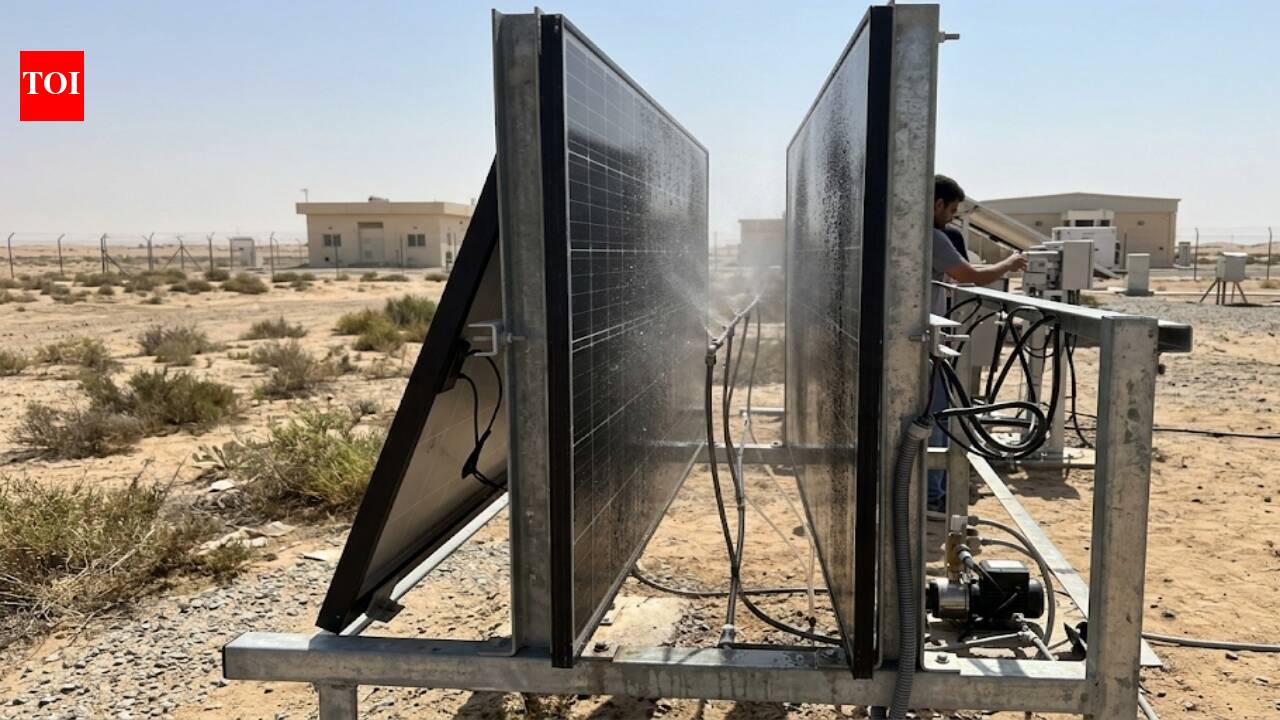
The quest for maximizing solar energy efficiency has taken an exciting turn, particularly in regions with extreme heat like the United Arab Emirates. Researchers at United Arab Emirates University and the University of Sharjah have developed an innovative solar panel design that not only increases energy output but also addresses the critical issue of overheating—a common challenge in arid climates. This new approach, introduced in 2025, involves the ingenious combination of two solar panels positioned back to back, cooled by a fine mist.
Understanding the Heat-Dominated Environment
Solar panels are typically rated for optimal performance at 25°C, but under the harsh sun of the UAE, they frequently exceed this temperature. Heat can significantly reduce the efficiency of silicon cells, leading to diminished power output. A well-documented study by the National Renewable Energy Laboratory highlights the detrimental effects of temperature on solar energy systems, demonstrating that for every degree Celsius above the rated temperature, efficiency can drop by 0.25% to 0.5%. When temperatures soar by 35 degrees, the efficiency losses become substantial, hindering the overall energy output of solar installations.
To combat this issue, the researchers innovated a solution called the “mist-cooled sandwich bifacial panel.” This design features two standard single-sided panels mounted back to back, with mist cooling strategically applied between them. This bifacial setup uniquely captures light from both sides, maximizing energy yield while simultaneously addressing overheating.
Results from Outdoor Testing
Field tests conducted in the sweltering UAE climate revealed promising results. The innovative sandwich panels outperformed conventional monofacial models by generating 26.05% more energy in outdoor settings. Interestingly, when subjected to extreme heat conditions, the mist-cooled panels produced up to 37% more electricity on sunny days and an impressive 46% more on cloudy days. The overall findings, published by Zafar Said and Fahad Faraz Ahmad in 2025, underscore the effectiveness of utilizing mist cooling to enhance solar panel performance, with an annual yield increase of 45.34 kWh per square meter compared to standard designs.
Despite these exciting milestones, it’s important to note the broader implications of such advancements. Researchers are focusing on refining the mist-cooling system to optimize water and energy consumption. Proper management of resources is crucial in arid regions where water availability is limited. Testing second-life solar panels within this innovative design could further enhance sustainability efforts.
Addressing Challenges and Future Prospects
One pressing concern remains the logistical aspects of implementing this technology on a larger scale. The prototype utilized two 60 W panels, a relatively small scale compared to utility-scale solar farms. While the annual energy gain of approximately $5.48 per square meter is noteworthy, ensuring that the costs associated with pumps, nozzles, and water management remain economically viable is essential. The commercial success of this concept will hinge on whether it can withstand real-world conditions and the fluctuating costs of water, which is vital for the mist cooling process.
If implemented successfully, this technology could revolutionize solar energy generation in hot climates, allowing existing solar installations to produce more electricity without requiring the construction of additional sites. This would not only increase energy availability but could also have positive economic implications, providing a more sustainable approach to harnessing solar power in regions facing similar challenges. The ongoing research and development in this area signal a promising future for solar energy efficiency, particularly in sun-drenched areas like the UAE.