
The United Arab Emirates (UAE) is carving its own path in the competitive landscape of space exploration, emphasizing capabilities over rigid alliances. While the space rivalry between Washington and Beijing is often portrayed as a zero-sum game, the UAE’s approach demonstrates a nuanced strategy focused on maximizing its own technological development, regardless of the partnering nation.
UAE’s Space Initiatives Amid Global Rivalries
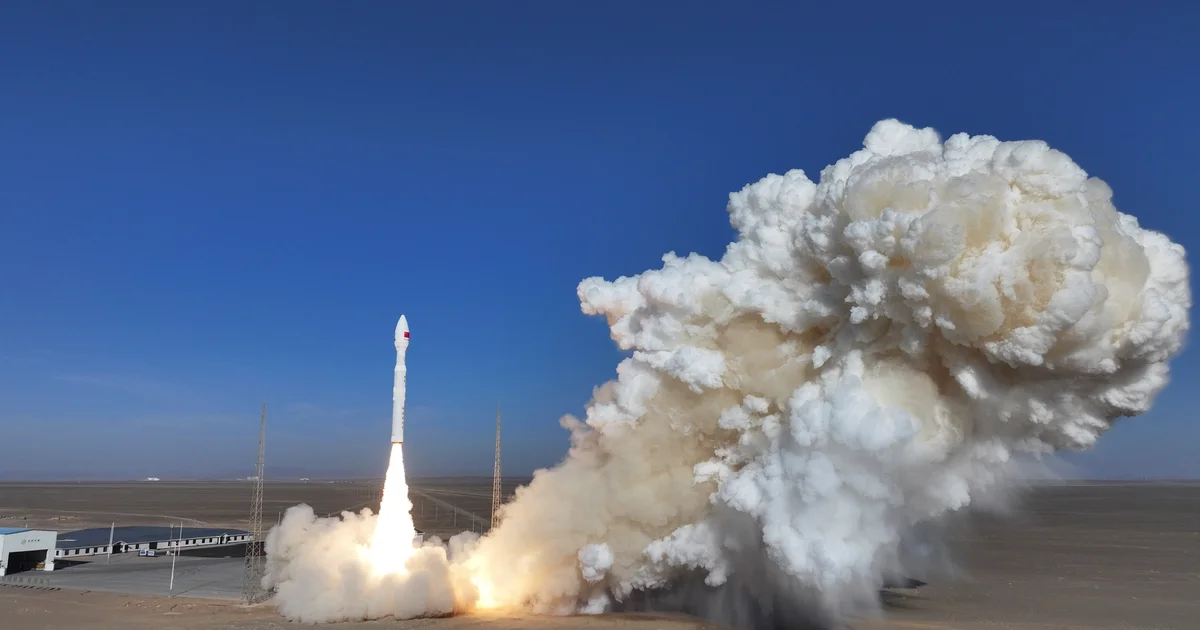
The UAE’s recent launch of its SEO Earth-observation satellite from China on August 17 marked a significant moment, albeit one that went largely unnoticed in international media. This operation signifies more than just a technical achievement; it reflects the UAE’s strategic intent to harness both American and Chinese resources to bolster its own domestic capabilities. The nation does not conform strictly to any singular geopolitical alignment but instead seeks to extract value from partnerships with both superpowers.
The UAE’s ambitions extend across various domains, including Earth observation, crewed spaceflight, and even planetary exploration. Its latest International Space Cooperation Program, announced with an investment of AED1 billion, aims to foster research and development partnerships with global entities. This initiative underscores how the UAE intends to localize sophisticated technologies and cultivate its own talent pool, rather than becoming dependent on any one country’s offerings.
Strategic Partnerships Over Geopolitical Alliances
The UAE carefully evaluates potential partnerships based on their ability to contribute toward its goal of building a sustainable domestic space industry. Their participation in projects like the American-led Artemis program and the collaborative space efforts with China spotlight this tactical approach. Rather than being forced into a binary choice between major powers, the UAE actively selects collaborators whose expertise can enhance its national objectives.
Recent collaborations exemplify this strategy; UAE entities utilize American launch services while developing partnerships across Europe, India, and Japan, showcasing a diverse international network. These efforts culminated in the successful Hope mission to Mars, which benefitted from extensive cooperation with U.S. research institutions. The UAE’s approach highlights that modern space exploration often necessitates a coalescence of varied expertise to tackle complex challenges.
A Vision Beyond Binary Choices
The story of the UAE in space serves as a counterpoint to the prevailing notion that global space endeavors are split between American and Chinese spheres. Despite the geopolitical tensions, the UAE thrives in a climate that allows it to navigate and leverage opportunities from various global players. This strategy depends on the ambition to not merely take sides but to engage in cooperative ventures that propel national capabilities forward.
Despite the prevailing dynamics, the potential for emerging space nations is vast. The UAE serves as a model for how such nations can constructively engage with established powers while maintaining a focus on national advancement. By engaging with both Washington and Beijing, the UAE exemplifies how smaller nations can assert their agency in space exploration, effectively capitalizing on opportunities that align with their strategic goals.
In conclusion, the UAE’s multifaceted approach to space exploration reveals a commitment to developing its capabilities rather than aligning with one dominant power. Through strategic partnerships, the UAE is not only advancing its national interests but also setting a precedent for other emerging space-faring entities in a rapidly evolving global landscape.