
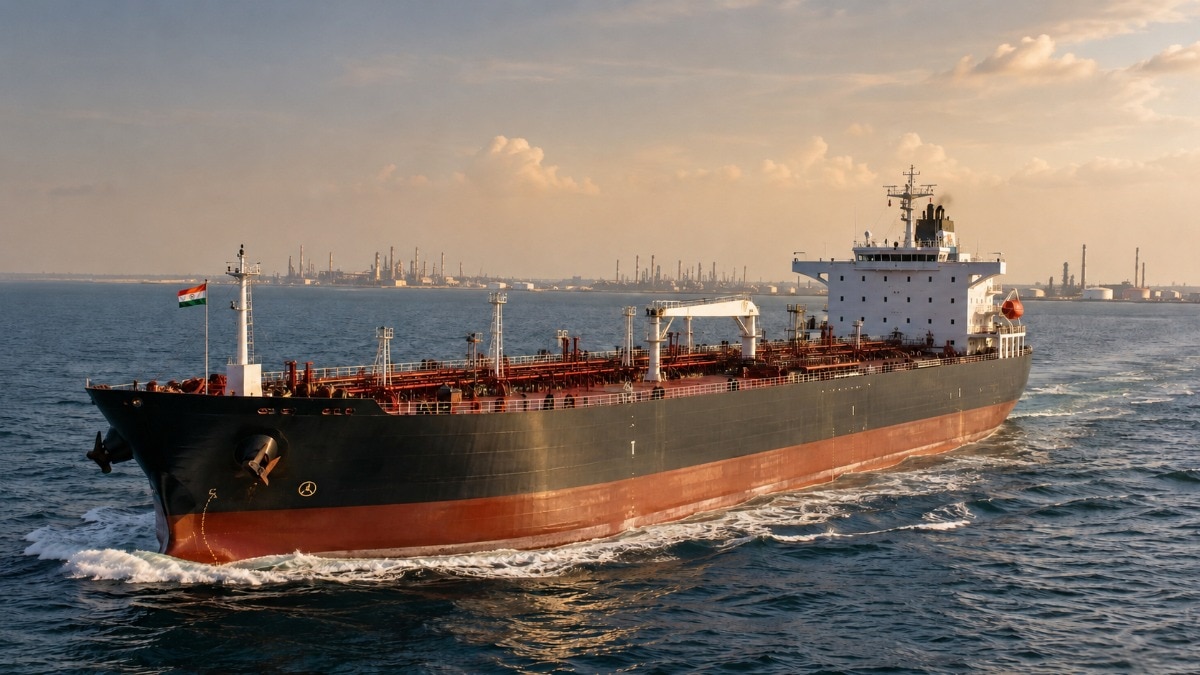
India has significantly bolstered its status as a leading supplier of petroleum products to Kenya, surpassing traditional suppliers like Saudi Arabia and the United Arab Emirates. The disruption of fuel-trading routes due to geopolitical tensions, particularly the US-Iran conflict in the Middle East, has opened avenues for India to enhance its role in the African fuel market. With a substantial increase in refining capabilities over recent decades, India is positioning itself as a key player in the global oil supply chain.
India’s Rise in Petroleum Exportation
Recent data from Kpler, a Belgian commodity analytics firm, highlights India’s breakthrough, indicating an abrupt shift in Kenya’s fuel imports. Anas Alhajji, an energy economist based in Dallas, noted that India is now a primary source for gasoline, diesel, jet fuel, and fuel oil for Kenya. The growth in Indian petroleum exports does not simply stop at Kenya; overall exports to Africa hit a record high with a striking 66% increase year-on-year as of July. This shift toward the African market was influenced by the European Union’s ban on Russian petroleum products refined in third countries, rapidly diverting Indian shipments from Europe to countries in Africa.
Historically, Kenya relied on agreements with major suppliers like Saudi Aramco and ADNOC for its fuel needs. However, the ongoing unrest in the Middle East has led the East African nation to explore alternative sources, finding a reliable partner in India. This shift underscores the adaptability of countries in response to global supply chain disruptions.
India’s Refining Strength and Capacity
Positioned as the fourth-largest oil refining nation globally, India boasts an impressive refining capacity of 258.1 million tonnes annually across its 22 operational refineries, according to the Ministry of Petroleum and Natural Gas. Despite being a net importer of crude oil—bringing in over 90%—India managed to export 61.5 million tonnes of petroleum products in the fiscal year 2025-2026. Notably, the Reliance Industries complex in Jamnagar is recognized as the largest oil-refining facility worldwide, underscoring India’s refining capabilities.
Interestingly, India’s status as a significant supplier has also led to unexpected developments. Reports suggest that Russia, traditionally known as a powerhouse in crude exports, has started importing petrol from India due to disruptions caused by the conflict in Ukraine. This reversal in trade dynamics further reinforces India’s growing influence in the global energy market.
Remarkable Growth in Trade with Kenya
The acceleration of petroleum product exports to Kenya coincides with a broader expansion in bilateral trade between India and East Africa. In July 2026, India’s exports to Kenya surged by 151.41% compared to the same month in 2025. This growth not only reflects the mining of oil but spans various product categories. Nevertheless, petroleum products remain a critical factor in this upward trajectory, contributing to an overall rise of 67.64% in global exports, from $4.13 billion to $6.92 billion within just one year.
Alhajji highlighted that Africa is now a pivotal destination for Indian fuel, particularly following changes in European regulations that have hampered direct imports of Russian crude. As a result, India’s strategic pivot towards the African market positions it for future growth, evidenced by Kenya becoming one of India’s fastest-growing export destinations.
In the context of thriving commerce, India has solidified its position as Kenya’s third-largest trading partner in the 2025-2026 fiscal year, with total bilateral trade reaching $4.31 billion—a substantial amount of which can be attributed to petroleum exports. The robust growth and diversification of trade signify a promising future for both nations amidst the shifting global energy landscape.