
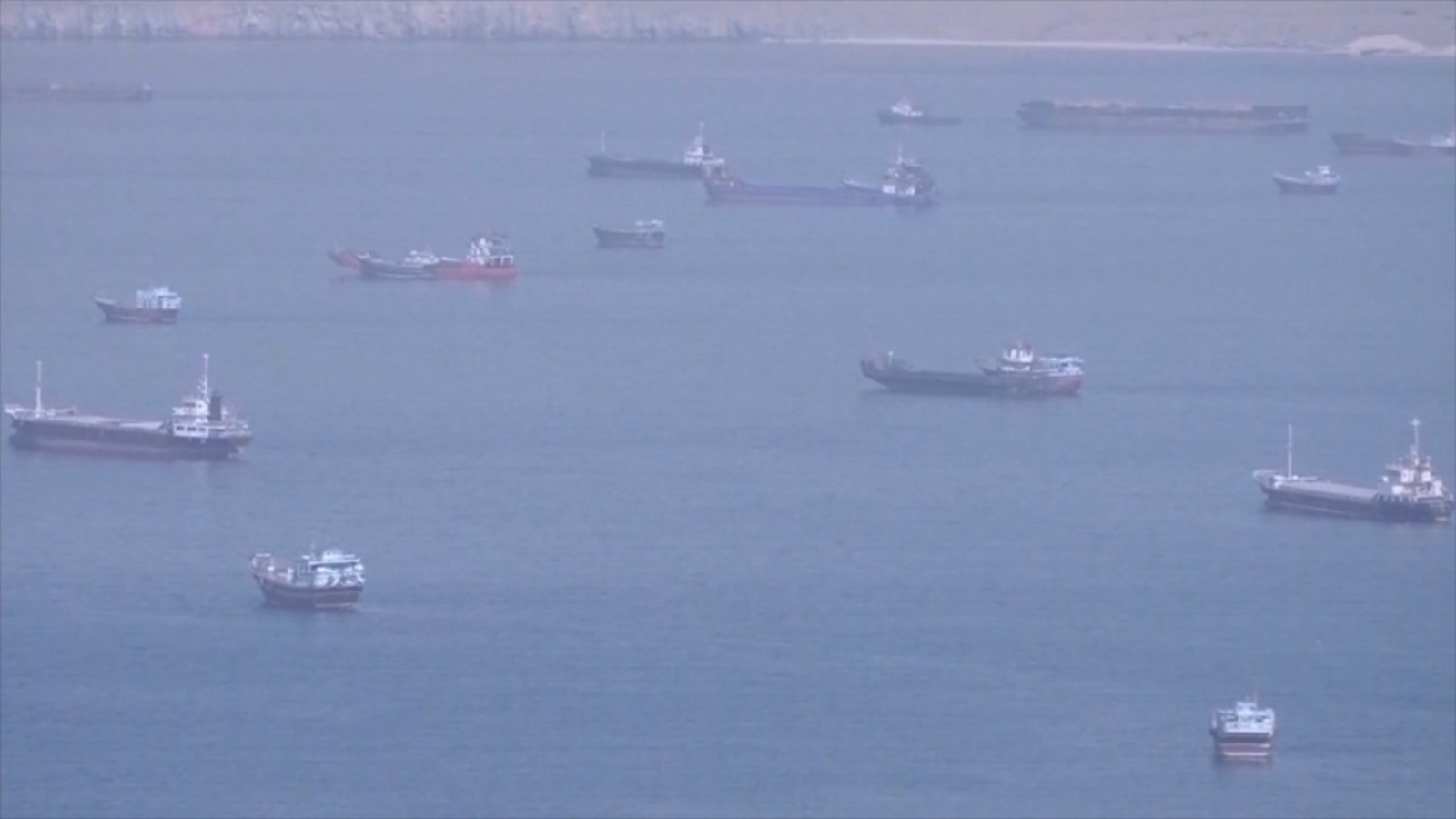
Iran has made significant demands regarding the reopening of the Strait of Hormuz, while the United Arab Emirates reported that one of its vessels was targeted by an Iranian missile. Meanwhile, Yemen’s military launched attacks against the Iranian-backed Houthi rebels, and Turkey’s parliament has approved a Kurdish peace bill. These incidents highlight increasing tensions and geopolitical maneuvering across the Middle East.
Iran’s Conditions for the Strait of Hormuz
The Supreme National Security Council of Iran has announced that the Strait of Hormuz will remain closed until the United States “corrects its behavior.” This stance could considerably impact ongoing negotiations pertaining to the management of this vital waterway. Mohammad Bagher Zolghadr, the council’s secretary and a commander within the Revolutionary Guard, articulated Iran’s position, stating that the U.S. must cease all threats against Iran, bring an end to its military involvement in the region, and lift sanctions in order to reopen the strait.
The Iranian government has specified that the U.S. must “fully compensate” for any wartime damages. This stern message comes amidst U.S. efforts to secure a deal before potentially ending its blockade of Iranian ports. Recent discussions indicated that a finalized agreement should address the lifting of sanctions and the fate of frozen Iranian assets. Furthermore, reports suggest that Iran is close to finalizing a separate arrangement with Oman to manage the strait, emphasizing the complex negotiations at play.
Developments Regarding the Iran-Oman Deal
The Strait of Hormuz is essential for global oil and natural gas supplies, having previously been regarded as an international passageway. The prospective deal between Iran and Oman aims to temporarily reinstate navigation through the strait. According to sources familiar with the discussions, vessels would navigate through specific routes close to both countries without incurring tolls during this interim phase.
This arrangement seeks to revive a prior agreement between Iran and the U.S. and would establish a 60-day period for negotiating further on Iran’s nuclear program. Notably, within this timeline, Iran may resume its oil sales. While officials from the Gulf Cooperation Council have expressed support for the agreement, it’s crucial to note that details remain fluid and could change as negotiations progress.
UAE Vessel Targeted Amid Rising Tensions
In a separate incident, Emirati authorities confirmed that an ADNOC-owned vessel was attacked in the Strait of Hormuz, attributed to a missile fired from Iran. Fortunately, there were no reported casualties following this early Saturday attack. ADNOC has noted that it has faced numerous threats, with over a dozen vessels targeted since the U.S. and Israel initiated military actions against Iran earlier this year.
Additionally, the United Kingdom Maritime Trade Operations reported that another vessel was struck by a projectile near the Omani town of Khasab, resulting in a fire that was quickly extinguished. The current escalation in hostilities raises alarms regarding the safety of commercial shipping in one of the world’s most critical maritime routes.
Regional Developments and Kurdish Peace Efforts
In Yemen, the military has retaliated against Houthi positions following recent strikes in central and eastern regions. This retaliatory action raises concerns that the fragile peace established in 2022 may further deteriorate, spiraling back into civil conflict.
On a more positive note, Turkey’s parliament has made strides towards peace with its Kurdish insurgents. A draft law aimed at facilitating disarmament and rehabilitation of PKK members has successfully passed its initial legislative hurdle and is anticipated to receive final approval shortly. This bill comes in the wake of the PKK’s announcement to disband as part of ongoing peace efforts, marking a significant step in a conflict that has claimed tens of thousands of lives since its inception in the 1980s.
The intricate landscape of the Middle East remains volatile, underlining the importance of continued diplomatic efforts to address these pressing issues.