
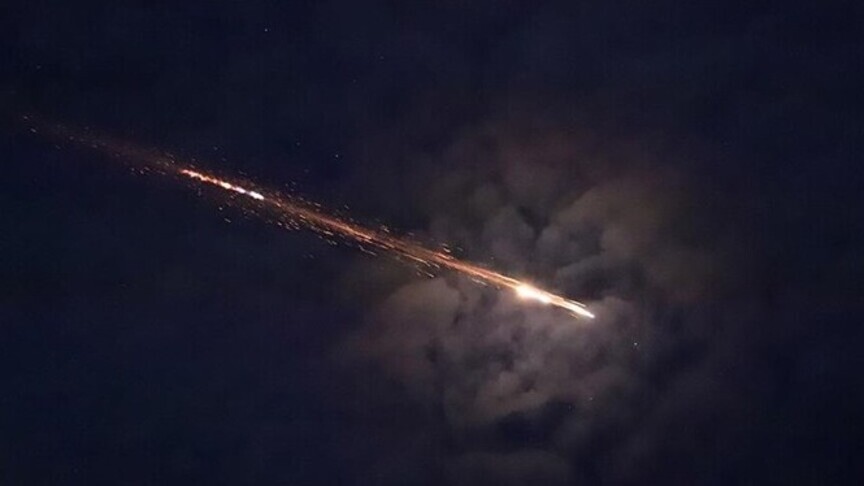
Iran has intensified its military activities in the region, launching missile and drone strikes on U.S. military installations in both Kuwait and the United Arab Emirates. This recent escalation marks a significant development in the ongoing tensions between Iran and the United States.
Details of the Military Strikes
On Thursday morning, Iran executed these coordinated attacks as part of the 31st phase of its Operation Saeqeh, responding to perceived provocations from U.S. forces. The Iranian military claimed responsibility for targeting key infrastructures at the Ahmed Al Jaber Air Base in Kuwait. This included strikes on satellite communication systems, equipment storage areas, and hangars designated for fighter jets. The damage reportedly hindered vital communications and affected military readiness at the base.
In the UAE, Iranian missiles and drones aimed at U.S. positions and radar installations stationed at the Al Minhad Air Base. This retaliatory action underscores Iran’s determination to confront U.S. military presence in the region, following a series of U.S. assaults on Iranian interests. Iranian officials have made it clear that such military responses will continue as long as U.S. operations against Iran persist.
Kuwait’s Response and Sovereignty Concerns
Following these aggressive maneuvers, the Kuwaiti government reported that its air defense systems were actively engaged in countering the Iranian missile and drone attacks. In a strong denunciation, the Kuwaiti Foreign Ministry labeled the assaults as a “flagrant violation” of its national sovereignty. This episode highlights Kuwait’s precarious position amid escalating regional conflicts and its reliance on external defense systems to safeguard its territory.
The Broader Context of U.S.-Iranian Tensions
These recent actions are part of a broader trend of heightened military engagement between Iran and the U.S. Following earlier incidents, such as those that took place on a single day prior, where the Islamic Revolutionary Guard Corps (IRGC) targeted U.S. command structures at Ali Al Salem Air Base, the cycle of retaliation appears to be entering a more dangerous phase. Analysts observe that the back-and-forth strikes mark the end of a temporary lull in direct confrontations, triggered by a U.S. airstrike on Iran’s Larak Island that sparked renewed hostilities.
Iran’s stance towards U.S. military forces in various regional nations suggests a strategy aimed at destabilizing American influence while asserting its own power. By engaging in military actions across several countries, including Iraq and Syria, Iran is sending a clear message to Washington that it will not hesitate to defend its interests.
Conclusion
The situation continues to evolve, with both nations seemingly locked in a cycle of retaliation that raises the stakes for regional stability. As Iran reiterates its commitment to striking back against U.S. operations, the implications for regional security and international relations become increasingly complex. The conflict underscores the urgent need for diplomatic solutions to prevent further escalation and bloodshed in an already volatile region.