
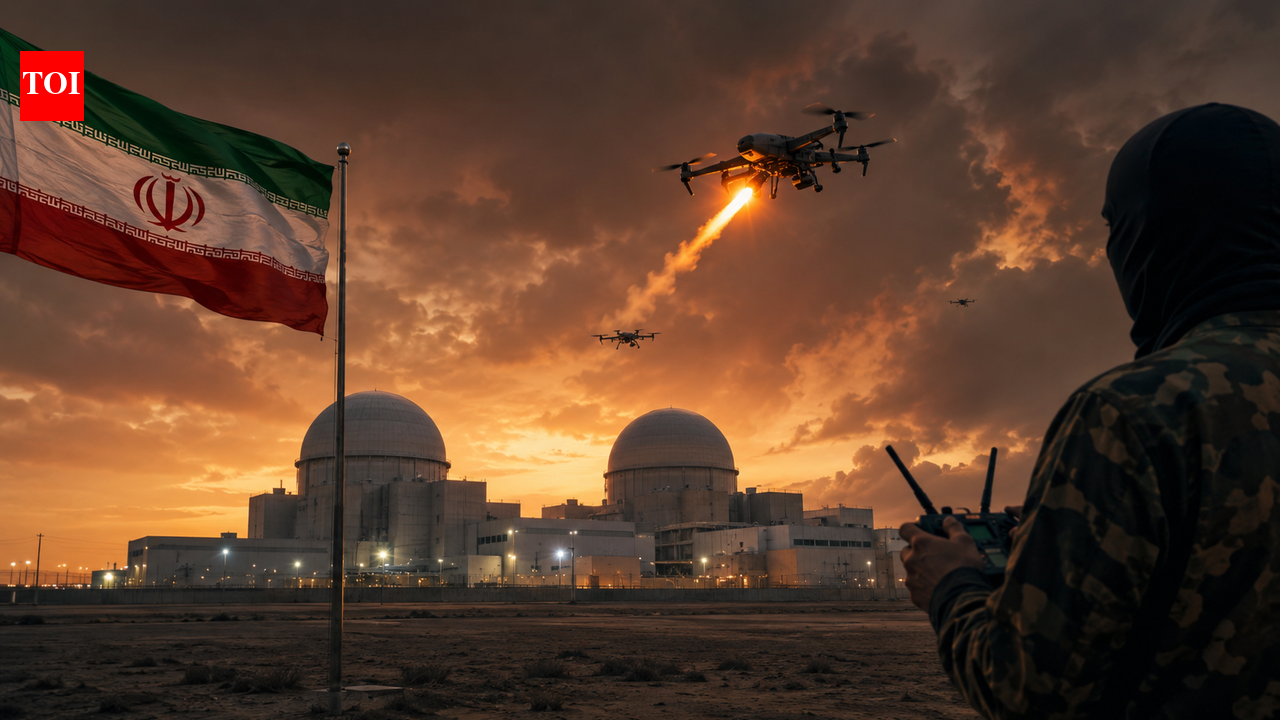
A recent drone strike targeting the United Arab Emirates’ Barakah nuclear plant has aggravated concerns of a broader regional conflict, with experts recognizing that Iran-backed militias from Iraq may be central to escalating tensions between Tehran and both the United States and Israel.
Drone Attack on Barakah Plant
On a recent Sunday, the UAE declared that a drone attack on its Barakah nuclear facility originated from Iraq, labeling the act as “terrorist.” Anwar Gargash, a senior presidential advisor, explicitly attributed the strike to Iranian militias stationed in Iraq, calling it a troubling sign of the security challenges facing the region. The attack prompted the plant to switch to backup power systems, a critical safety measure, although authorities reported no injuries or abnormal radiation levels. This incident has underlined the growing vulnerability of significant civilian infrastructures amid intensifying regional tensions.
Significance of Iranian Militias
Analysts are interpreting the attack as a calculated warning from Iran. Mohammed Baharoon, the director of the Dubai Public Policy Research Center, indicated that this act signifies Iran’s strategy to maintain pressure on Gulf states. He emphasized that even if Tehran does not launch direct attacks, its proxy forces can exert influence and threaten regional stability. While neither Iran nor its militias claimed responsibility for the Barakah strike, it comes at a pivotal moment when attempts to solidify a ceasefire between Washington and Tehran remain tenuous.
Iran’s Regional Strategy
Iran-linked militias, particularly those associated with the Islamic Revolutionary Guard Corps (IRGC), are recognized as integral to Tehran’s military strategy throughout the Middle East. Groups like Kataib Hezbollah have conducted numerous drone strikes targeting American interests in Iraq and have sparked geopolitical concerns in Gulf nations. Analysts note that these militias are often tasked directly by the IRGC, further complicating efforts to understand the dynamics of the conflict. For instance, the Armed Conflict Location & Event Data Project (ACLED) has tracked over 65 incidents where Iraqi militias targeted Gulf countries during recent confrontations, but the true number may be even higher, as many attacks are not publicly attributed.
Implications for Iraq and Regional Stability
The increasing activity of Iraqi militias has significant implications for Iraq’s political climate, especially for its newly inaugurated Prime Minister Ali al-Zaidi. Experts argue that attacks originating from Iraqi soil could jeopardize Baghdad’s attempts to foster stronger economic and political relationships with Gulf states. While the Iraqi government condemned the recent drone strikes, it faces the challenge of lacking authoritative control over these militias. The conflict has also prompted the formation of a high-level committee to investigate the attacks, highlighting Iraq’s struggle to maintain domestic stability while navigating external pressures.
In summary, the drone attack on the Barakah nuclear plant serves as a stark reminder of the volatility in the Gulf region. With Iranian-backed militias increasingly central to the conflict dynamics, both regional and global security remain at risk.