
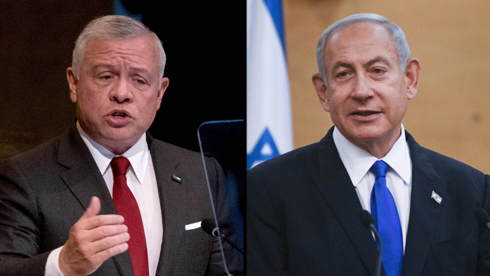
Israel is contemplating convening a trilateral energy summit alongside Jordan and the United Arab Emirates in Abu Dhabi. This initiative aims to enhance regional collaboration not only in energy but also in water resources and diplomatic relations, according to Israeli officials involved in the talks.
Proposed Water Agreements
The upcoming summit, which enjoys support from the UAE, seeks to gather the energy ministers of all three nations for discussions centered on a new water accord. Under this proposed agreement, Israel would increase its annual water supply to Jordan by an additional 50 million cubic meters, supplementing the existing 50 million cubic meters it provides each year as established by the 1994 Israel-Jordan peace treaty.
The discussions will also revisit the “Prosperity” initiative aimed at regional development, which includes plans for Israel to construct a large desalination plant that would provide water to both Israel and Jordan. In return, Jordan would establish a significant solar energy facility capable of supplying electricity to both countries.
Deteriorating Diplomatic Relations
Another key topic of conversation will focus on improving the tenuous diplomatic relations between Israel and Jordan. These ties have become strained, particularly since the recent outbreak of hostilities in Gaza. Since November 2023, Jordan has been without an ambassador in Israel, and similarly, Israel has not had an ambassador stationed in Amman since the October 7, 2023, Hamas attack.
Under the existing peace treaty, Israel supplies Jordan with 50 million cubic meters of water at a nominal cost. However, a previous agreement from 2021, which authorized the additional supply of 50 million cubic meters for three years, has been marked by complications. Jordan later requested to extend this arrangement for another five years, seeking to raise the additional water allocation to 80 million cubic meters annually.
Challenges and International Pressure
Israeli Energy Minister Eli Cohen has extended the agreement every six months amid internal discussions regarding its continuation. These extensions have often been influenced by external pressures, particularly from the U.S., given Jordan’s assistance in intercepting Iranian drones during recent regional tensions.
Furthermore, ongoing critiques from Jordanian officials, particularly Foreign Minister Ayman Safadi, have complicated the situation. The additional water agreement lapsed in November 2025, leaving Jordan without this essential supply for over eight months and further straining bilateral relations.
As a senior Israeli official stated, while the nation continues to supply the agreed-upon quantity under the peace treaty, there is no obligation for additional water unless goodwill is fostered between both nations. The official emphasized that the year 2025 marked a severe drought for Israel, necessitating prioritization of domestic water reservoirs for agriculture.
Jordan’s Water Scarcity Crisis
The urgency of these negotiations is underscored by Jordan’s severe water scarcity. As one of the most water-stressed countries globally, the kingdom grapples with limited natural resources, skyrocketing population growth, and the challenges posed by a large influx of Syrian refugees. Compounded by ongoing droughts and climate change, Jordan faces an annual water deficit estimated at around 500 million cubic meters.
Jordanian officials have made it clear that water security ranks as a top national priority. A source close to the Jordanian government highlighted that water is not just a necessity but fundamentally tied to the peace agreement. However, frustrations mount as water cooperation, once a foundational aspect of the treaty, has increasingly turned into leverage within Israel-Jordan relations. Continued delays in renewing the additional water agreement may exacerbate tensions between the two neighborly nations, underscoring the need for diplomatic engagement in the upcoming summit.