
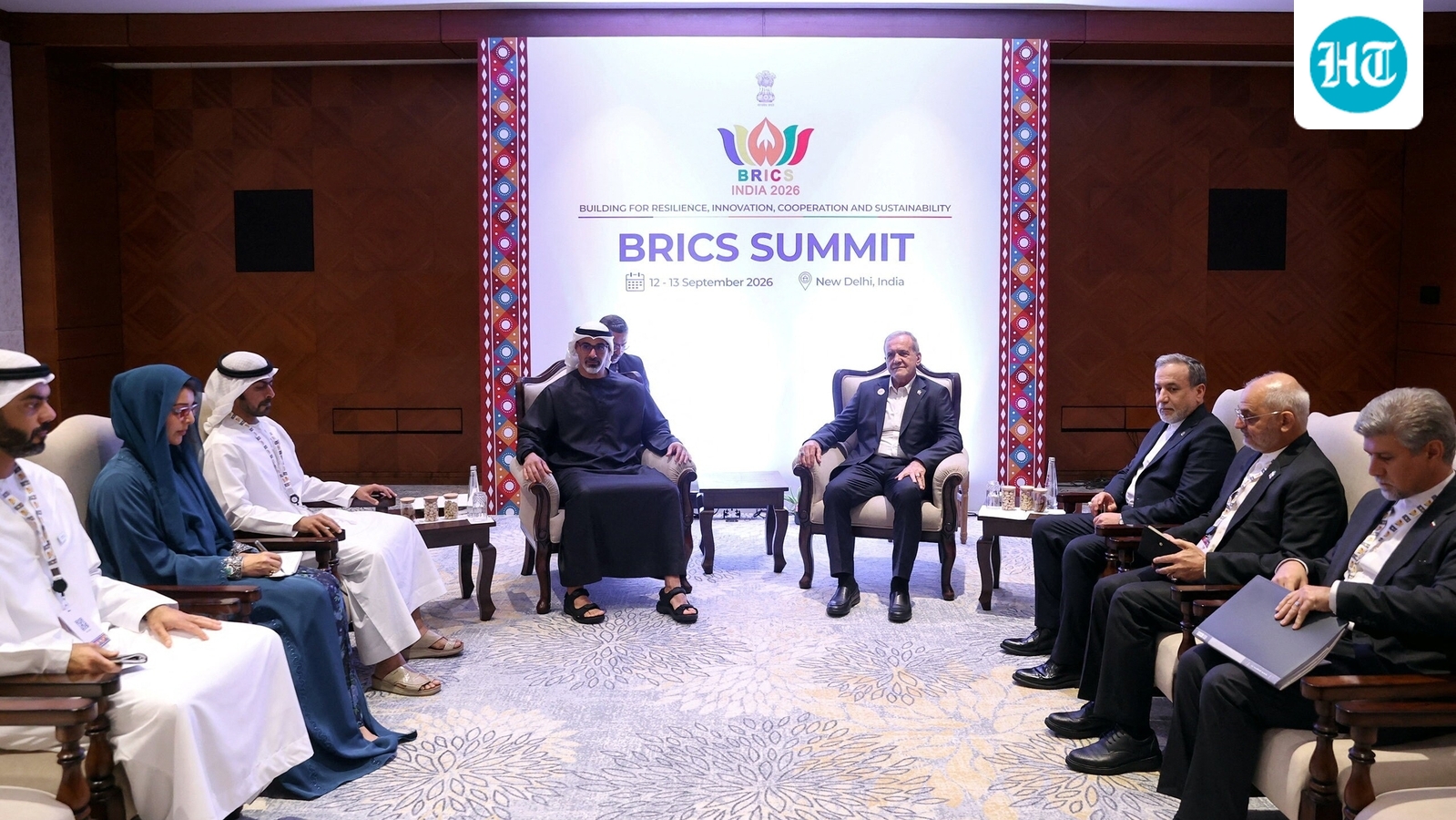
Iran is eager to forge a new chapter in its relationship with the United Arab Emirates (UAE). This sentiment was expressed by Iranian President Masoud Pezeshkian following his unexpected meeting with Abu Dhabi Crown Prince Khaled bin Mohamed during the recent BRICS Summit in New Delhi. This encounter signifies a potential shift in regional dynamics, focusing on collaboration and mutual understanding for future endeavors.
Significance of the Recent Meeting
The discussions between Iran and the UAE come at a time when both countries aim to alleviate tensions linked to the ongoing West Asia conflict. This diplomatic engagement led to a joint declaration at the BRICS Summit, highlighting common interests. Although detailed outcomes of the meeting remain scarce, it sets a positive precedent. Additionally, an upcoming gathering of Iranian officials and their Gulf counterparts in Oman aims to address security, particularly concerning the crucial Strait of Hormuz. This indicates a willingness to prioritize regional stability over historical grievances.
Pezeshkian’s Optimistic Outlook
President Pezeshkian emphasized the necessity of moving beyond past adversities and focusing on future prospects. Following the BRICS Summit, he informed Iranian media about the constructive discussions with the Crown Prince, reaffirming their commitment to cooperation. He noted that the summit also included discussions condemning attacks on Iran’s assets, underlining a shared desire for peace and security in the region. However, not all Gulf states seem open to the dialogue, as Bahrain has opted out of the upcoming meeting, reflecting the complex geopolitical landscape.
Broader Implications of Economic Collaboration
During his address at the BRICS Summit, Pezeshkian outlined the need to diversify trade relationships and reduce dependency on Western financial systems that can be precarious for emerging economies. He urged BRICS nations to bolster economic collaboration, advocating for trade in national currencies and enhancing the New Development Bank’s role in fostering resilience. The Iranian president criticized unilateral sanctions, claiming they disrupt global food security and hamper developmental endeavors. This highlights the imperative for nations to unite against external economic pressures affecting their sustainability.
Challenges Ahead for Iran and the BRICS Alliance
Pezeshkian also pointed out the broader repercussions of military aggression on economic stability, specifically referencing actions taken by the US and Israel against Iran. He articulated that attacks on Iran’s infrastructure have lasting effects that extend beyond national borders, influencing regional and even global stability. The call for an international response to protect civilian lives underscores the collective responsibility that nations share in maintaining peace. Such sentiments reflect a growing recognition of interconnected global challenges, necessitating cooperative solutions.
In conclusion, the recent diplomatic overtures between Iran and the UAE, alongside discussions at the BRICS Summit, signify a potential turning point in Middle Eastern relations. With economic cooperation and security at the forefront, both countries are exploring ways to mitigate past grievances in favor of shared growth. As this narrative unfolds, the role of nations involved in BRICS may prove vital in crafting a stable and equitable future amid existing geopolitical tensions.