
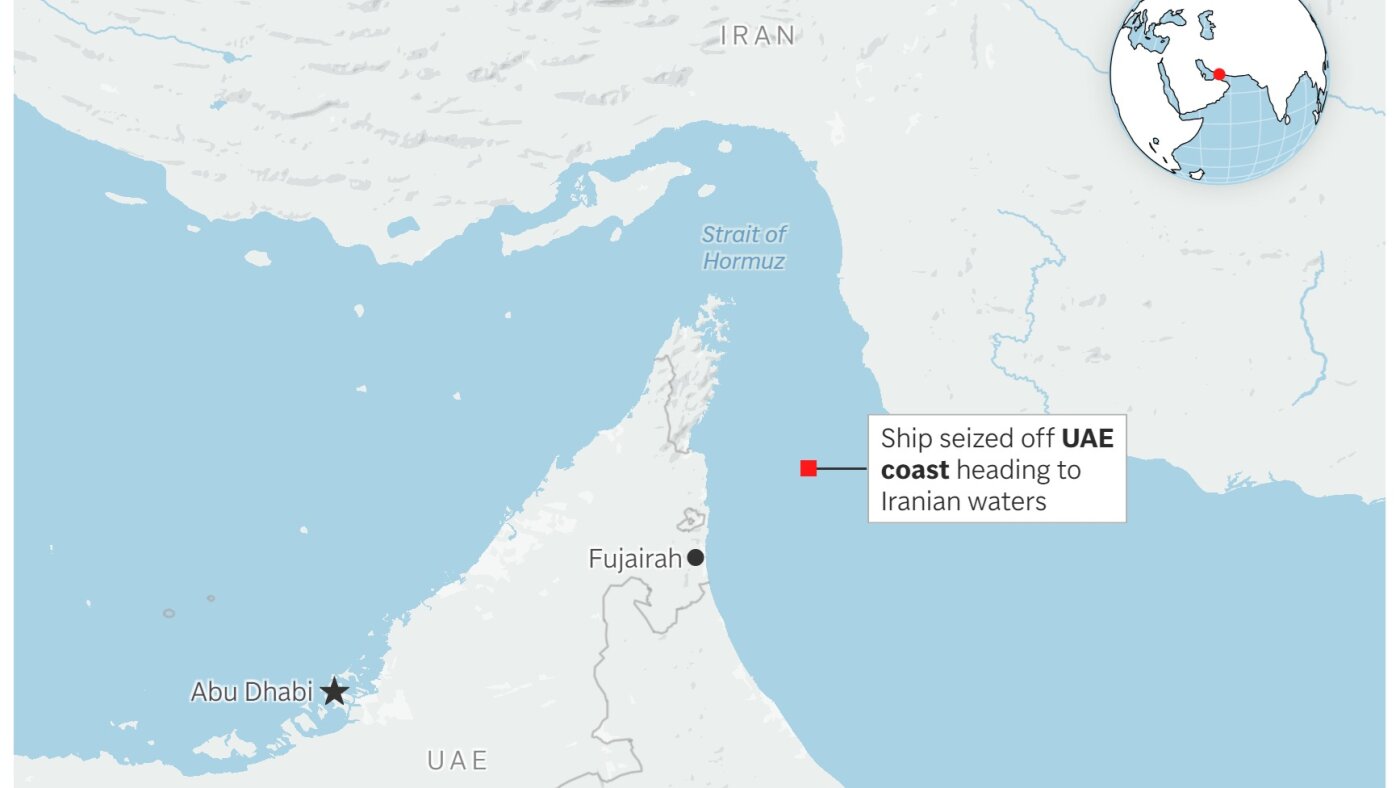
In recent events, tensions have escalated significantly in the maritime region off the coast of the United Arab Emirates (UAE), particularly in the strategically vital Strait of Hormuz. As geopolitical maneuvering intensifies, reports confirm the seizure of a vessel by unauthorized personnel and the sinking of another cargo ship due to an attack. These incidents have profound implications, especially considering the Strait of Hormuz is a critical thoroughfare for oil transportation.
Recent Incidents Heightened Tensions
A cargo ship anchored northeast of the UAE was reported seized on Thursday, prompting investigations from maritime authorities. Although details about the vessel remain undisclosed, its trajectory indicates that it may be heading towards Iranian waters. This seizure aligns with Iran’s ongoing claims of sovereignty over the strait, which is critical for global oil transit. The heightened military and political activities in this region are significant, particularly as Iranian officials have reiterated their right to control shipping lanes amid increasing frictions with the United States.
Moreover, an Indian-flagged cargo ship, the Haji Ali, sank off the coast of Oman following an unspecified attack that caused a fire while it was en route from Somalia to Sharjah. Fortunately, all 14 crew members were rescued by Oman’s coastguard, but the lack of clarity surrounding the attack has raised alarms concerning maritime safety in this volatile area.
Impact on Global Oil Supply and Diplomacy
The unrest in the Strait of Hormuz possesses the potential to disrupt a key shipping route through which approximately 20% of the world’s oil is transported. The ongoing diplomatic efforts between the United States and Iran to de-escalate conflicts in the region have been complicated by these incidents. Iranian officials have emphasized their control over the strait, further complicating negotiations. With U.S. President Donald Trump meeting with Chinese leader Xi Jinping, both leaders stressed the necessity of keeping the Strait of Hormuz open for international shipping.
In a time of heightened sensitivity regarding naval security, U.S. military responses have escalated, including firing on Iranian oil tankers that allegedly attempted to breach a blockade. Such military actions further exacerbate the precarious situation, prompting international maritime organizations to issue alerts regarding potential dangers in the region.
Iran’s Stance and Demands for New Talks
As discussions about peace negotiations unfold, Iranian officials have set forth conditions, including reparations and recognition of its sovereignty over the Strait of Hormuz. Iran’s vice president asserted that the waterway has always belonged to the nation, vehemently defending its claims. From Iran’s perspective, the U.S. has violated international maritime laws, which they argue justifies their actions toward oil tankers associated with the U.S.
This complex web of maritime and diplomatic tensions presents challenges for global shipping. The United States maintains a strong military presence in the region, with the ability to safeguard shipping routes. However, as Adm. Brad Cooper has pointed out, the voice and threats emanating from Iran have already had a considerable impact on the shipping and insurance industries, raising concerns about safety and future commerce in these waters.
The Road Ahead: Navigating Increasing Turbulence
In conclusion, the recent seizures and attacks in the Strait of Hormuz signal a worrying escalation in the geopolitical chess game involving Iran and the United States, with implications that reverberate beyond regional borders. The international community keenly watches the unfolding events as any prolonged instability could lead to significant consequences for global oil supply and maritime security. While diplomatic avenues are explored, the trajectory of these tensions will be pivotal in shaping future interactions in this critical waterway.