
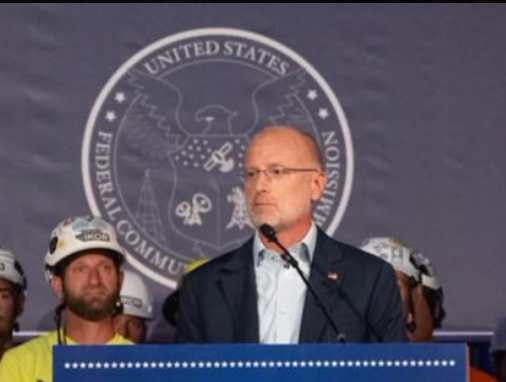
In recent developments, the Federal Communications Commission (FCC) has approved a significant foreign investment in a potential merger between Paramount Skydance and Warner Bros. Discovery. This decision has sparked considerable backlash from various political and media figures, with U.S. Senator Bernie Sanders voicing particularly strong concerns about foreign influence in American media.
Concerns Over Foreign Ownership in Media
On Thursday, the FCC, led by Chairman Brendan Carr—a Trump appointee—approved Paramount’s petition. This ruling permits foreign investors to hold up to 49.5% of the merged entity, allowing nearly 50% ownership from countries such as Qatar, Saudi Arabia, and the United Arab Emirates (UAE). Senator Sanders expressed outrage on social media, stating, “We don’t need Middle East dictators to control American media.” He pointed out that such foreign investment could compromise media integrity by placing responsibility for content creation and reporting in the hands of authoritarian regimes.
The implications of this merger are far-reaching. The combined company would encompass popular brands and channels, including CBS, CNN, HBO, and Showtime. Sanders articulated that the potential influence of these foreign governments over such a vast media empire is alarming and poses a direct threat to free speech and journalistic integrity in the United States.
Political Ramifications and Reactions
Anna Gomez, the only Democratic commissioner on the FCC, echoed Sanders’ concerns. She criticized the decision, stating that it indirectly allows very repressive governments to exert influence over major American media outlets. The lack of rigorous assessment and public accountability in the FCC’s decision-making process further raises eyebrows. Gomez argued that the profound stakes warranted a full commission vote instead of a staff-level approval.
Legal and media experts have joined the discourse, emphasizing that foreign ownership could bypass traditional safeguards meant to ensure editorial independence. Critically, they argue the foreign investors’ influence may not be overt. However, the financial leverage that comes with such ownership structures could inherently shape content decisions, suppressing dissenting voices within the organization.
Calls for Regulatory Review
Numerous advocacy groups, including the First Amendment nonprofit Free Press, have urged the FCC to impose stricter regulations to protect American news interests from foreign intervention. They recommend spinning off key channels like CBS and CNN into fully American-owned subsidiaries to mitigate the risk. Nevertheless, the FCC has dismissed these concerns, stating they lack substantive evidence.
The financial stakes are substantial, as the Ellison family and other stakeholders stand to gain significant control over the merged company. Critics like Lee Hepner, an antitrust attorney, raised alarms about the unenforceability of regulations meant to prevent foreign influence. He highlighted the concern that financial interests could curb journalistic freedom and compromise national security. The potential for foreign governments to exploit American media resources only adds layers to the existing controversy surrounding this merger.
As legal challenges mount from state attorneys general and unions, the future of this merger remains uncertain. With a trial scheduled for March, opponents view this as a pivotal moment to reassess not only the merger’s implications but also the broader issue of foreign investment in American media.entities.