
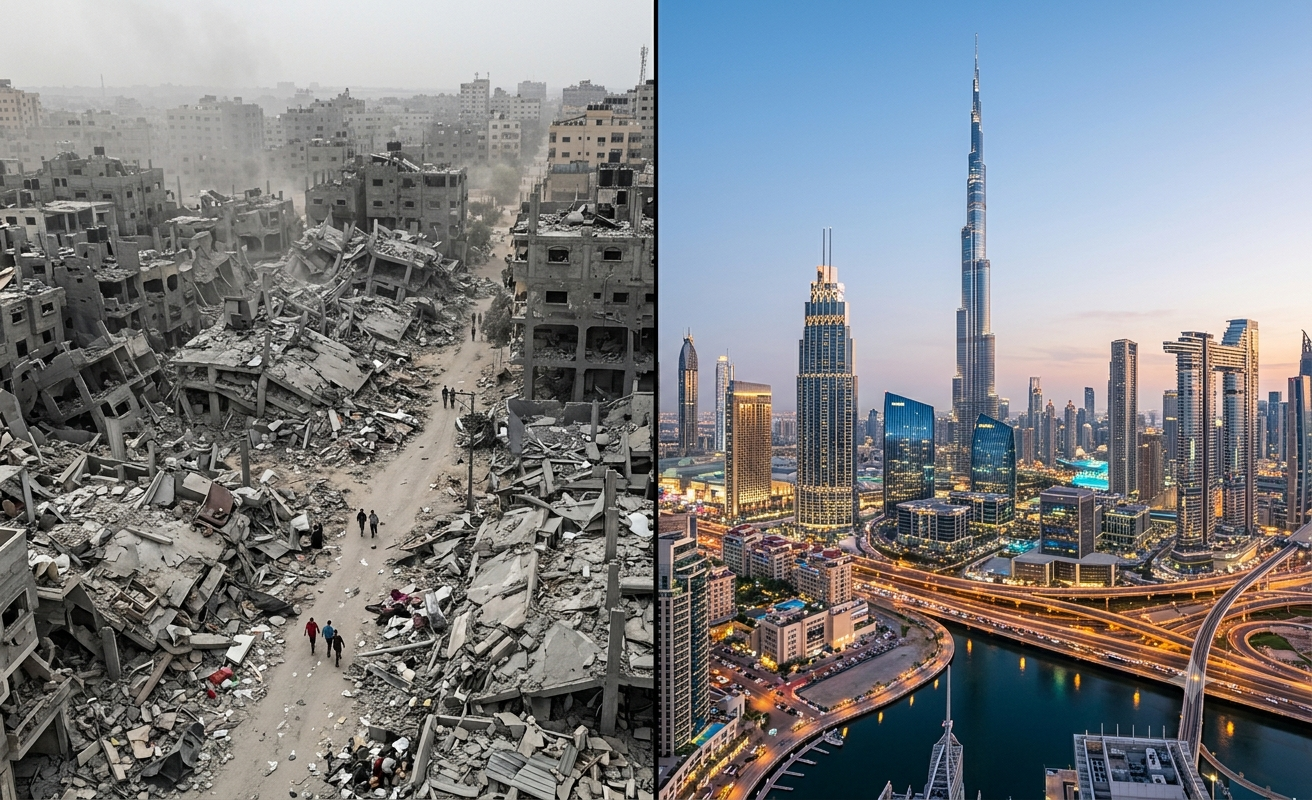
The discourse surrounding Middle Eastern stability has often focused on the notion that fostering closer ties with the United Arab Emirates (UAE) can pave the way for a peaceful future, while the complex realities of the Palestine issue take a backseat. This perspective portrays the UAE as the foremost Arab player dedicated to modernization and dialogue, relegating the plight of Gaza to a mere humanitarian concern. However, this simplified narrative overlooks essential truths, particularly regarding Palestinian political legitimacy, which remains vital for understanding the geopolitical landscape of the region.
### Gaza’s Significance in Regional Diplomacy
Gaza is not just another conflict zone or humanitarian crisis; it has emerged as a critical center of gravity impacting Middle Eastern geopolitics. The situation in Gaza significantly shapes the legitimacy framework within the Arab and Muslim worlds. It influences U.S. foreign policy considerations and affects the maneuverability of regional players like Saudi Arabia. Additionally, Gaza’s significance extends beyond its borders, impacting diplomatic relationships that involve countries like Turkey, Iran, and even Pakistan. Every major regional issue—ranging from conflicts in Lebanon and Yemen to normalization processes—inevitably ties back to Gaza. The idea that Israel could sidestep Gaza while establishing a new regional order is fundamentally misguided.
### The Role of Saudi Arabia in Regional Dynamics
Saudi Arabia stands as the linchpin in Arab diplomacy. As the custodian of Islam’s two holiest sites and a key player in the Arab League, its decisions set the tone for broader Arab politics. More importantly, Saudi Arabia possesses the essential political legitimacy concerning Palestinian issues that the UAE cannot claim. Riyadh’s inability to move toward normalization with Israel without addressing the Palestinian narrative serves as a testament to Gaza’s pivotal role in regional diplomacy. Any approach that disregards Saudi Arabia’s influence is not only short-sighted but also ignores a crucial reality in the Middle East.
### Misplaced Emphasis on the UAE
The narrative that frames the UAE as the primary Arab actor is not only misleading but also strategically flawed. While the UAE boasts significant wealth and clout, it lacks the legitimacy required to represent broader Arab sentiments on Palestine. Public perception across the Arab world often views the UAE as a state that has prioritized its economic interests at the expense of Palestinian rights. This disconnect renders the UAE an inadequate anchor for regional consensus, as it does not fulfill the political and moral expectations set by Arab populations.
### Essential Mediators: Qatar and Egypt
In contrast to the UAE’s purported role, Qatar and Egypt emerge as indispensable players in Gaza-related diplomacy. Qatar commands valuable leverage over Hamas and maintains balanced relations with both Washington and Tehran, making it a critical mediator in negotiations. Likewise, Egypt plays a crucial role due to its geographical proximity and deep involvement in Gaza’s security dynamics. Ignoring these crucial players is not merely an oversight; it represents a fundamental misunderstanding of the political architecture in the region.
### Israel’s Strategic Isolation
Israel’s attempt to marginalize Palestinians while elevating the UAE has backfired, resulting in growing international isolation. The country now faces unprecedented diplomatic challenges, being further alienated from global public opinion. The legitimacy crisis surrounding Gaza is a significant factor driving this isolation, making it essential for Israel to recalibrate its understanding of regional dynamics. Acknowledging Gaza as a core issue is indispensable if Israel hopes to reverse its current trajectory of isolation.
### Future Directions: Engaging with Gaza
The path to achieving Israeli security cannot lie solely in strengthening ties with Abu Dhabi; it must engage constructively with Gaza. This involves recognizing Palestinian political agency and cooperating with Saudi Arabia, Qatar, Egypt, and other influential nations. Israel’s future strategic stability depends not just on military might but on a robust diplomatic framework that brings legitimate Palestinian perspectives to the forefront. Failing to acknowledge these realities risks prolonging isolation and instability in this tumultuous region.
In summary, Israel’s long-term security should predominantly focus on Gaza and the West Bank, emphasizing diplomacy over military strategy. Embracing these essentials could pave the way for a more stable and equitable future in the Middle East.