
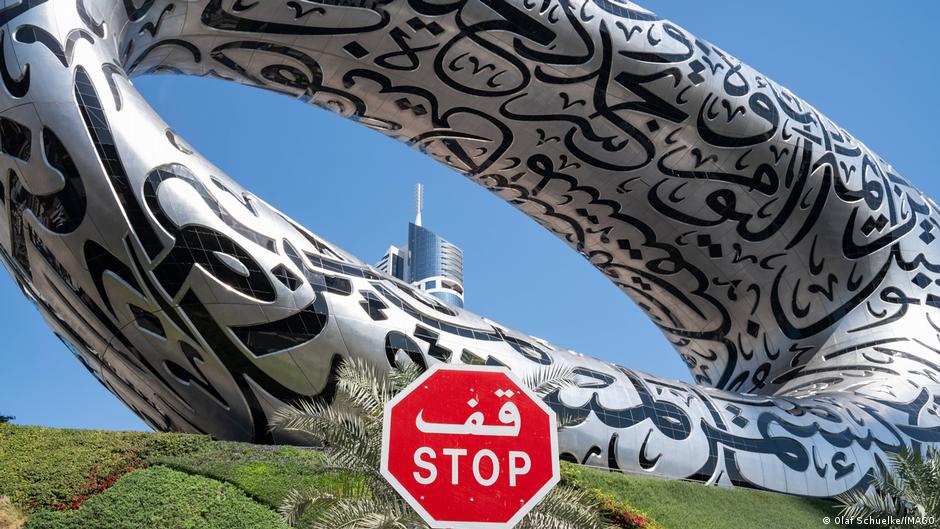
When the United Arab Emirates (UAE) appointed Omar Sultan Al Olama as the first Minister of State for Artificial Intelligence in 2017, his vision was to position the nation at the forefront of AI development globally. Fast forward six years, and Al Olama has earned a spot on TIME magazine’s inaugural TIME100 AI list as the UAE advances its digital initiatives. Despite facing external challenges due to geopolitical tensions in the region, the UAE remains committed to its digital transformation.
Impact of Geopolitical Tensions
The recent conflict involving the United States and Israel’s actions against Iran has placed the UAE in a precarious position, making it a primary target for Iranian attacks. Reports indicate that numerous missile and drone strikes have targeted critical local offices and data centers housing major global tech firms like Amazon, Google, Microsoft, and Nvidia. This ongoing warfare poses a significant threat to the UAE’s infrastructure, leading to increased concerns about the vulnerability of undersea cables, vital for global data flow and local digital operations.
Adding to the complexity, the blockade of the Strait of Hormuz has disrupted hardware deliveries, further straining the capabilities of UAE’s technology sector. Experts, including Sebastian Sons from the German think tank CARPO, emphasize that just as oil refineries and desalination plants are deemed essential, so too are data centers in today’s digital economy. Protection of this critical infrastructure is paramount to maintaining the UAE’s competitiveness in AI.
Resilience Amidst Crisis
Despite the challenges posed by the ongoing conflict, the UAE continues to demonstrate a remarkable level of resilience. Observers note that while the political landscape has evolved, the fundamental aspects of the UAE’s economy remain robust. Mohammed Soliman, a senior fellow at the Middle East Institute, points out that the UAE’s strategic position as a nexus for capital flow between East and West and its abundant resources mean it is still well-equipped to foster AI growth.
Historically, the Gulf region has navigated multiple crises—from the financial downturn in the late 2000s to the COVID-19 pandemic—without compromising its economic framework. As the UAE adapts to these contemporary challenges, experts argue that sustained damage will only occur if the Iran situation persists for an extended period without a strategic shift.
A Future-focused AI Strategy
The UAE’s ambitious “UAE AI Strategy 2031” appears well-diversified to withstand external pressures. Central to this initiative is G42, a conglomerate focused on AI and cloud computing, which has catalyzed the country’s technological evolution. Notably, the establishment of the Mohamed Bin Zayed University of Artificial Intelligence in 2019 has positioned the UAE as a contender in the global AI educational landscape.
Despite this progress, the UAE’s efforts to balance relations between major global powers, including the US and China, came under scrutiny, prompting the UAE to sever AI connections with China in 2023. In its ongoing projects, Abu Dhabi is currently developing the Stargate UAE, a colossal data center cluster expected to be the largest outside the US, further solidifying its position as a global AI hub.
Challenges in AI Development
Despite the attractive salaries offered in the UAE’s tech sector, the region has not yet established itself among the world’s elite AI engineering destinations. Much of its AI ecosystem still relies on external models and frameworks, resulting in a perception as a consumer rather than a producer in the AI arena. Experts like Fatima Abu Salem highlight the heavy dependence on foreign research and expertise, undermining local progress.
Criticism has also been leveled at the quality of Arabic AI models developed in the region, which are reported to lag in performance. As the UAE continues to invest heavily in its AI ambitions, industry analysts caution that it must overcome these foundational challenges to truly establish itself as a leader in the global AI landscape.
In conclusion, the UAE is at a critical juncture, balancing geopolitical challenges while pursuing ambitious AI initiatives. By investing in education and technology and enhancing its resilience, the nation aims to emerge not just as a participant, but as a key player in the global AI revolution.