
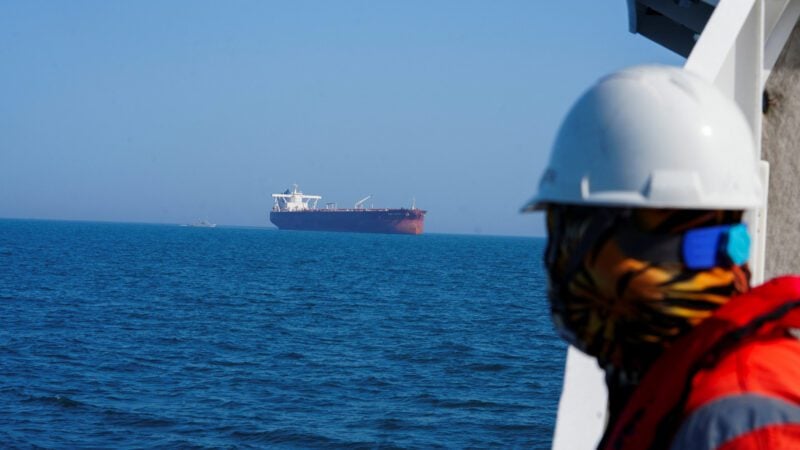
On Friday, two tankers linked to the Abu Dhabi National Oil Company (ADNOC) were targeted by drones while navigating through the Strait of Hormuz. This incident coincides with ADNOC’s recent expansion of its shuttle operations, aimed at transporting Iraqi crude oil through this strategically significant maritime route.
Drone Strikes Affect Oil Tankers
The United Kingdom Maritime Trade Operations (UKMTO) issued alerts regarding the drone strikes following reports from military sources. Both tankers sustained minor damage, and thankfully, the crews were reported safe. Fortunately, there were no environmental repercussions from the attacks, but the implications for shipping in the region remain significant.
ADNOC confirmed the attacks, stating the situation had been managed effectively. In a strong response, the UAE government attributed the strikes to Iranian forces, marking this incident as part of a concerning trend with multiple attacks occurring in a short span. The UAE Ministry of Foreign Affairs condemned the assaults, labeling them as “acts of piracy.” They called for a cessation of hostilities and urged Iran to completely reopen the crucial shipping lane.
Impact on Oil Export Strategies
Adding to the significance of this event, reports surfaced earlier this week indicating that ADNOC has been enhancing its trading activities by offering to shuttle Iraqi oil exports through the Strait of Hormuz. This strategy aims to circumvent disruption risks while maintaining oil flow in and out of the Gulf. The shuttling method involves transferring cargo from local vessels to larger ships beyond the Gulf, sometimes with the automatic identification systems (AIS) turned off to maintain anonymity.
Iraq’s state oil marketer, SOMO, confirmed that ADNOC is indeed purchasing Iraqi crude oil and facilitating its transportation through the Strait. However, it remains unclear if the two targeted vessels were involved in this shuttle operation or if the drone attacks were directly linked to these activities. Regardless, the incident highlights the growing dangers associated with this critical trading artery.
Shipping Risks and Traffic Analysis
According to UKMTO’s recent assessments, shipping traffic in the region has drastically declined. The reports indicate that outbound and inbound voyages through the Strait are operating at only 17% of pre-conflict levels. While tankers represent a significant portion of this traffic, many operators are now favoring routes controlled by Iran for security reasons. The southern route, which is often patrolled by U.S. forces, has proved particularly perilous, accounting for most reported drone strike incidents since July.
The pressure on oil transport is mounting, as the frequency of these attacks disrupts what was once a smooth and efficient shipping route. Before these challenges arose, daily traffic through the Strait of Hormuz consisted of over 130 ships. Now, the ongoing conflict and targeted assaults threaten not only the safe passage of vessels but also the stability of global oil markets and supply chains.
Despite the challenges posed by these drone strikes, ADNOC continues to assert its commitment to maintaining operations in the region. The oil giant has acknowledged the impact of these attacks on its logistics but remains focused on fulfilling customer demand amid escalating threats. The recent incidents not only jeopardize ADNOC’s shuttle strategy but also further complicate the delicate balance of oil transport in a region marked by geopolitical tensions.