
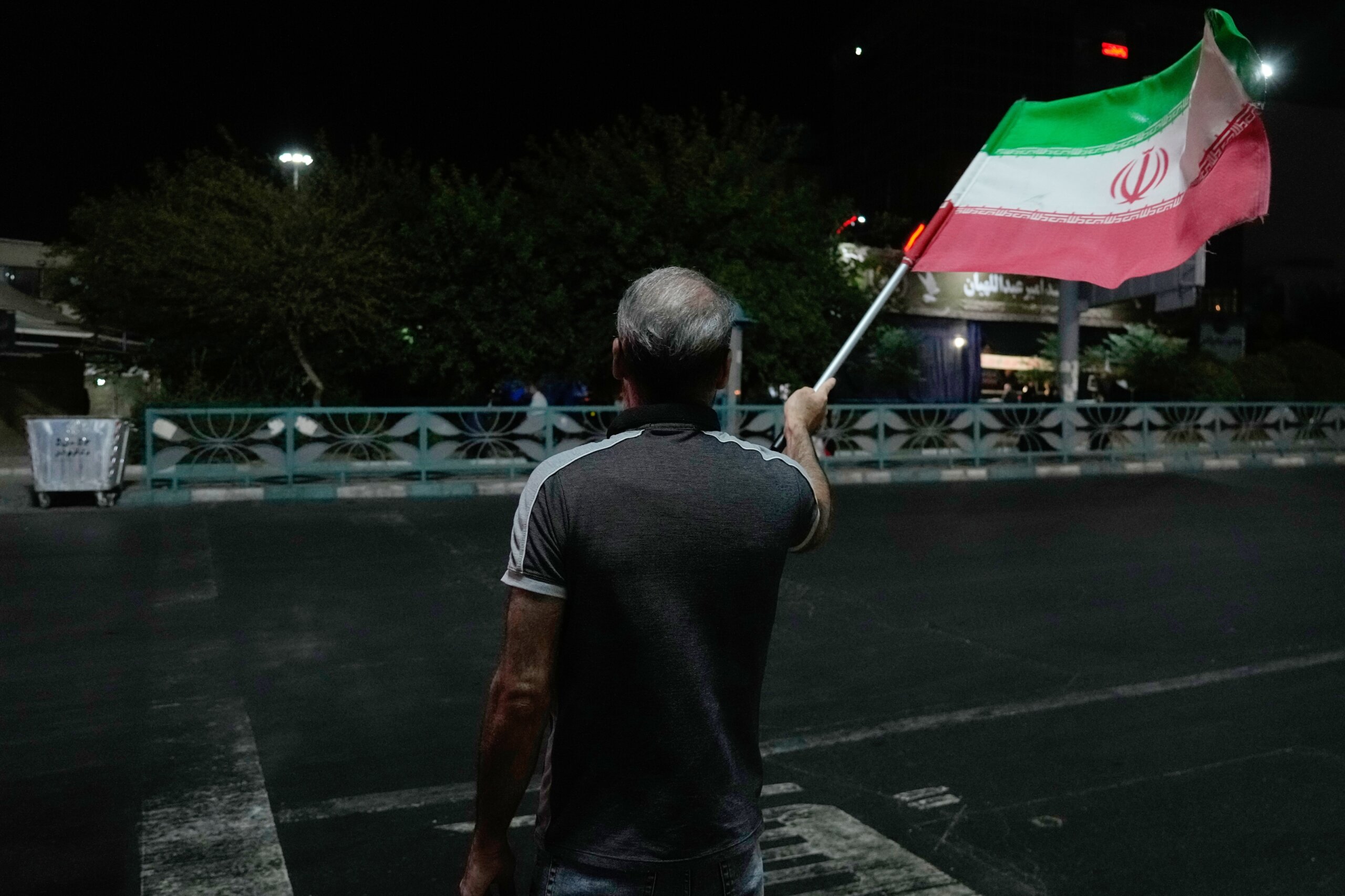
The recent military actions between the United States and Iran have escalated tensions in the already volatile region of the Persian Gulf. On Sunday morning, the U.S. conducted airstrikes against Iranian targets in response to an attack on a commercial vessel in the crucial Strait of Hormuz. This flare-up threatens to impact maritime security and international trade routes significantly.
Escalating Tensions in the Persian Gulf
The incident began with an attack on a Cyprus-flagged container ship, which suffered substantial damage to its engine room, leaving a civilian crew member unaccounted for, according to U.S. Central Command. In retaliation, Iran launched missile strikes aimed at Bahrain, Qatar, and the United Arab Emirates, intensifying fears of wider conflict in the region. U.S. Defense Secretary Pete Hegseth stated emphatically on social media that Iran’s actions were reckless and options were limited for Iran in the face of American military might: “Iran made a poor choice. Now they pay.”
As the hostilities unfolded, the United Arab Emirates alerted its citizens to incoming missile and drone attacks. Residents in Qatar reported hearing explosions followed by missile alerts. Meanwhile, areas in Bahrain, which houses the U.S. Navy’s 5th Fleet, experienced similar alerts, showcasing the significant risks involved in this complex geopolitical landscape.
Implications for Maritime Security
In light of these recent developments, the Strait of Hormuz remains a focal point for maritime security risks. Given that this waterway is a vital artery for global oil shipments, further deterioration could inflict heavy economic repercussions worldwide. Iran’s Revolutionary Guard issued stern warnings to vessels that failed to heed their instructions, stating that their actions would be met with force. They declared that the strait would remain closed “until further notice,” raising concerns over the potential for prolonged disruptions in a key transit route.
While it remains uncertain which specific locations within the UAE faced an attack, this marks a significant shift in the conflict dynamics, as the UAE had largely avoided becoming directly involved in the escalations that had previously marked relations between the U.S. and Iran.
The Broader Context of U.S.-Iran Relations
This sudden escalation occurs against the backdrop of U.S. President Donald Trump’s recent comments suggesting that any hopes for a ceasefire or interim deal in the ongoing conflict with Iran were extinguished. This change in tone follows years of tension, sanctions, and the contentious nuclear program negotiations that have characterized U.S.-Iran relations. The ongoing military engagement raises questions regarding the stability of the region and the effectiveness of diplomatic efforts moving forward.
As the situation continues to develop, world leaders and analysts are closely monitoring the potential ramifications on both regional stability and global economic conditions. The possibility of further military action or retaliatory strikes looms large, casting a shadow of uncertainty over the futures of those residing in and adjacent to the conflict zones.
In summary, the recent military strikes symbolize a dangerous escalation in tensions between the United States and Iran, with the Strait of Hormuz serving as a critical battleground. The international community remains on high alert as both nations navigate this fraught situation, and the fate of maritime security hangs in the balance.