
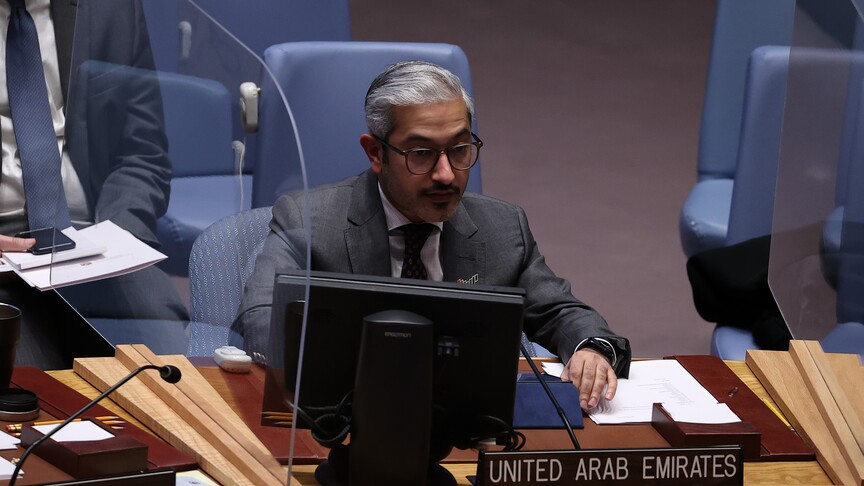
The recent escalation of tensions in the Middle East has led the United Arab Emirates (UAE) to invoke its right to self-defense under international law. This response comes amid a series of reported attacks from Iran that have targeted civilian infrastructure, raising alarm on both regional and global fronts.
UAE’s Response to Attacks
On May 4, the UAE faced significant hostility when Iran launched a barrage of missiles and drones aimed directly at its territory, resulting in a fire at a civilian energy facility in Fujairah and leaving three individuals injured. UAE Ambassador Mohamed Abushahab condemned these actions, emphasizing that targeting civilians and civilian infrastructure is not only immoral but also illegal under international law. Ahead of discussions at the UN Security Council, he expressed the gravity of the situation, highlighting that since the conflict intensified on February 28, the UAE has successfully intercepted over 500 ballistic missiles and 2,000 drones.
Abushahab’s remarks cast doubt on the Security Council’s credibility, questioning its ability to address blatant violations of international law. He expressed concern that the council risks becoming a platform for empty rhetoric while real violations occur unchecked. This sentiment points to a growing frustration with the international community’s inaction during moments of crisis.
The Broader Impact on Regional Security
The attacks have drawn condemnation from other nations in the region, including Bahrain. Ambassador Jamal Fares Alrowaiei characterized the Iranian strikes as “heinous,” calling for a united international response to uphold regional security—which he described as “indivisible.” Alrowaiei stressed that the continued escalation poses a significant threat to diplomatic efforts aimed at stabilizing the area. He urged the global community to react decisively to these attacks, which he pointed out are clear violations of United Nations resolutions.
Moreover, the repercussions of these hostilities extend beyond immediate threats to safety. As noted by the UAE envoy, insecurity in the Strait of Hormuz can lead to broader economic instability, impacting food prices and global markets. The Strait is a crucial passage for oil shipments, and disturbances in this region can ripple outwards, affecting countries that rely on stable oil prices.
The Stakes for International Law
As these events unfold, the international community faces a critical juncture. The ongoing conflict and subsequent responses underscore the fragility of peace in the region. The actions taken next by entities like the United Nations will be pivotal in determining whether they can effectively enforce international law and protect civilians. Failure to address these violations could undermine the authority of international law and embolden further aggression.
While Iran has denied involvement in the attacks, asserting that any military action would be publicly acknowledged, the atmosphere remains tense. The UAE’s assertions and the ensuing fallout signify more than just a regional skirmish; they represent a broader struggle over international norms and the enforcement of laws designed to protect civilians and uphold peace.
In conclusion, as the UAE continues to assert its right to self-defense, the need for strong, unified international action becomes paramount. The dialogue around regional security, the consequences of economic instability, and the fundamental principles of international law remain at the forefront of discussions as the world watches these developments unfold.