
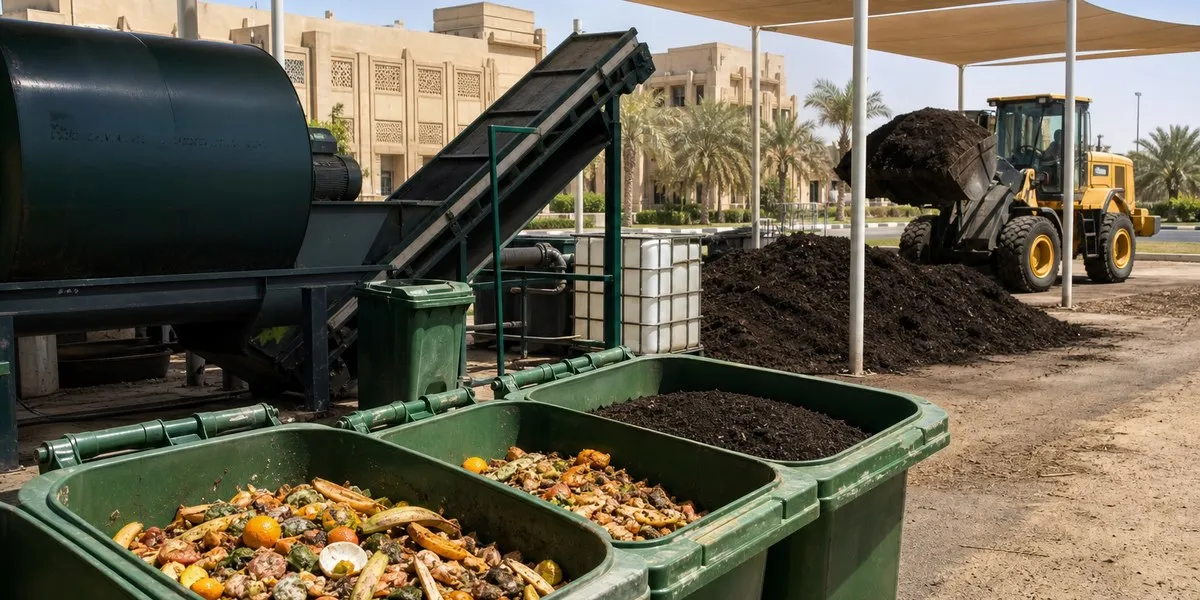
In Al Ain, UAE, a significant step towards sustainable waste management has been initiated through a collaboration between the United Arab Emirates University and Emirates Biotech. The duo is set to construct an innovative organic waste processing facility that aims to recycle up to 40 kilograms of waste, converting food scraps and compostable materials into renewable biogas and nutrient-rich compost. This groundbreaking project is expected to take between six and twelve months to complete, marking it as a pioneering initiative within the Emirates.
Promoting a Circular Economy
Zafar Saeed Sher, an associate professor at the UAE University, outlines the vision behind this project: creating a self-sustaining circular economy. The objective is to minimize the amount of waste sent to landfills while maximizing the recovery and reuse of essential resources. If this project meets its goals, plans are in place for its expansion throughout the region, potentially transforming waste management practices. Sher emphasizes that composting can enhance soil fertility, thereby contributing to the nation’s food security.
Francois de Bie, the Chief Commercial Officer of Emirates Biotech, echoes this sentiment, stating that improving soil fertility is crucial for the UAE’s agricultural development. The resulting compost from the facility will play a vital role in enriching the soil to facilitate better crop yields and enhance the sustainability of local agriculture.
Understanding the Importance of Composting
The current waste management practices in the UAE have raised concerns, particularly the methane emissions generated by organic waste in landfills, which can be up to 28 times more harmful than carbon dioxide. Alarmingly, organic waste accounts for approximately 40% of the total waste generated across the Emirates. The new facility not only aims to tackle this issue but also positions itself as a key player in reducing environmental impact.
Part of the project’s focus includes collecting organic waste for composting while also integrating polylactic acid (PLA) products to demonstrate their biodegradability. Al Ain’s selection for this initiative is strategic, given its rich agricultural history linked to the traditional falaj irrigation system.
Innovation in Bioplastic Production
Additionally, Emirates Biotech is set to construct a polylactic acid production plant in the Kezad industrial zone, with a production capacity of 80,000 tonnes annually. The completion target for this facility is by 2029, along with plans to create a comprehensive materials recycling complex in the same location. This development is aligned with the UAE’s ambitious sustainability goals and reflects an ongoing commitment to innovation in waste management.
The wider sustainability initiatives in the UAE include the Nema program, established in 2022, which aims to halve food loss and waste by 2030. The nation is not just focusing on food waste; their long-term goals also include achieving net-zero emissions by 2050, and reducing emissions by 18% by 2030. Through projects like the organic waste processing facility, the UAE is poised to lead the way in environmental responsibility and contribute significantly to a more sustainable future.