
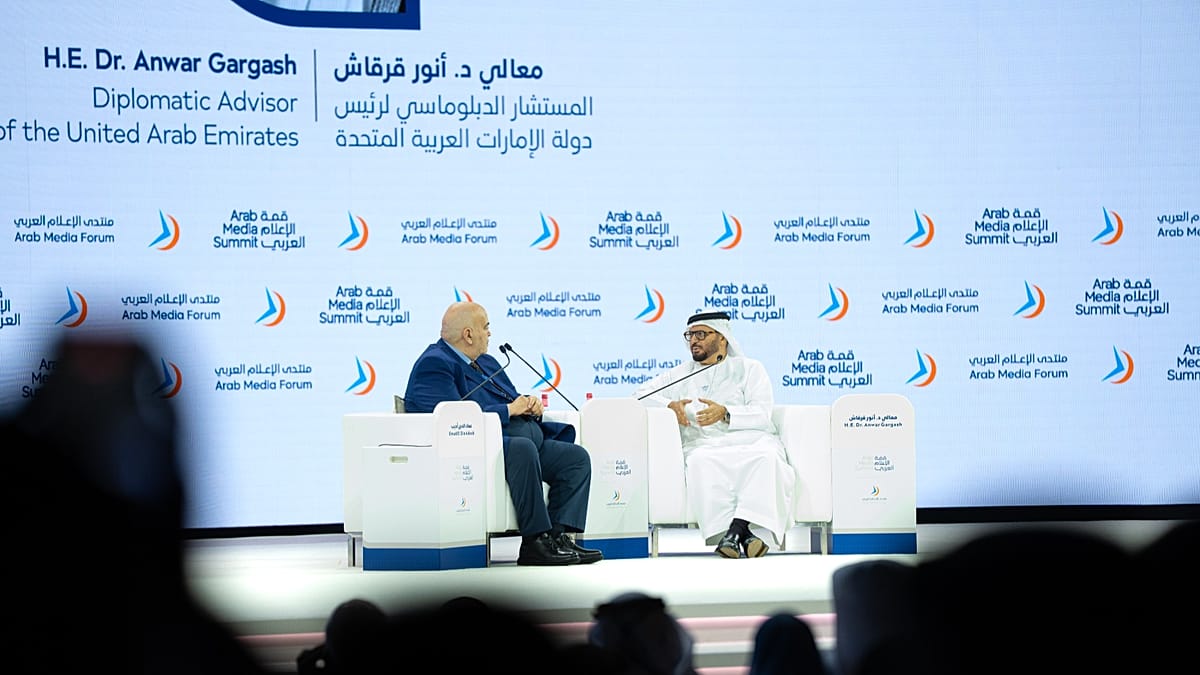
Trust between the United Arab Emirates (UAE) and Iran will take considerable time to rebuild, according to Dr. Anwar Gargash, a diplomatic adviser to the UAE president. His remarks during the Arab Media Summit in Dubai underline the complexities of their relationship, especially following recent attacks on Gulf states. Gargash emphasized the importance of maintaining communication while recognizing that trust is a separate issue.
Redefining UAE-Iran Relations
Gargash highlighted that the UAE and Iran, as neighboring countries, have a shared interest in continuing dialogue. However, he acknowledged the significant decline in security trust within the region. “At the end of the day, we are neighbors,” he stated, alluding to the necessity of fostering new channels of understanding. The UAE’s approach to managing this complex relationship involves three main elements: defending sovereignty, showing flexibility, and ensuring economic continuity.
The UAE leader also stressed the importance of maintaining economic momentum even amid geopolitical challenges. For instance, the president’s recent visit to Germany was cited as an effort to bolster economic ties despite the ongoing crisis. “We have to try,” he said, underlining the UAE’s commitment to progress while navigating difficult circumstances.
Gargash made it clear that while there may be a need for dialogue, rebuilding trust will be a long-term project. He reiterated his previous statements regarding the breakdown of confidence between the two nations, stressing that this separation of relations and trust is essential. The Iranian president’s acknowledgment of aggression against Gulf Cooperation Council (GCC) countries was cited as a geostrategic misstep, complicating Iran’s future opportunities for international engagement.
Challenges and Opportunities in the Gulf
Furthermore, Gargash pointed out that Iran’s reliance on proxy militias complicates relations with the UAE and other Gulf states. He posited that negotiations for a new future can only commence once Iran stops threatening its neighbors. Despite the ongoing tensions, he affirmed that the UAE has not initiated any punitive measures against Iran, focusing instead on self-defense while remaining open to friendly relations.
The geopolitical landscape is fluid, and Gargash noted that decision-making in Iran has become decentralized since the era of Ayatollah Ali Khamenei, signaling a shift that may benefit diplomatic engagements. Recent interactions between UAE officials and Iranian leaders suggest a willingness to explore new possibilities, even if comprehensive agreements are still pending. Gargash emphasized the need to “start a new page” in UAE-Iran relations for the sake of regional stability.
Gargash reasserted the UAE’s stance: “We are a nice country, but we are not an easy target.” As tensions persist, he cautioned that stability in Iran could take decades to achieve, framing the UAE’s policy as a blend of resilience and openness.
Regional Security Concerns
In discussing broader regional security issues, Gargash condemned recent attacks on Saudi Arabia, particularly the targeting of holy sites. “The security and the sovereignty of Saudi Arabia are part of our security,” he noted, highlighting the interconnectedness of stability in the Gulf. He cited militant groups, including Hezbollah and the Houthis, as ongoing threats to regional peace.
Particularly concerning is the Houthis’ attempt to control the Bab el-Mandeb strait, a strategic waterway crucial for international trade. Gargash stated that this issue transcends regional borders and impacts the global economy, reinforcing the importance of international law in governing shared maritime routes.
Finally, Gargash did not set a specific timeline for renewed talks with Tehran but emphasized that initiating political dialogue is critical. Although the UAE may not have chosen the path of conflict, its approach now focuses on defending its interests while advocating for a political solution that can lead to lasting peace and stability.