
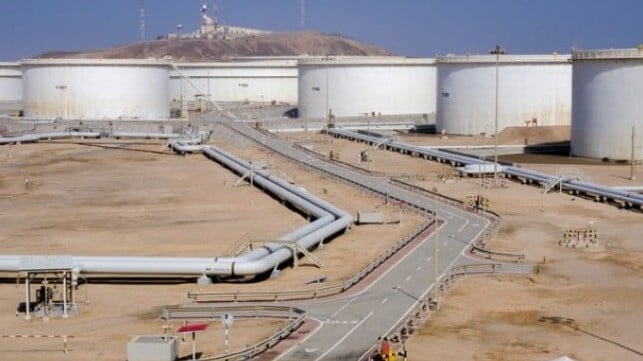
The United Arab Emirates (UAE) is taking significant steps to reduce its dependence on the Strait of Hormuz for oil exports amid ongoing regional tensions. The nation exports approximately three million barrels of crude oil each day and has been proactively diverting a substantial portion through a pipeline network to the port of Fujairah. This redirection has allowed the UAE to manage around two million barrels per day through this alternate route. In the wake of its withdrawal from OPEC, the UAE aims to ramp up its production to 5.2 million barrels per day by 2028, alongside planning for an additional parallel oil pipeline and another line for transporting refined products.
Aiming for Independence from Hormuz
UAE Trade Minister Thani Al Zeyoudi shared insights on the country’s strategic shifts during a conversation with Bloomberg News. He emphasized that irrespective of the state of the Strait of Hormuz, UAE’s plans for diversification would continue. “We hope the Strait will open soon, but we are committed to achieving zero dependence on Hormuz,” Al Zeyoudi stated. This commitment illustrates the UAE’s strategic foresight amid a dynamic geopolitical landscape.
Pipeline Infrastructure Investment
The UAE is spurred by the urgency of enhancing its logistical framework. The state-owned oil company, ADNOC, has been transporting tankers discreetly around the Omani side of the Strait of Hormuz, backed by U.S. oversight, to navigate the challenges posed by potential Iranian attacks. Recently, a drone targeted one of the tankers after an offloading operation, highlighting the inherent risks in this high-stakes environment. Moving forward, Al Zeyoudi noted that the UAE is set on developing critical infrastructure to eliminate all reliance on shipping through the Strait. Plans include enhancing capacity at ports along the Gulf of Oman, specifically in Khor Fakkan, Fujairah, and Dibba, as well as constructing a new port.
Financial Commitment and Broader Ambitions
Expanding the pipeline network, along with investments in road and rail capabilities, is crucial to achieving this vision. Although the financial requirements are substantial, ADNOC has planned a capital budget of $150 billion for the years 2025-2030, which will provide ample resources for growth. This investment will establish a secure and efficient link between the UAE’s oilfields located in the west and its eastern coastline, thereby ensuring uninterrupted export capabilities.
Challenges from Regional Tensions
Despite these ambitious plans, the threat of Iranian missile and drone strikes looms large. There are no stipulations in the recent U.S.-Iran agreement limiting Iran’s missile capabilities, leading critics to express concerns over a potential acceleration in Iran’s military buildup. In the recent months, many oil and gas infrastructures in the region, especially in the UAE, have faced strikes, threatening the stability of export operations. While recent attacks primarily targeted other assets instead of pipelines, they underscore the ongoing challenges of ensuring safe transportation of goods across borders in this volatile region.
In summary, the UAE’s strategic initiatives to diversify its oil transport routes reflect a conscious effort to strengthen its economic resilience. By investing heavily in infrastructure and reducing dependency on the Strait of Hormuz, the UAE aims to navigate geopolitical risks while bolstering its position in the global oil market.