
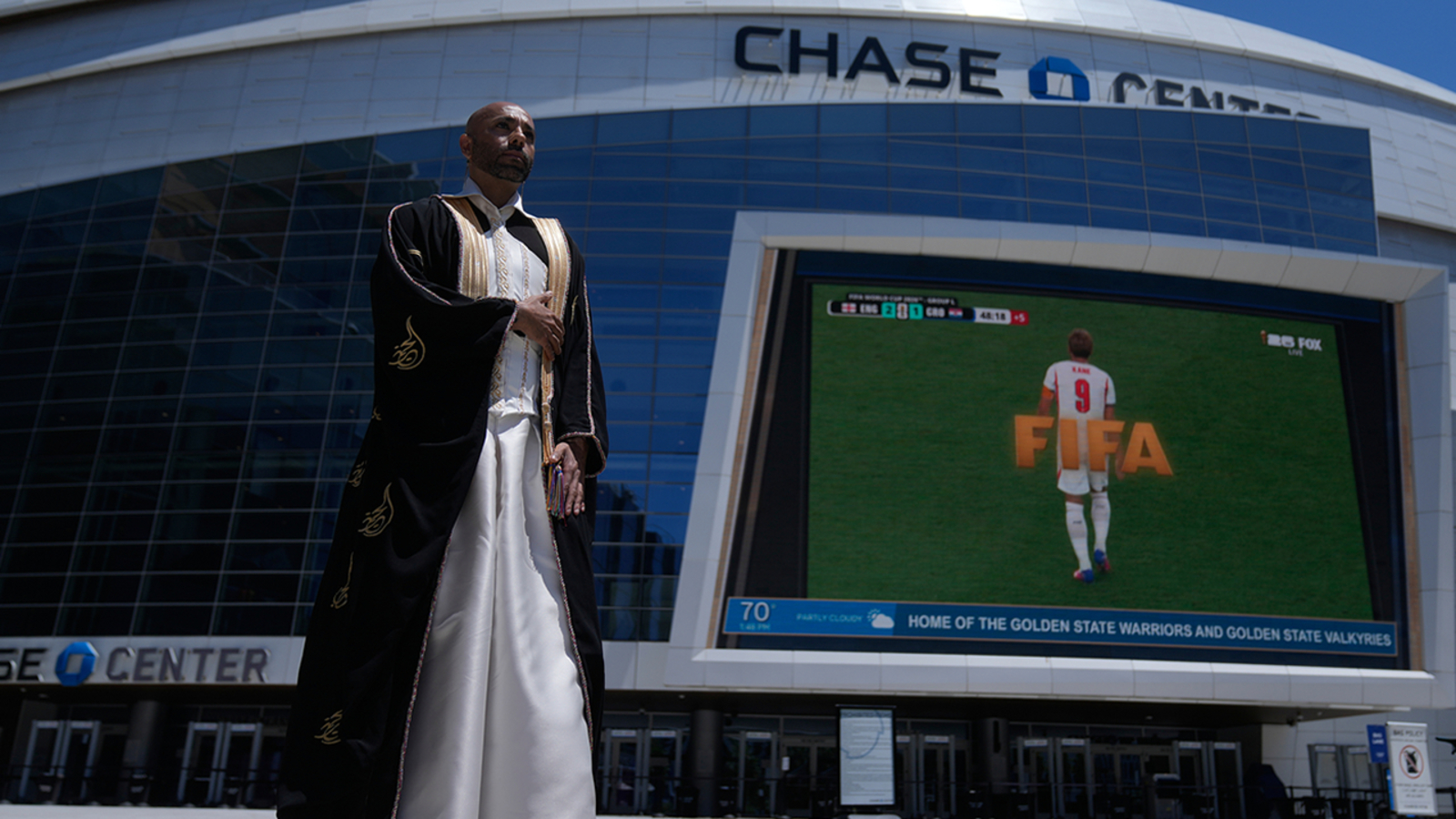
In recent years, the FIFA World Cup has transcended sporting events, becoming a global stage for personal expression and advocacy. Dr. Nasser Mohamed, a doctor and LGBTQ+ activist from Qatar, embodies this movement of visibility and change. As he navigates his journey as an openly gay man in a country where such identities face severe oppression, his story sheds light on broader societal issues during significant global events like the World Cup.
Embracing Identity and Activism
Dressed in a traditional Qatari bisht adorned with rainbow accents, Dr. Mohamed made a striking entrance at Chase Center in San Francisco, amidst a crowd gathering to watch the England-Croatia match. His outfit wasn’t just a nod to his heritage but a statement of pride and resilience. “The World Cup holds power; it allows me to be seen without saying a word,” he expressed. This sentiment resonates deeply as he recalls his journey of coming out four years prior, marking a pivotal moment in his life as one of the few openly gay figures in Qatar—a country where homosexuality is criminalized.
Dr. Mohamed’s advocacy continues to grow as he uses his platform to support those who cannot express themselves freely. Emphasizing his sense of security in San Francisco, he reflects on the community’s support that counters the negativity he still encounters. “I truly feel loved here,” he says, underscoring the importance of acceptance. His identity, once stifled by societal norms in Qatar, shines in this new environment, where he can express himself through fashion and activism without fear.
Campaigning for Love at the World Cup
Launching the “Love is the Goal” campaign, Dr. Mohamed aims to humanize the experiences of individuals affected by societal prejudices. Combining soccer terminology with affirmations of love, this initiative seeks to enlighten others on the importance of compassion amidst the competitive spirit of the World Cup. “Love is the assist in finding you exactly where you are,” he articulates, reinforcing the idea that love is a unifying force, even in sports.
Despite the vibrant life he leads in San Francisco, the pain of being estranged from his family and homeland remains palpable. Dr. Mohamed highlights the sacrifices made to attain his freedom, stating, “I lost everything; I had to build my life from scratch.” This commentary sheds light on the emotional toll faced by many in similar predicaments—fighting for identity while longing for acceptance.
The Duality of Existence
Even in exile, Dr. Mohamed expresses unwavering support for the Qatari national team, recognizing his roots while standing firm in his commitment to advocate for LGBTQ+ rights. His attendance at the team’s matches, coupled with community support from figures like California state Senator Scott Wiener, showcases the intersection of sports, identity, and activism. Despite being away from home, he finds joy in celebrating the World Cup, a time when cultural and personal pride come together.
Yet, the heartache lingers. “When will I see home again? I don’t know,” Dr. Mohamed reflects. His emotional connection to his birthplace, despite its rigid views on sexuality, remains strong. He acknowledges the challenges of aiding those in need of refuge from oppressive environments, including individuals who have faced persecution based on their identities.
As the World Cup unfolds, Dr. Mohamed not only cheers for Qatar but also for those fighting for their rights worldwide. “I support both the U.S. and Qatar. Love guides my criticism and my celebrations,” he concludes, emphasizing that acceptance is imperative in a world often divided by prejudice. His courage to live authentically while advocating for change encapsulates the ethos of the World Cup as a global celebration—one that should include love and acceptance for all.